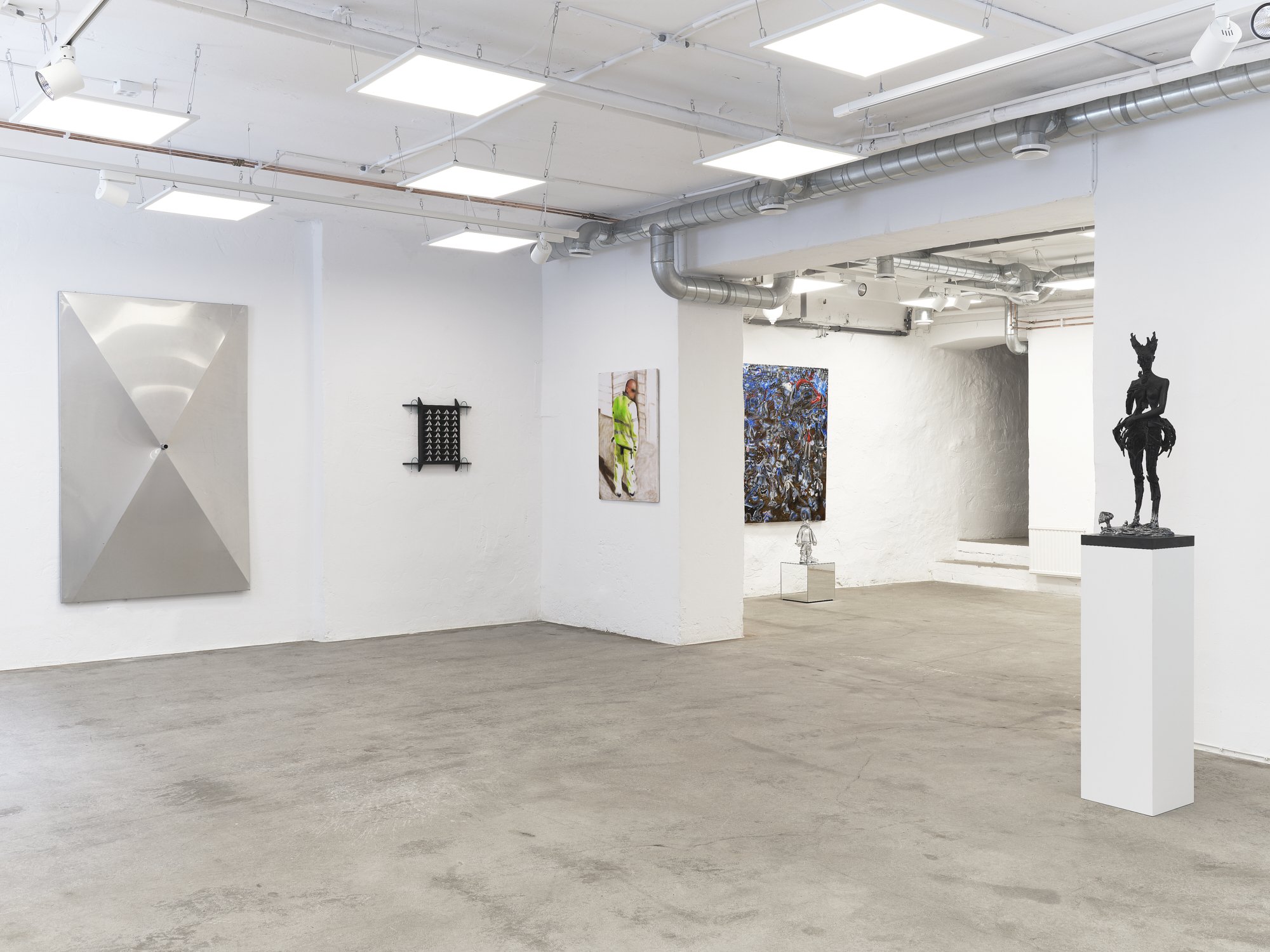
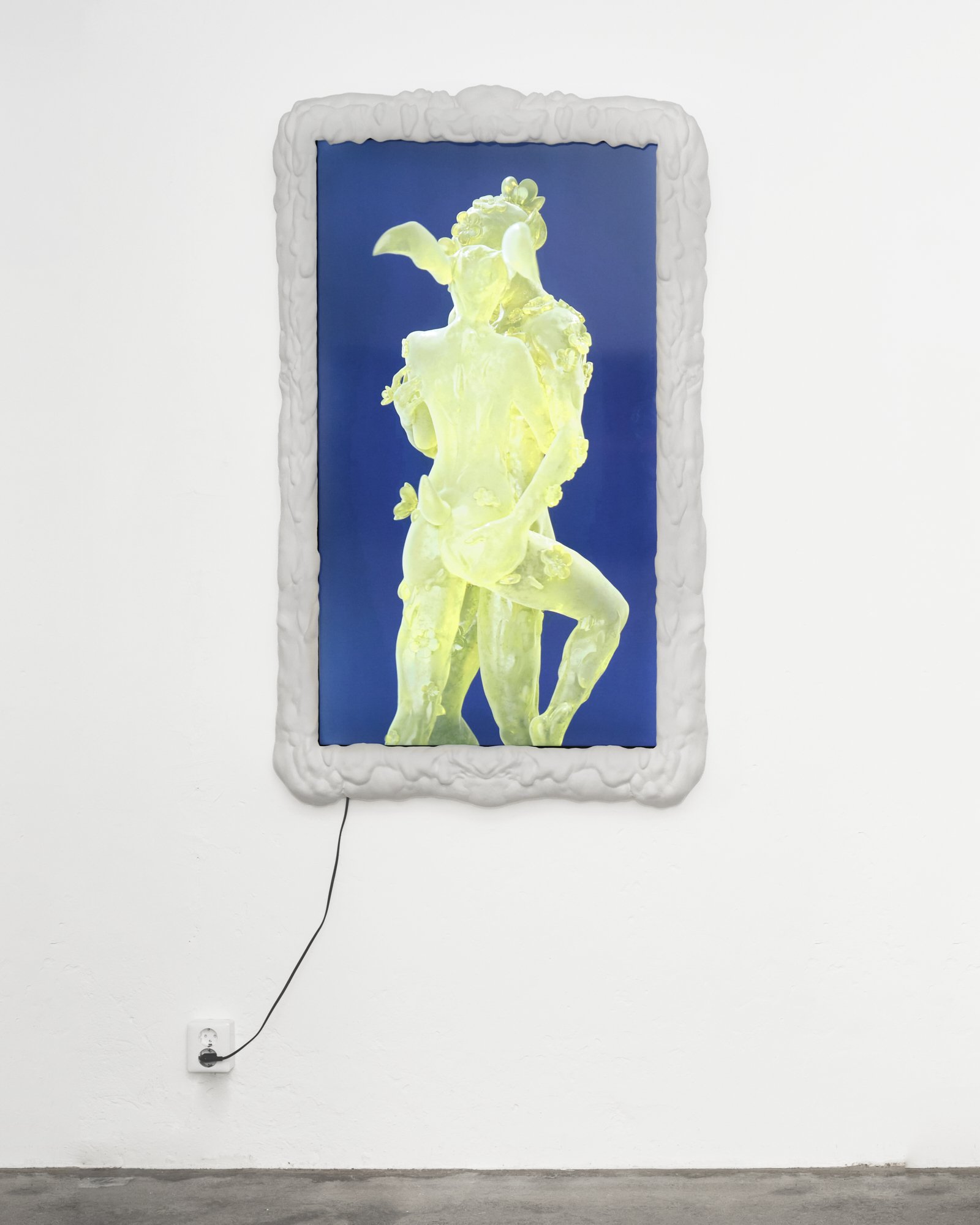
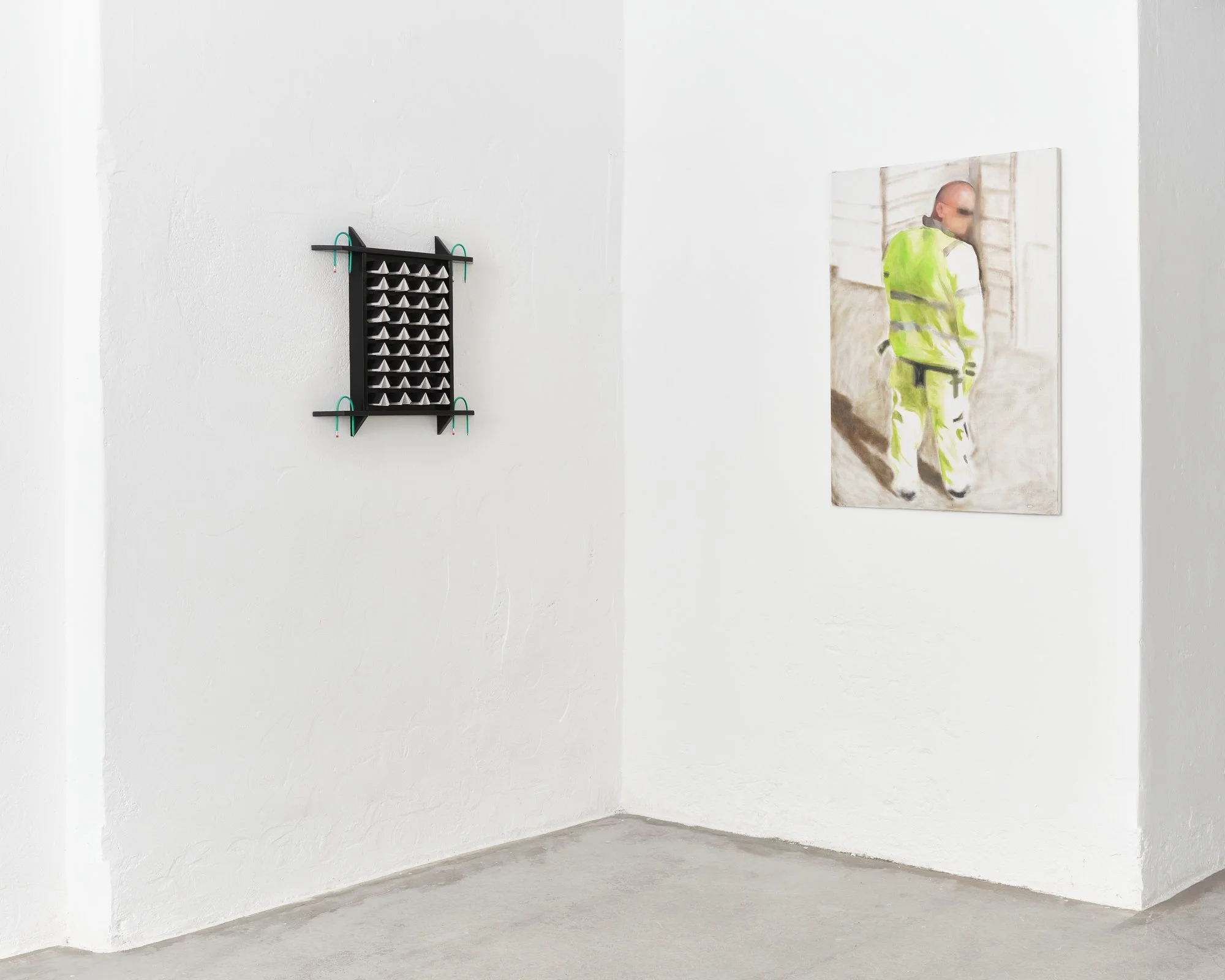
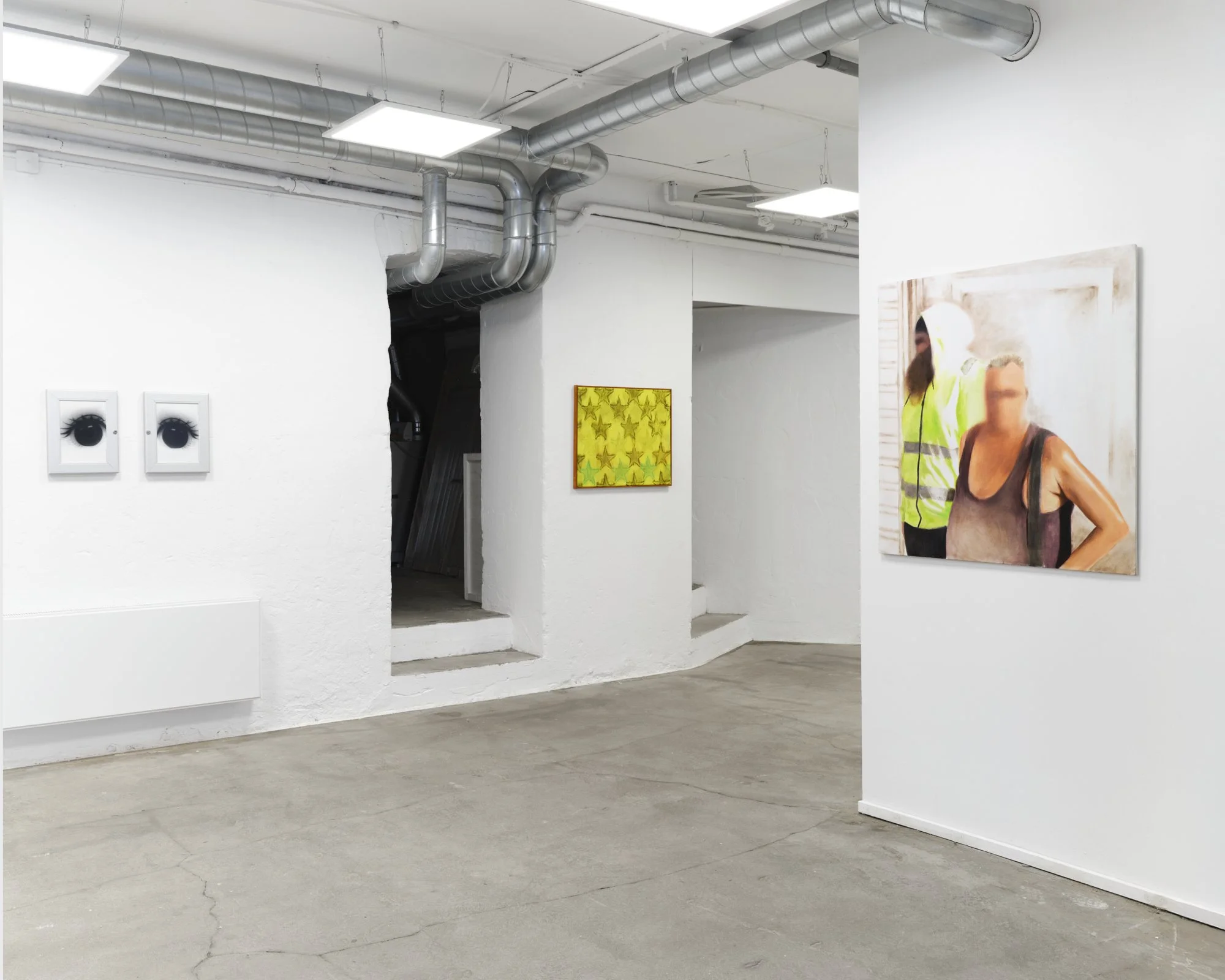
THEODOR FORSBECK - ALL WRONGS RESERVED
(18 September - 10 October 2026)
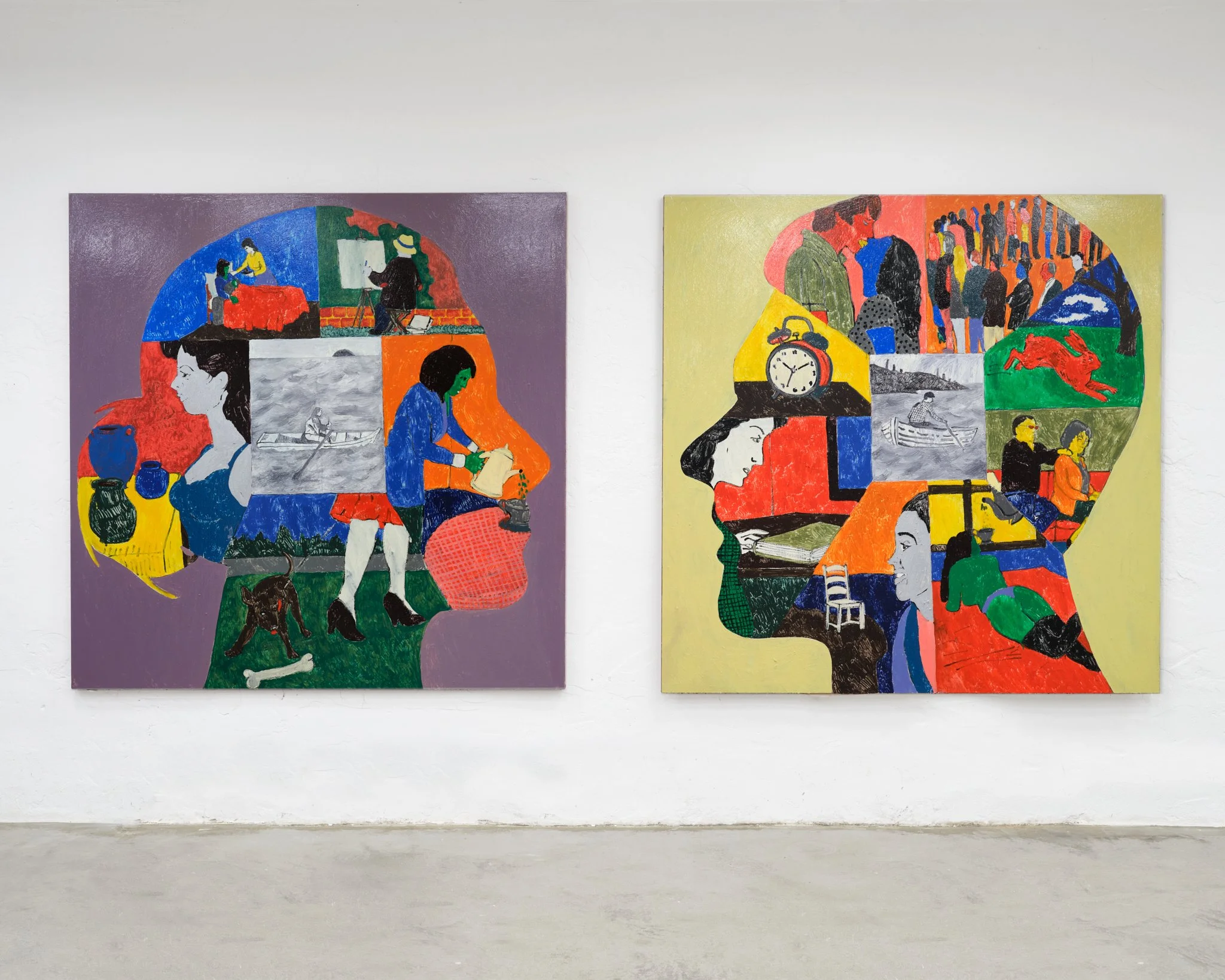
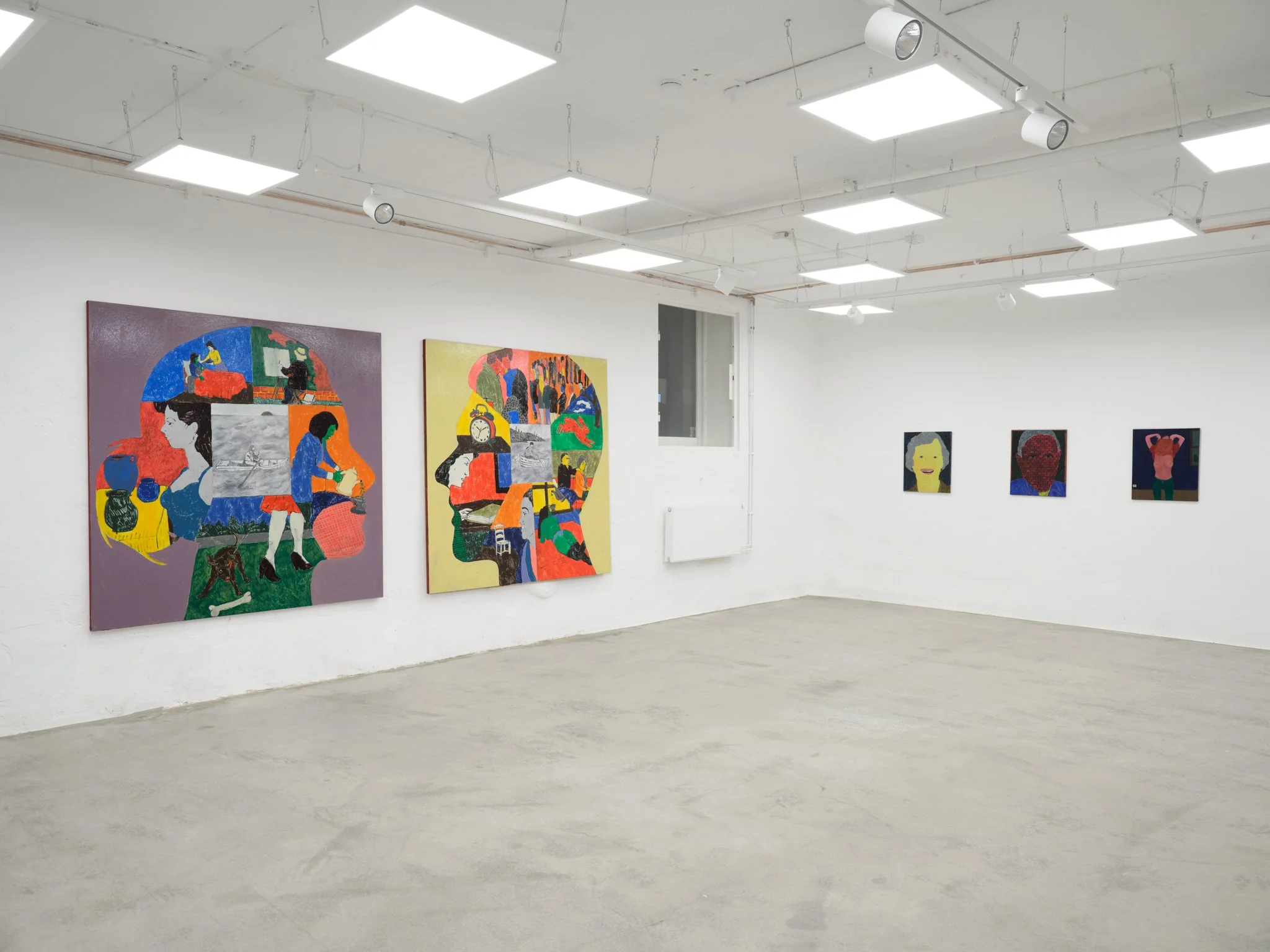
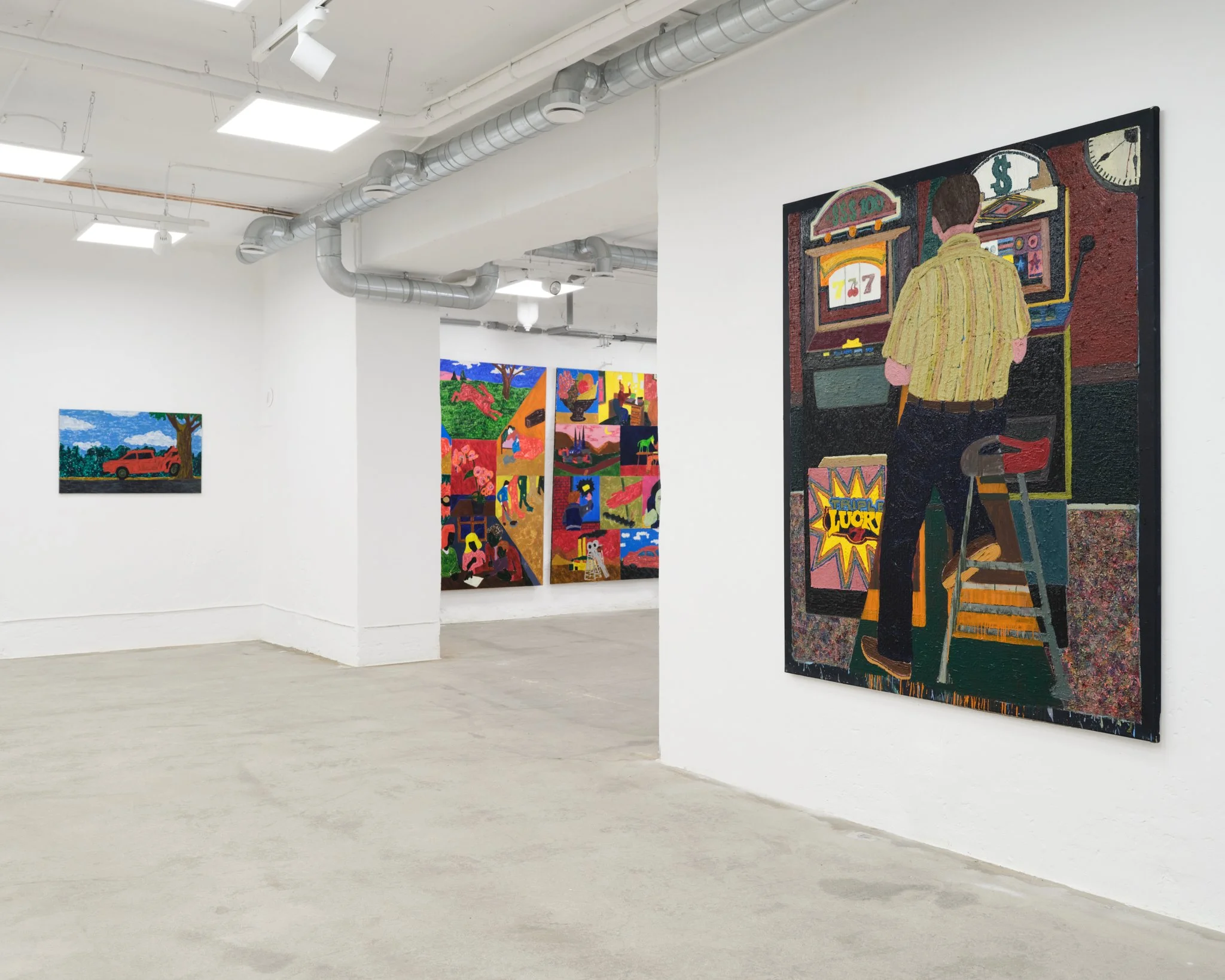
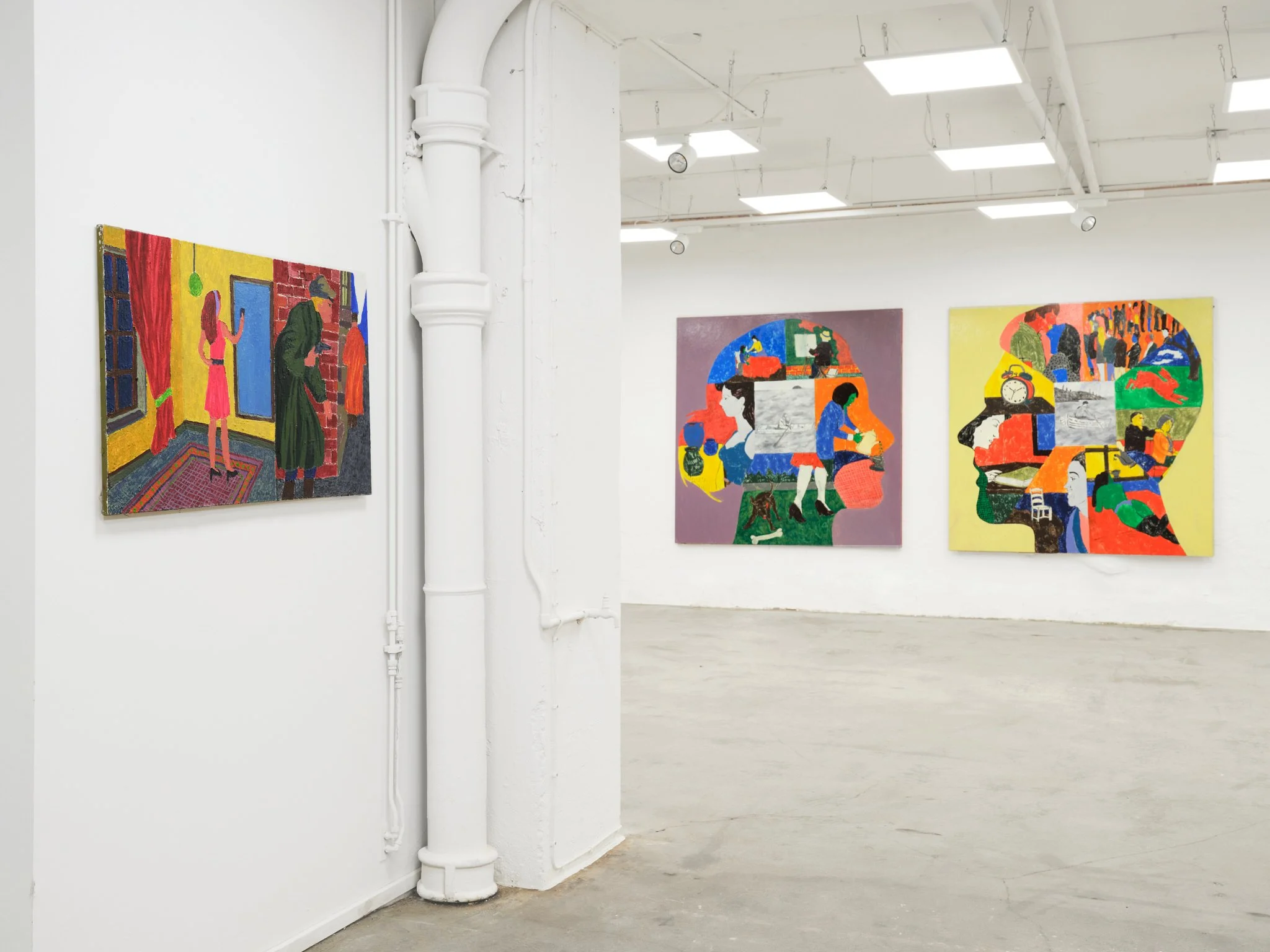
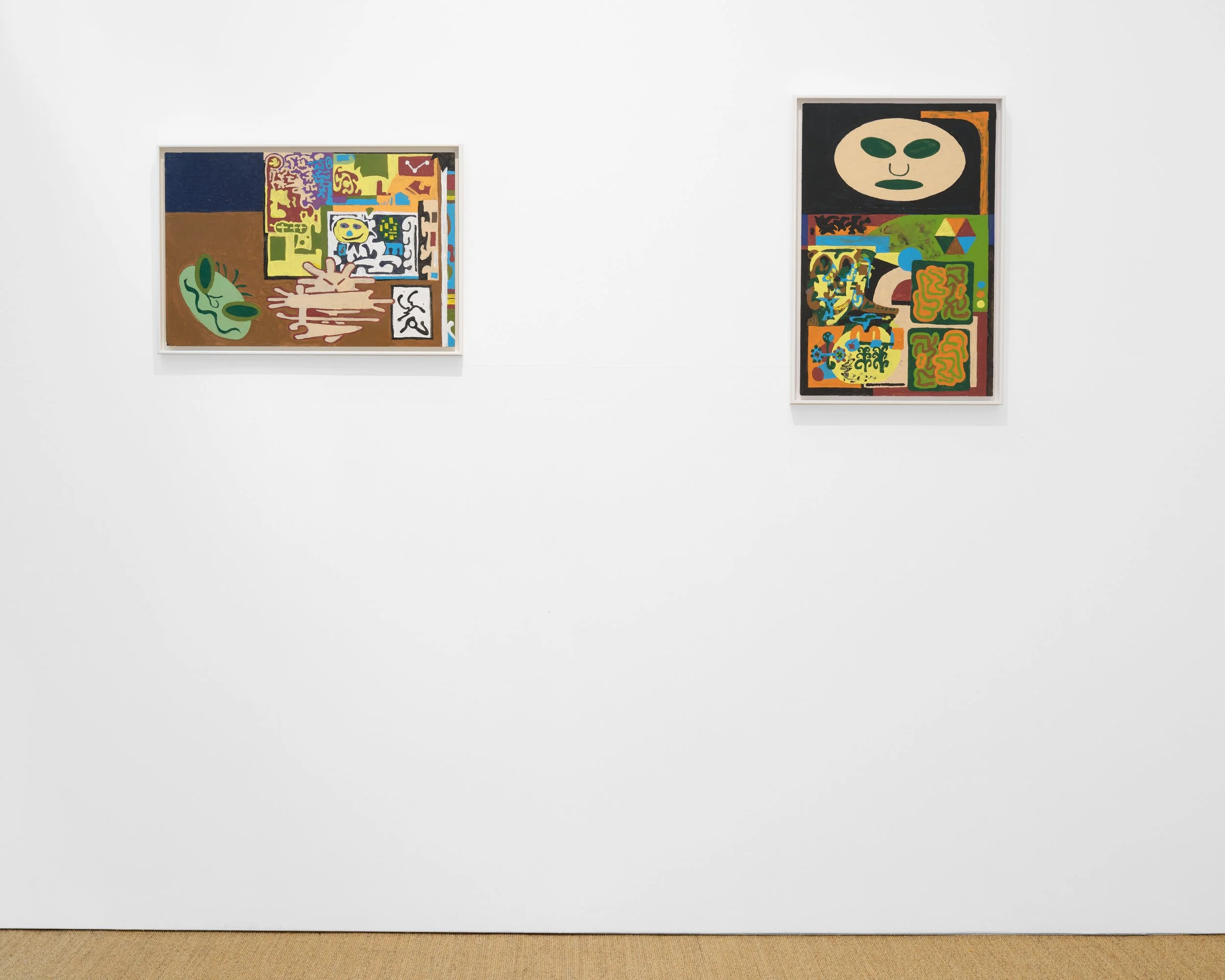
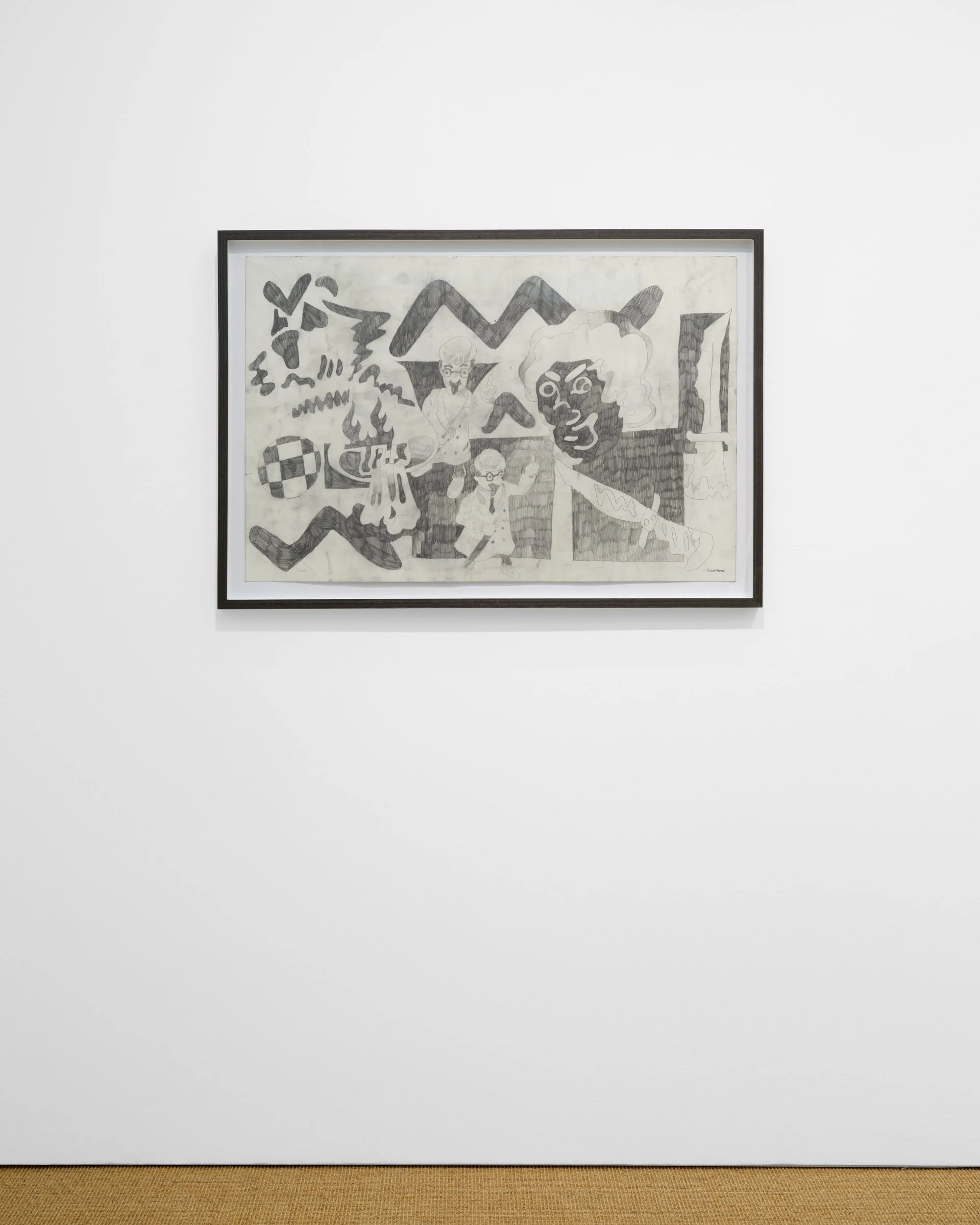
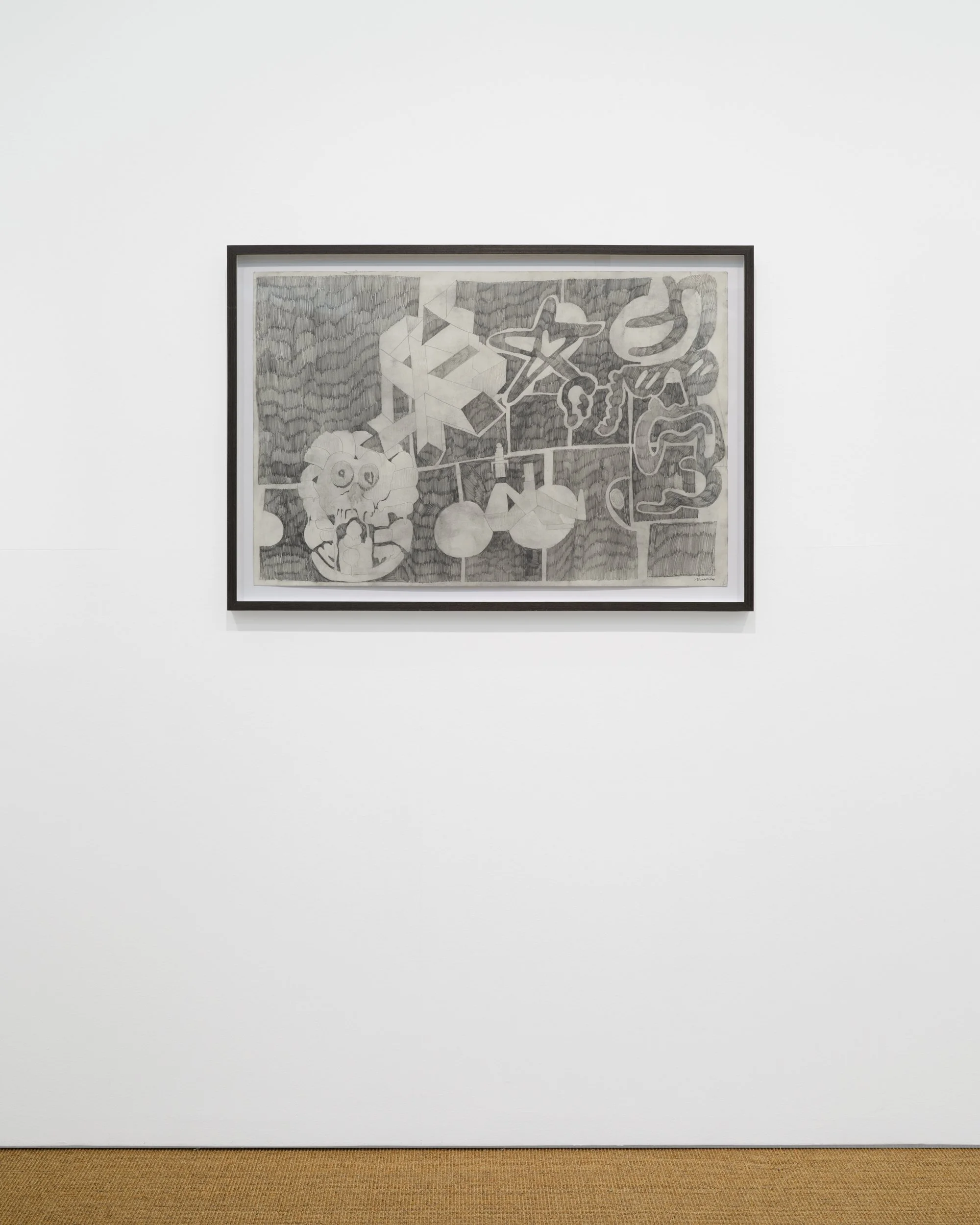
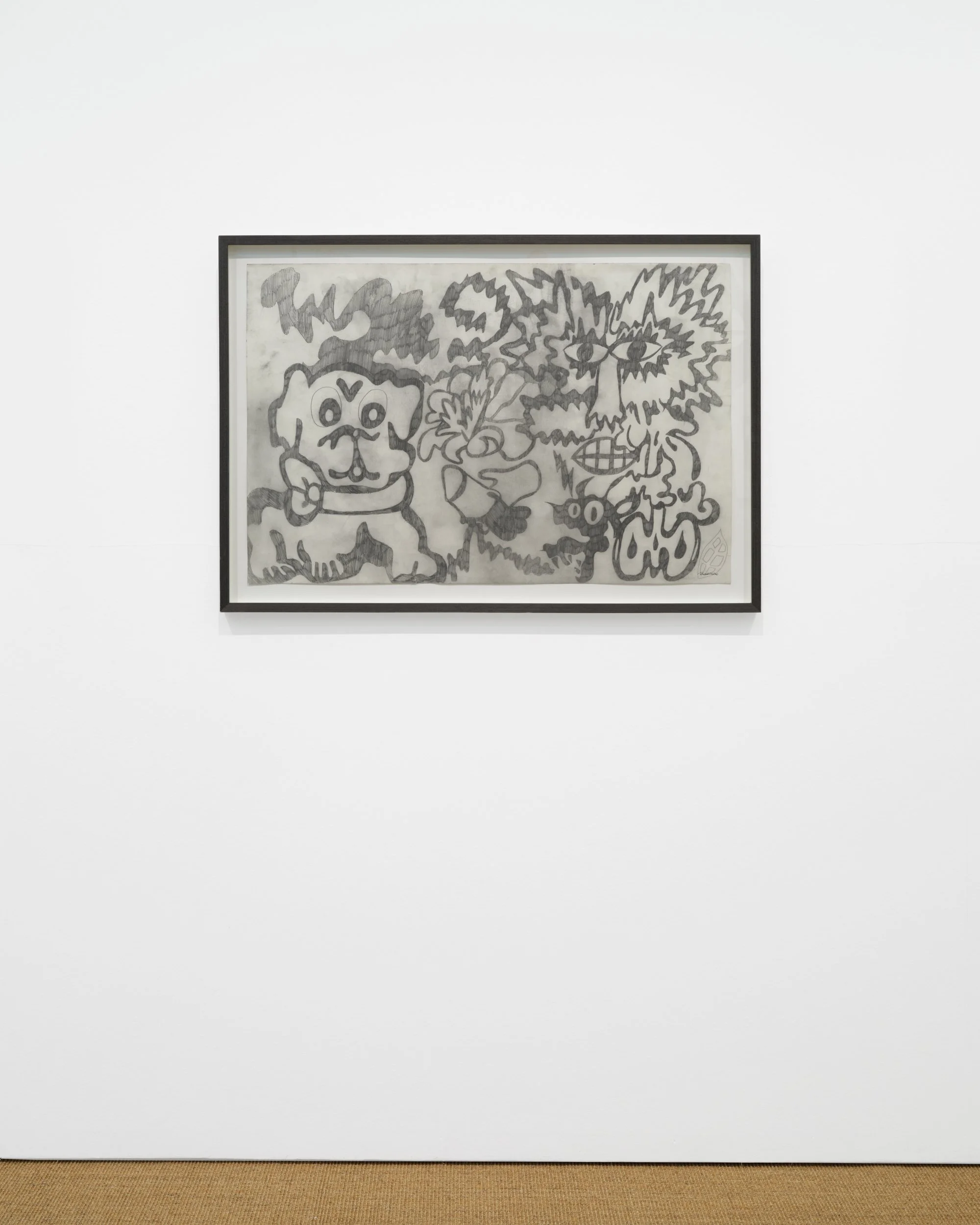
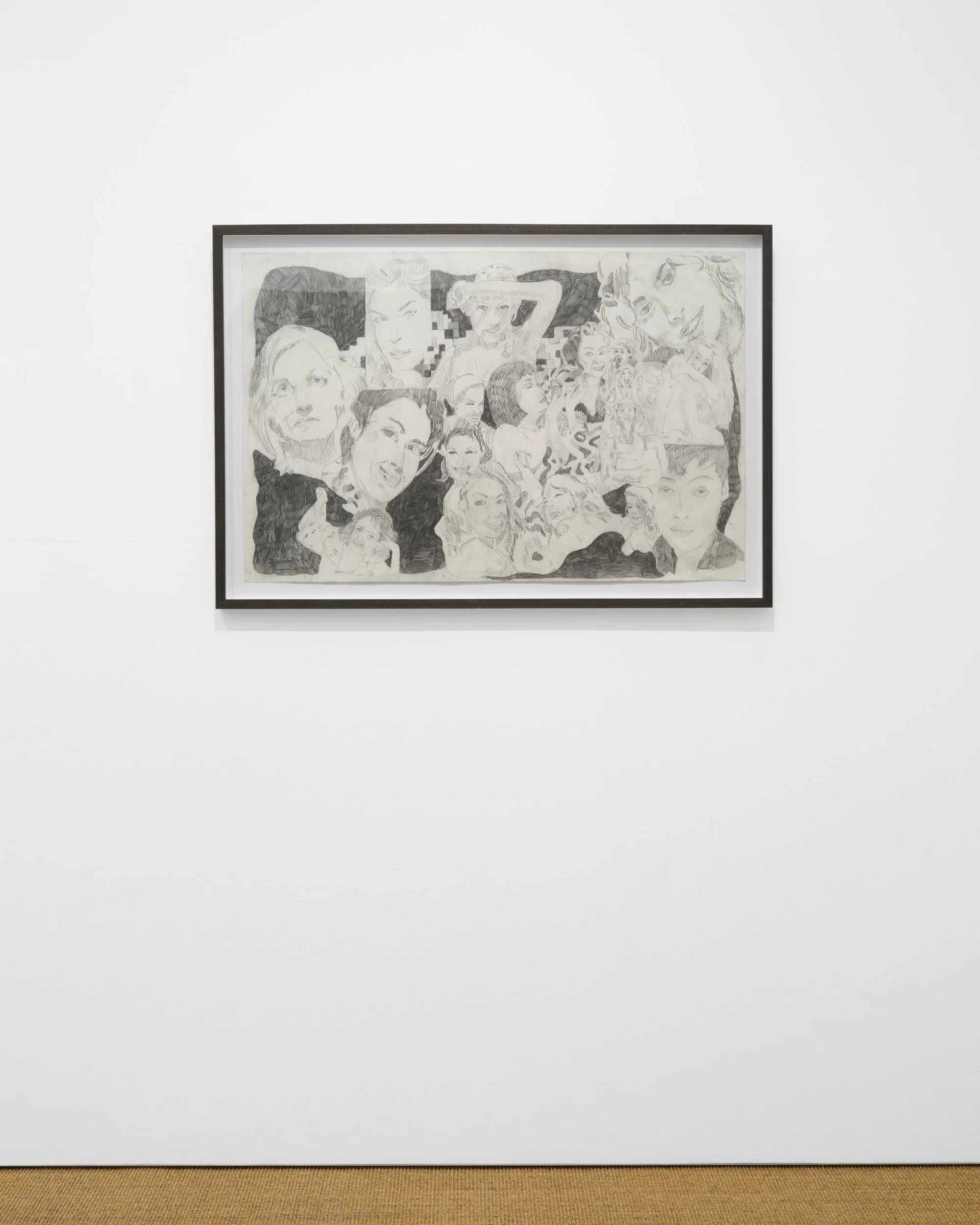
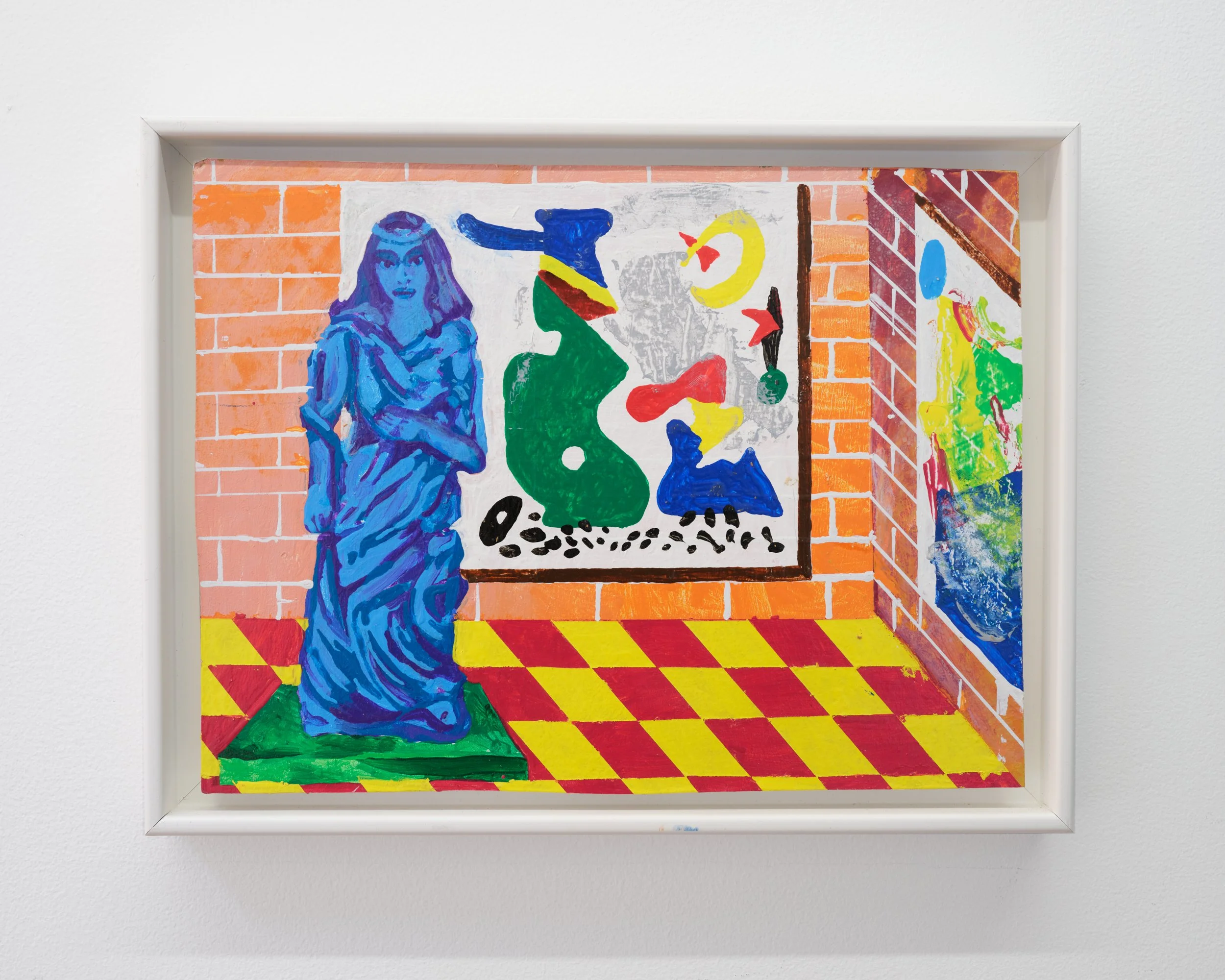
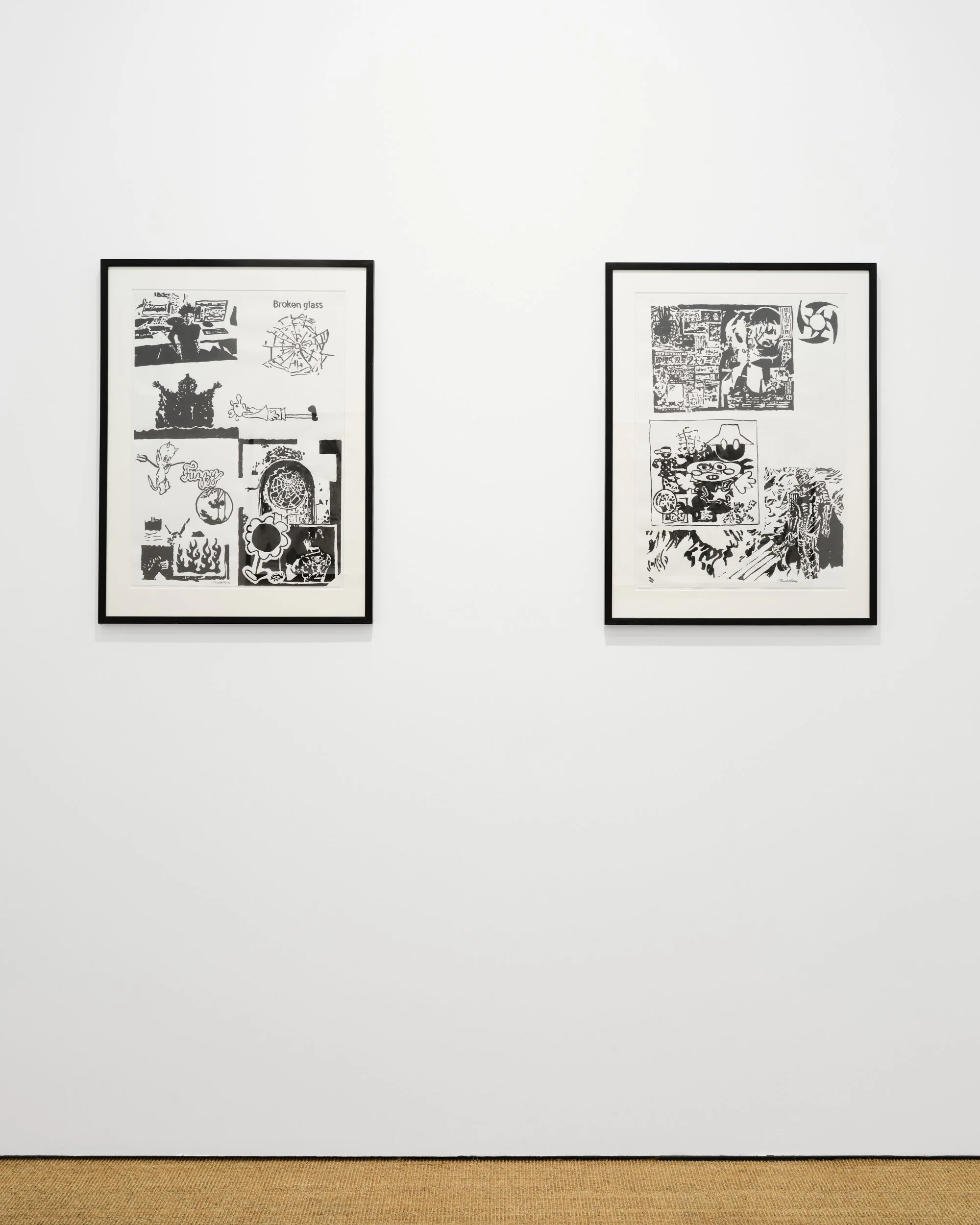
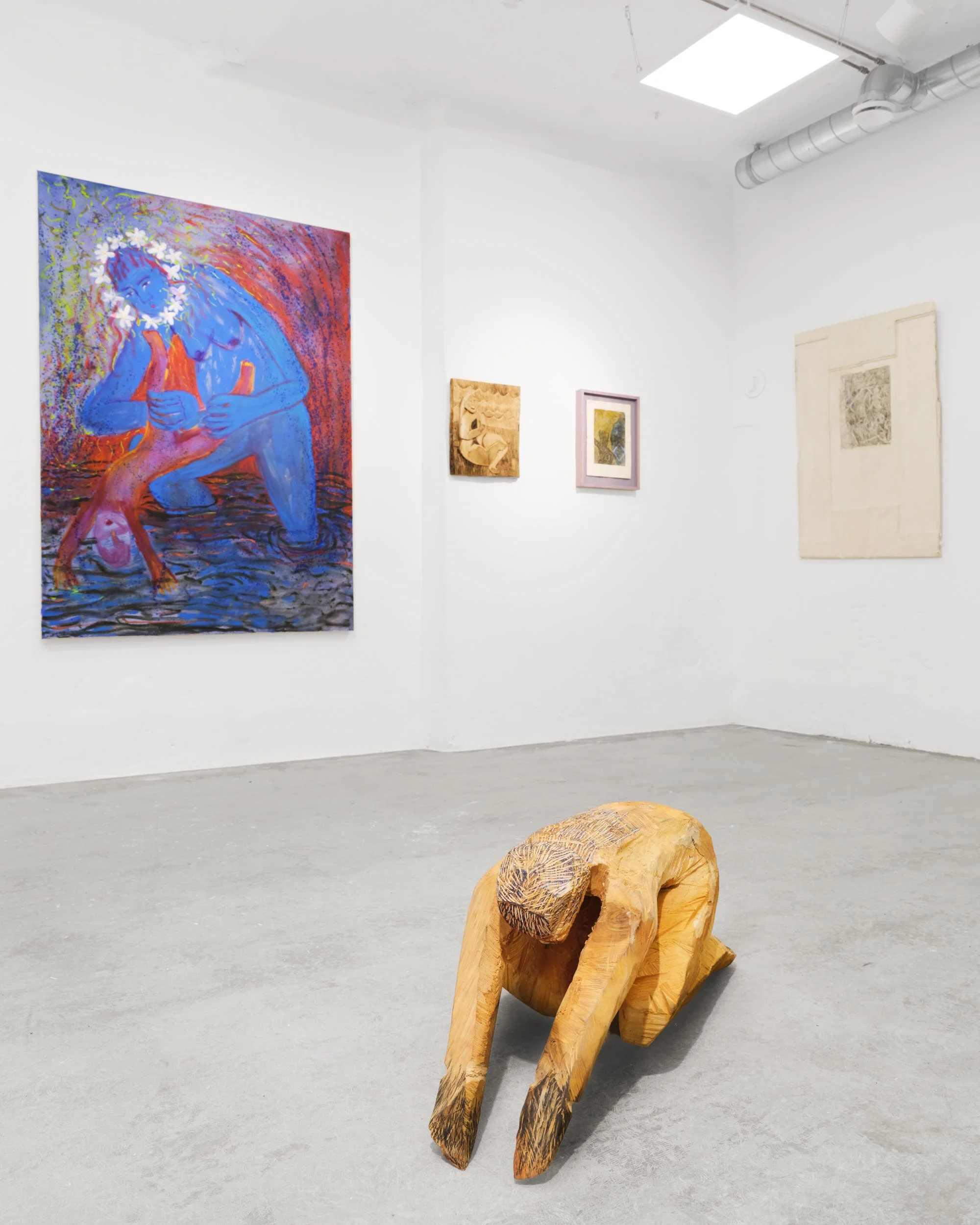
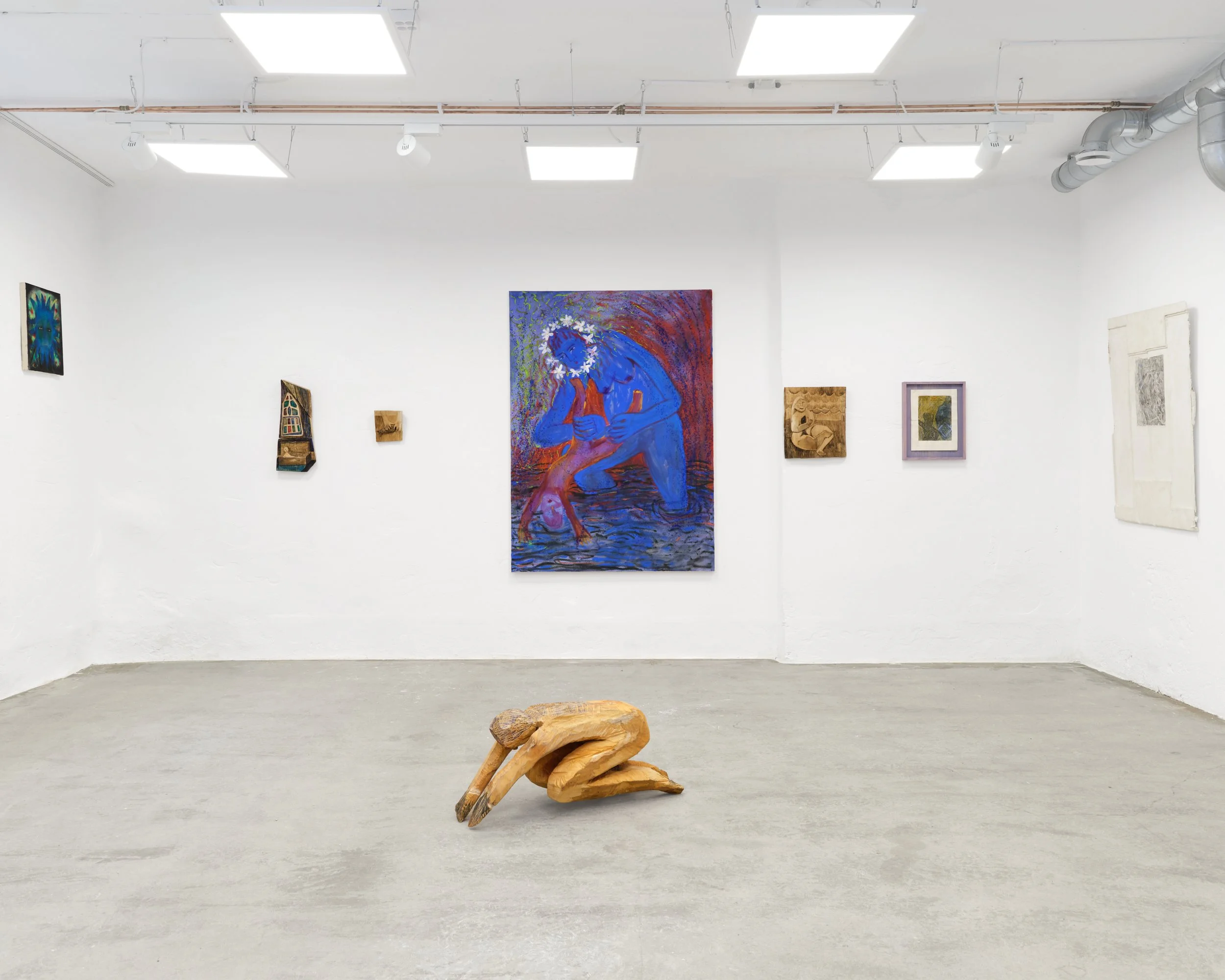
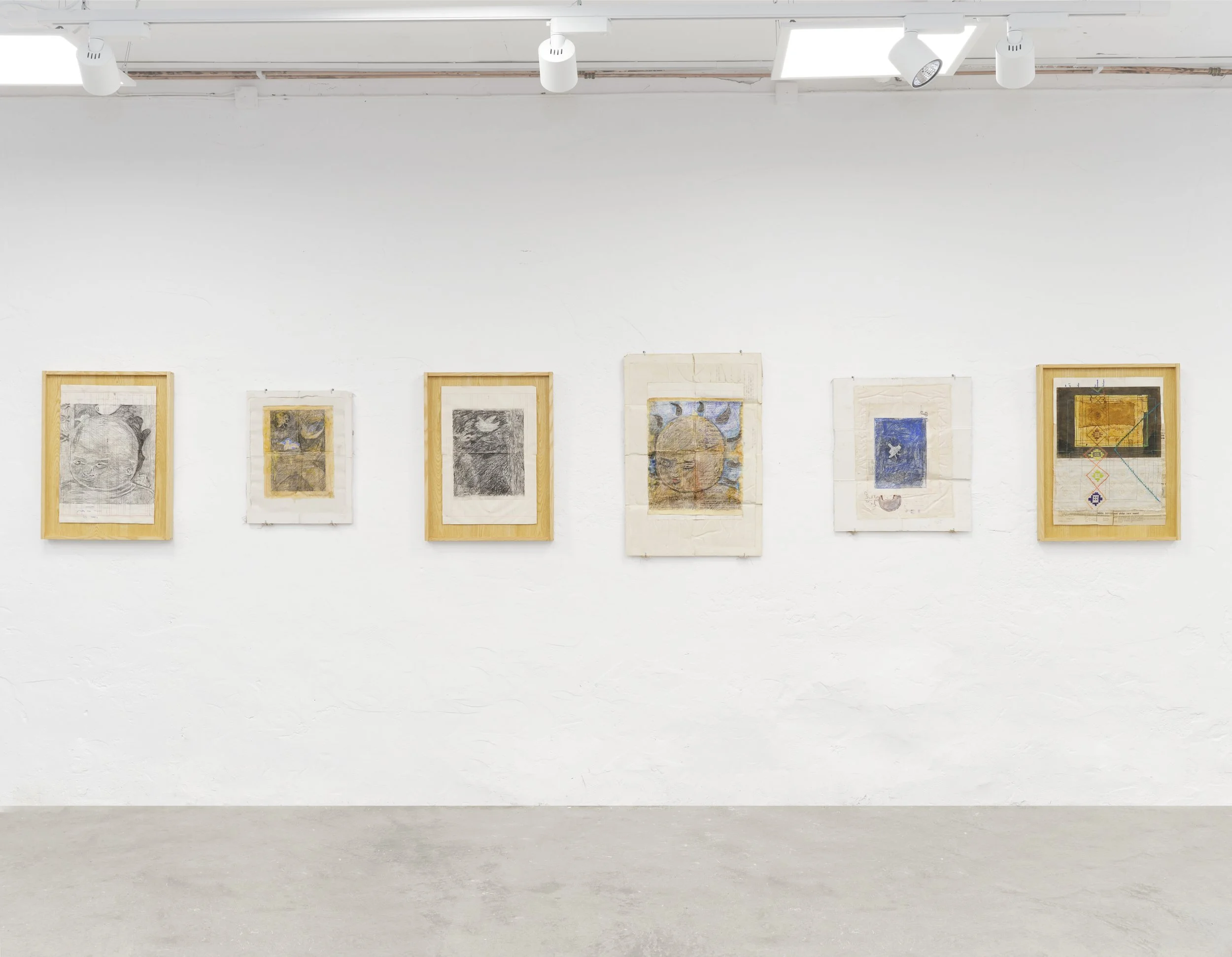
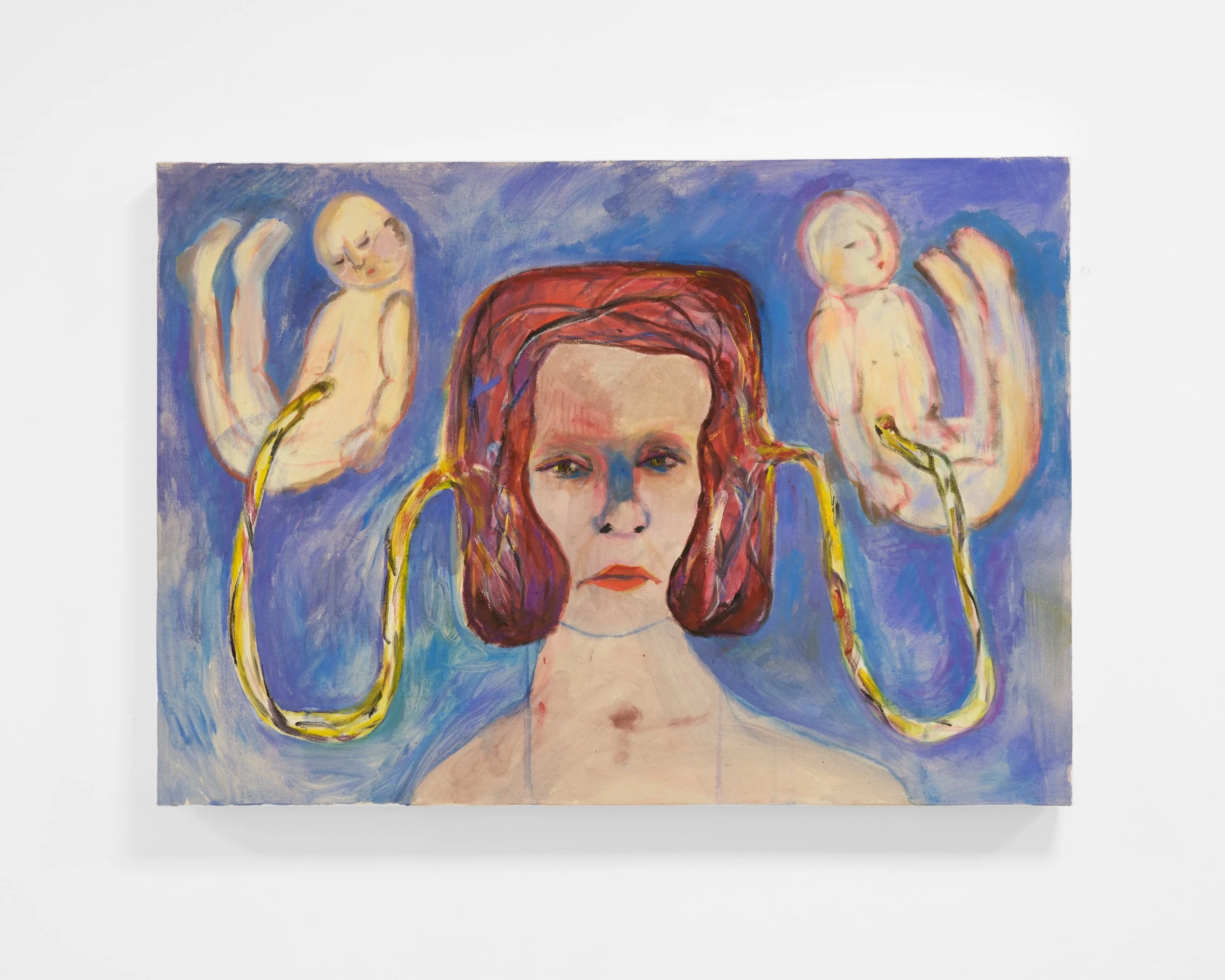
Down in the corner, on the back of a booklet from Theodor Forsbeck dated 2017, stood the words ”All Wrongs Reserved”. The phrasing highlights the defiant humor and the polemic against the established hierarchy that characterized his artistic practice.
Theodor Forsbeck (1987–2018), educated at the Royal Institute of Art in Stockholm (2007–2011), navigated an exciting field between seriousness and playfulness. His imagery consists of a blend of popular culture references, subcultures, and recurring motivic figures. His output bore traces of high productivity.
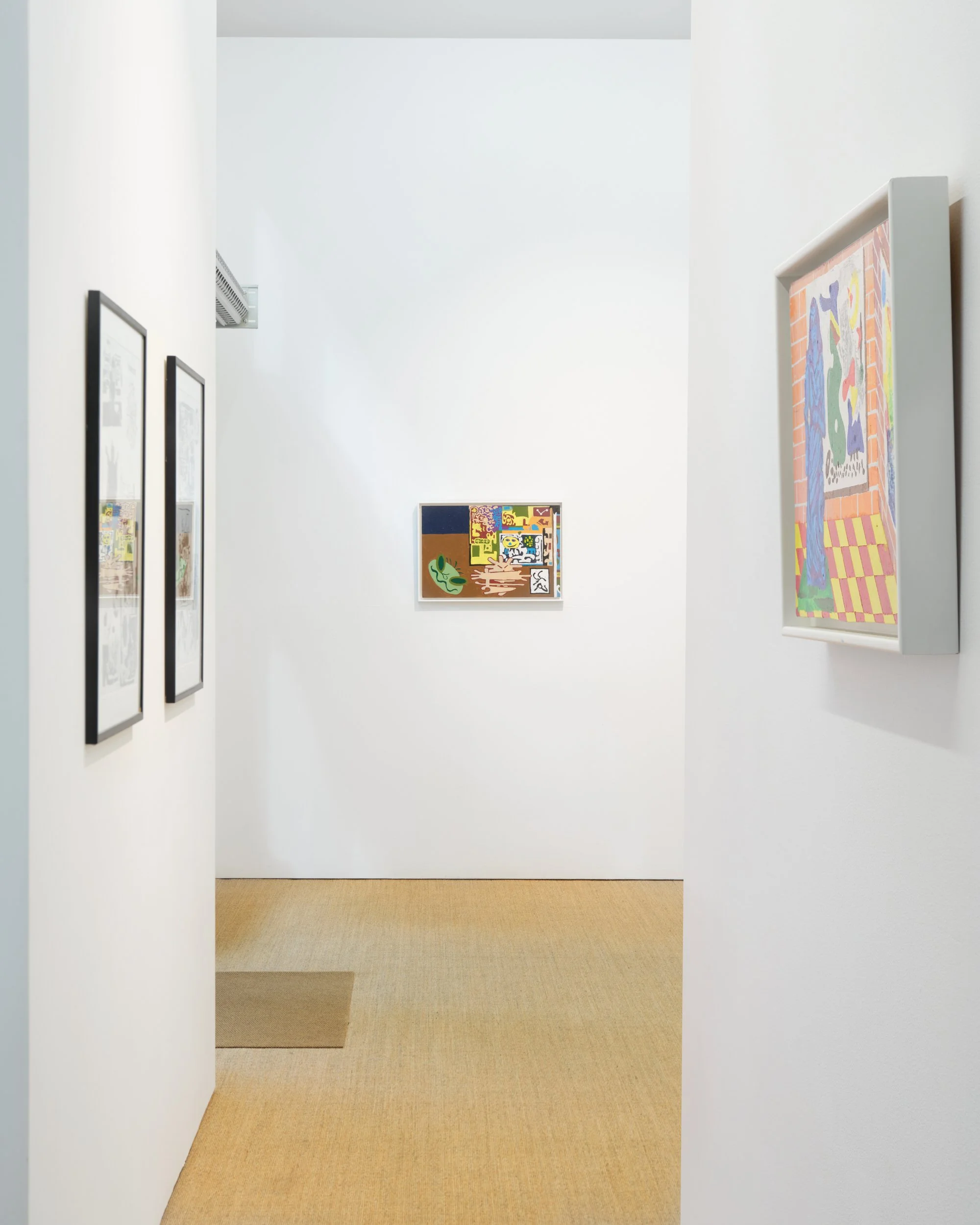
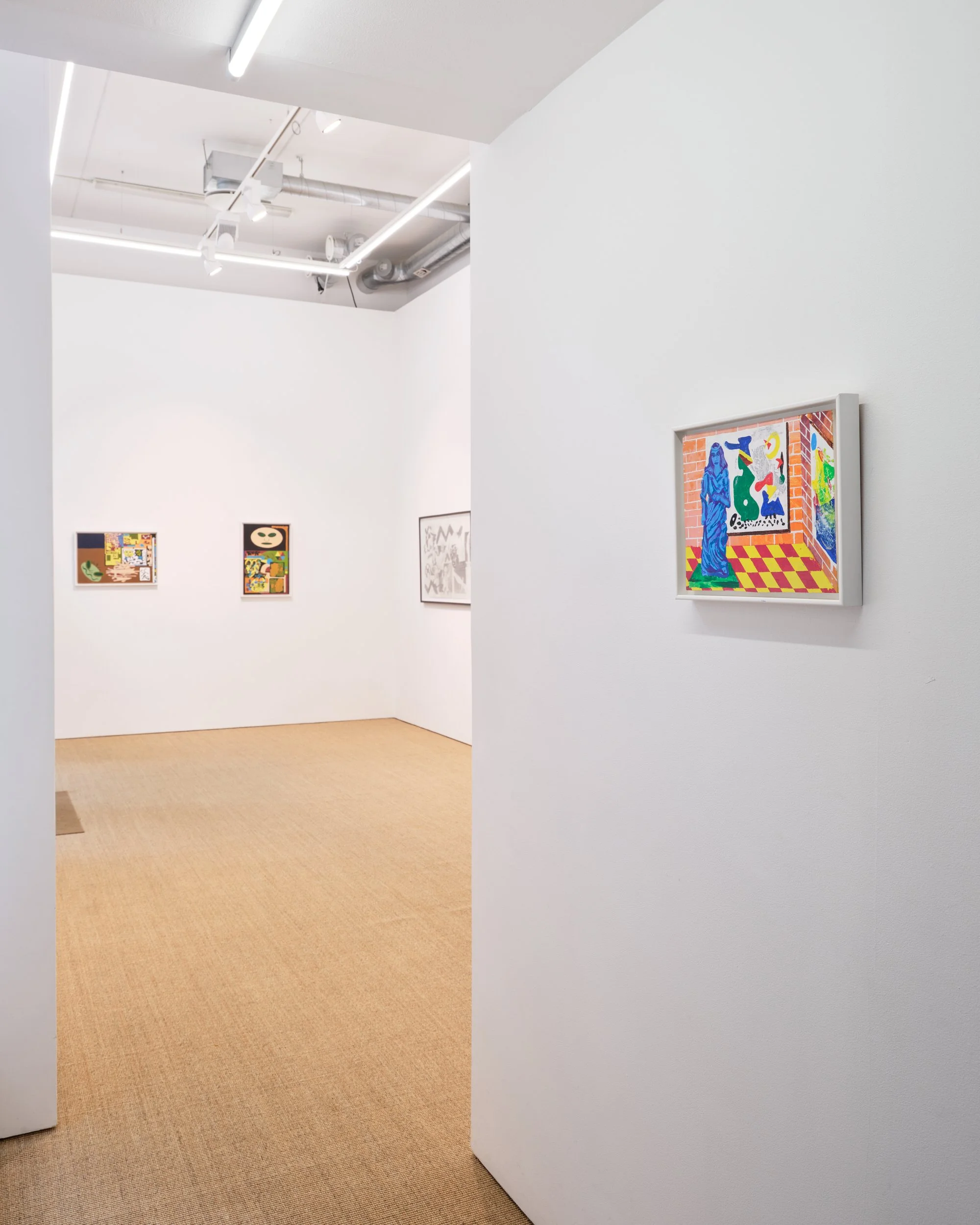
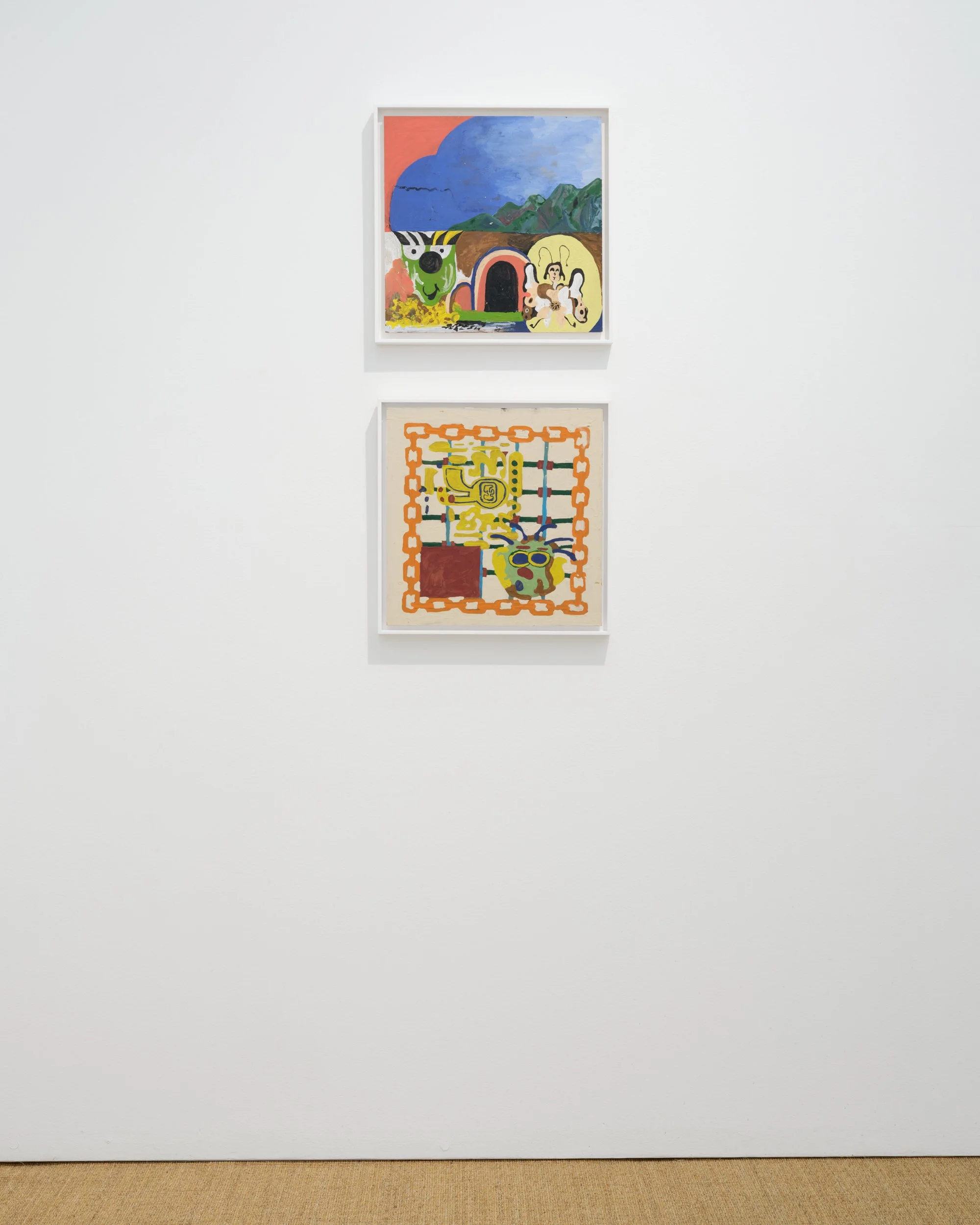
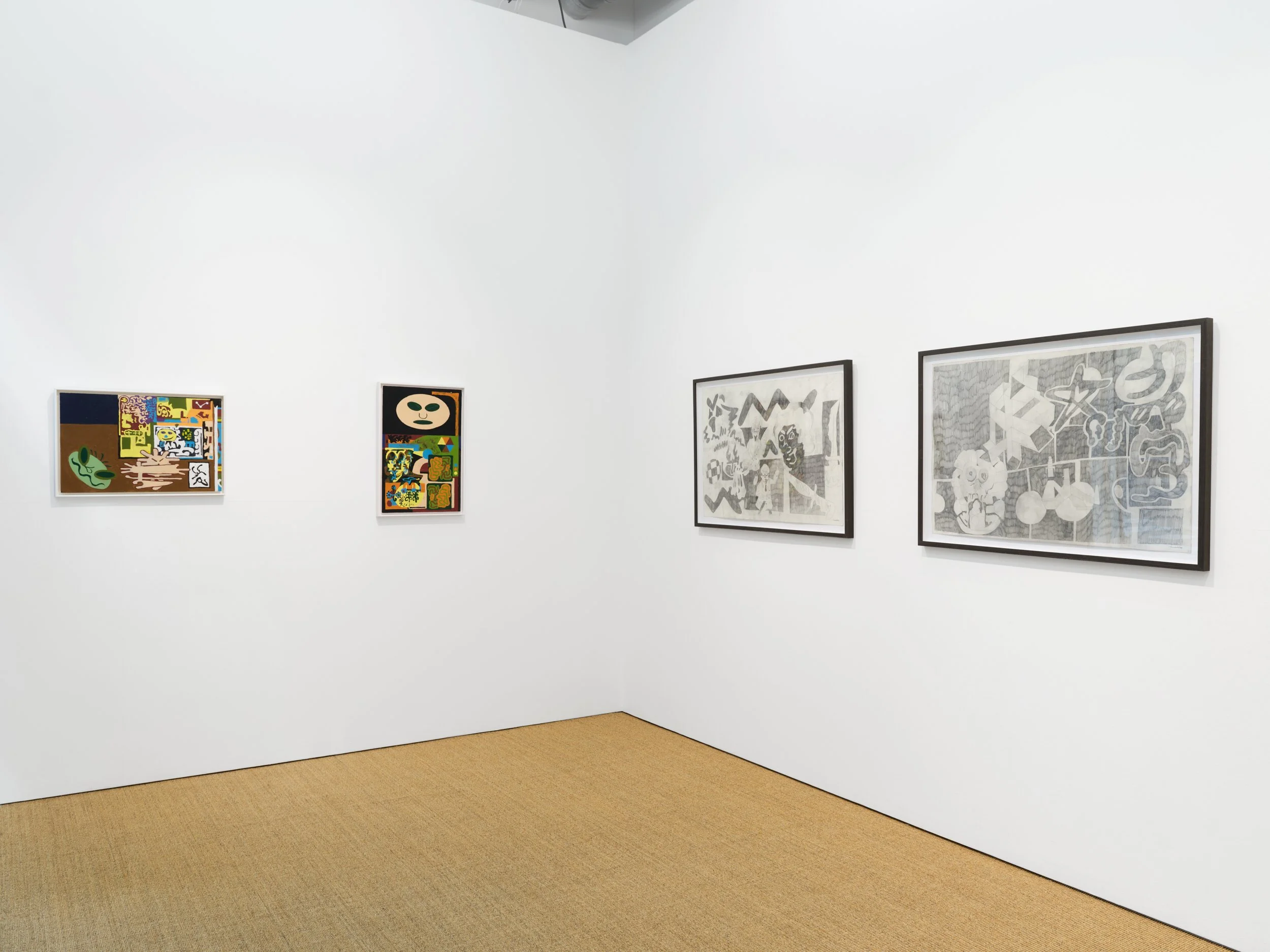
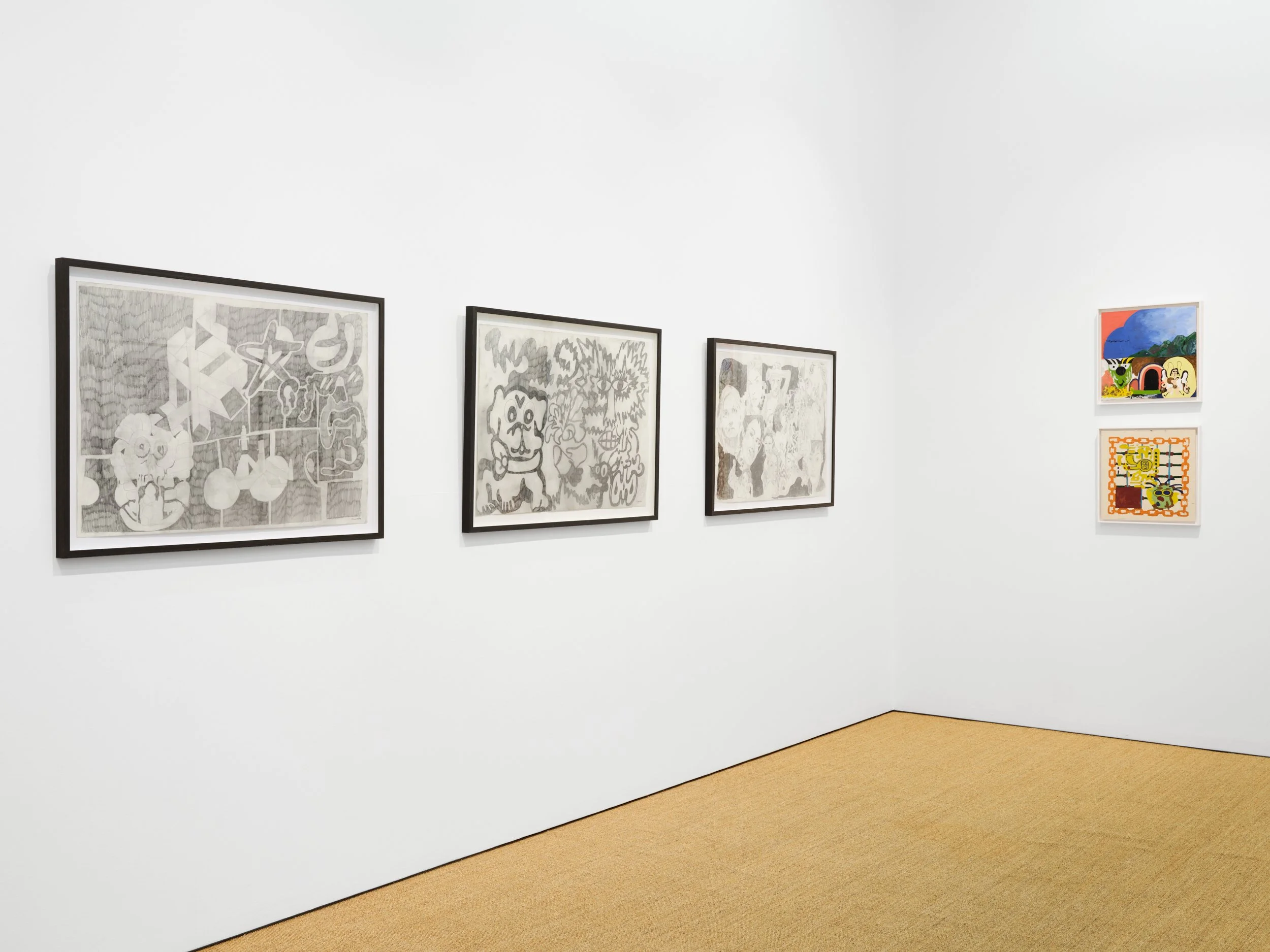
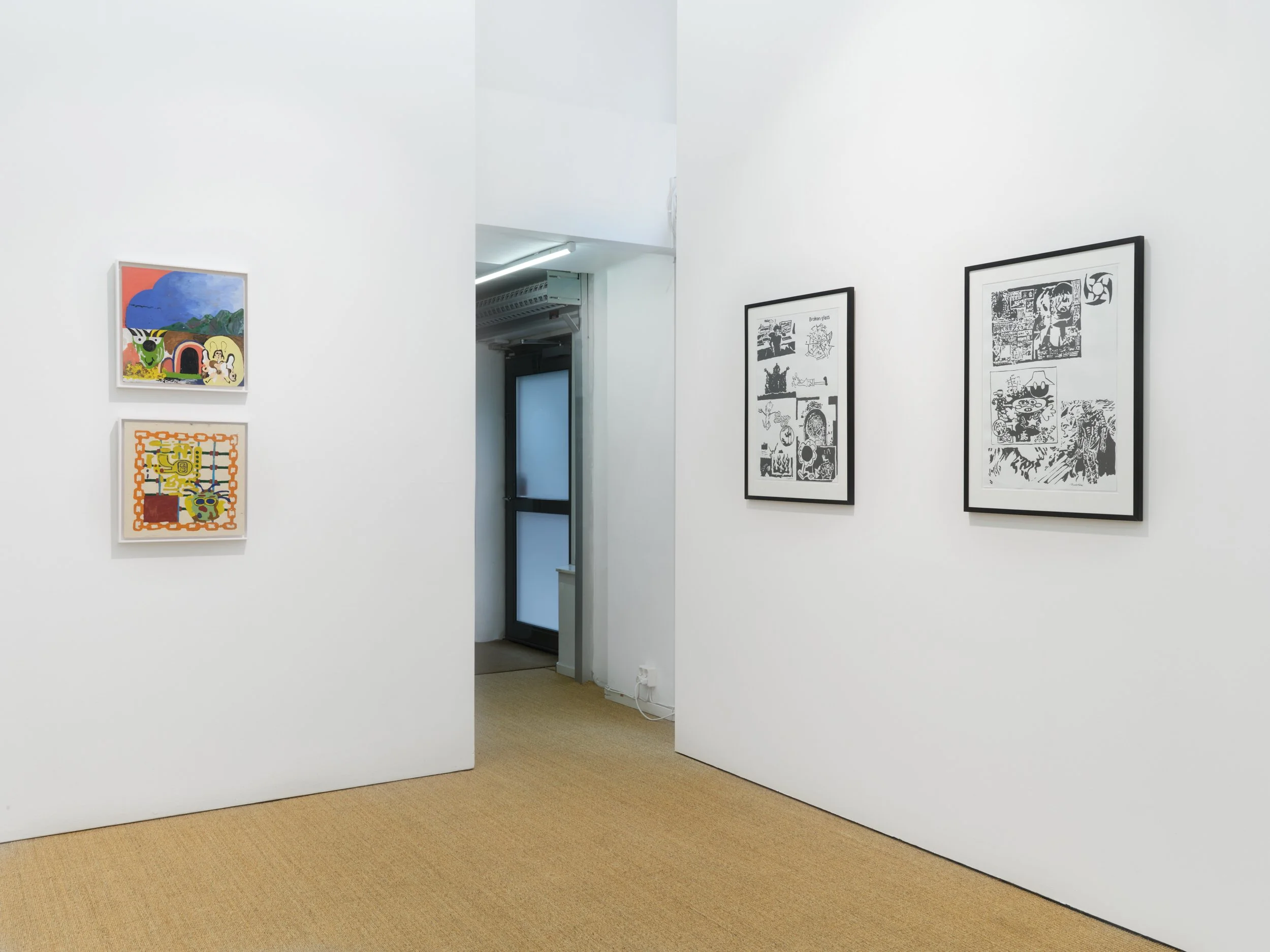
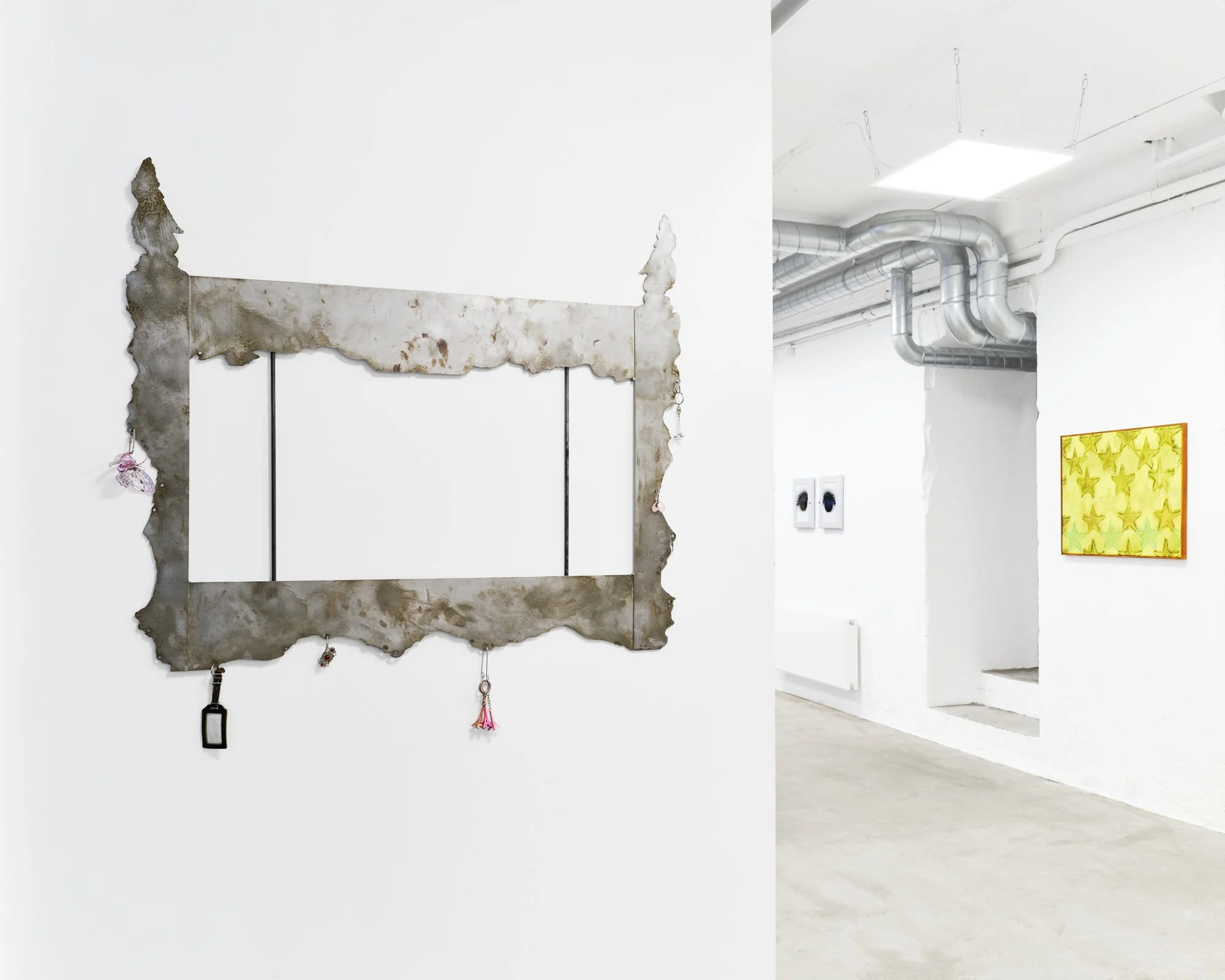
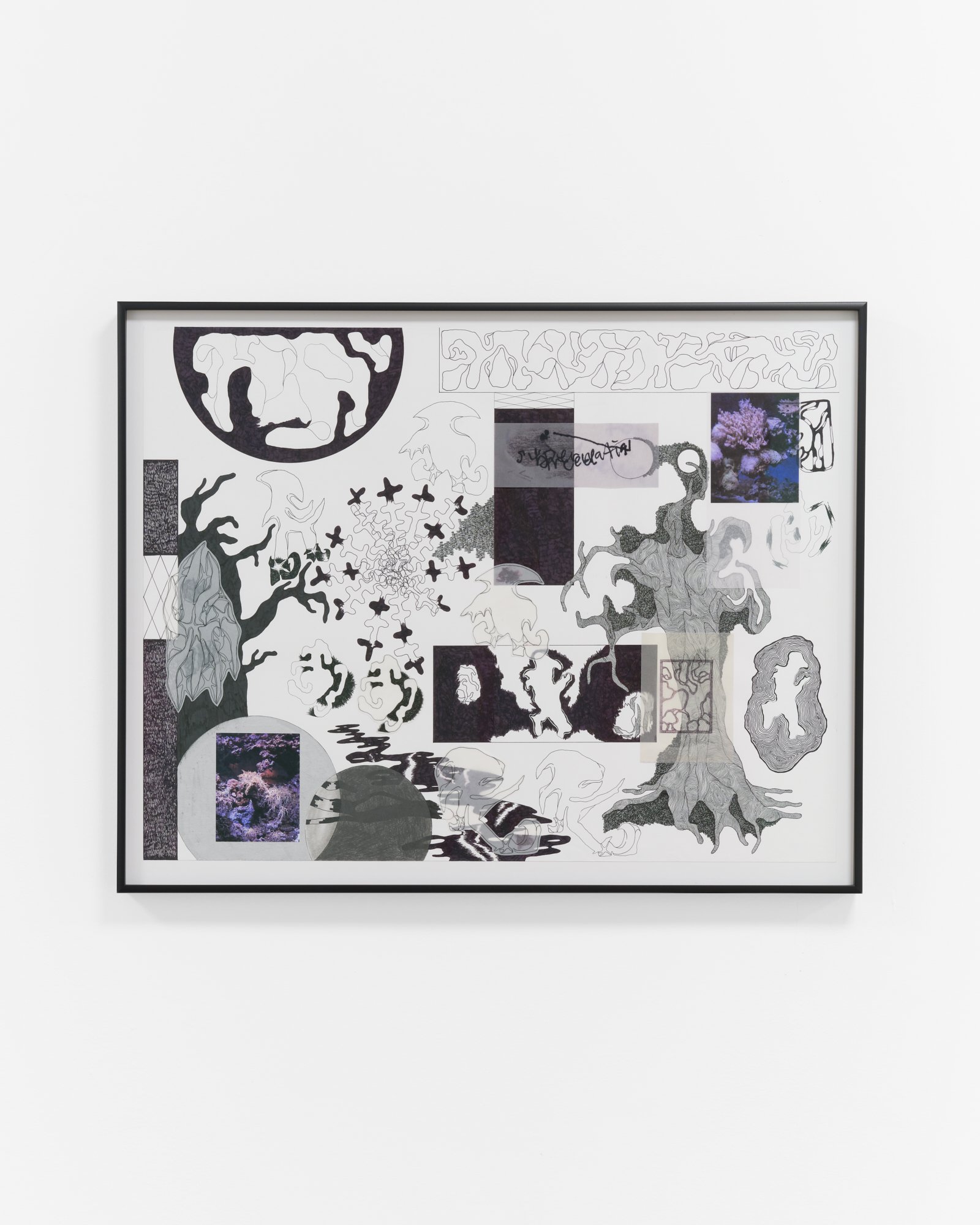
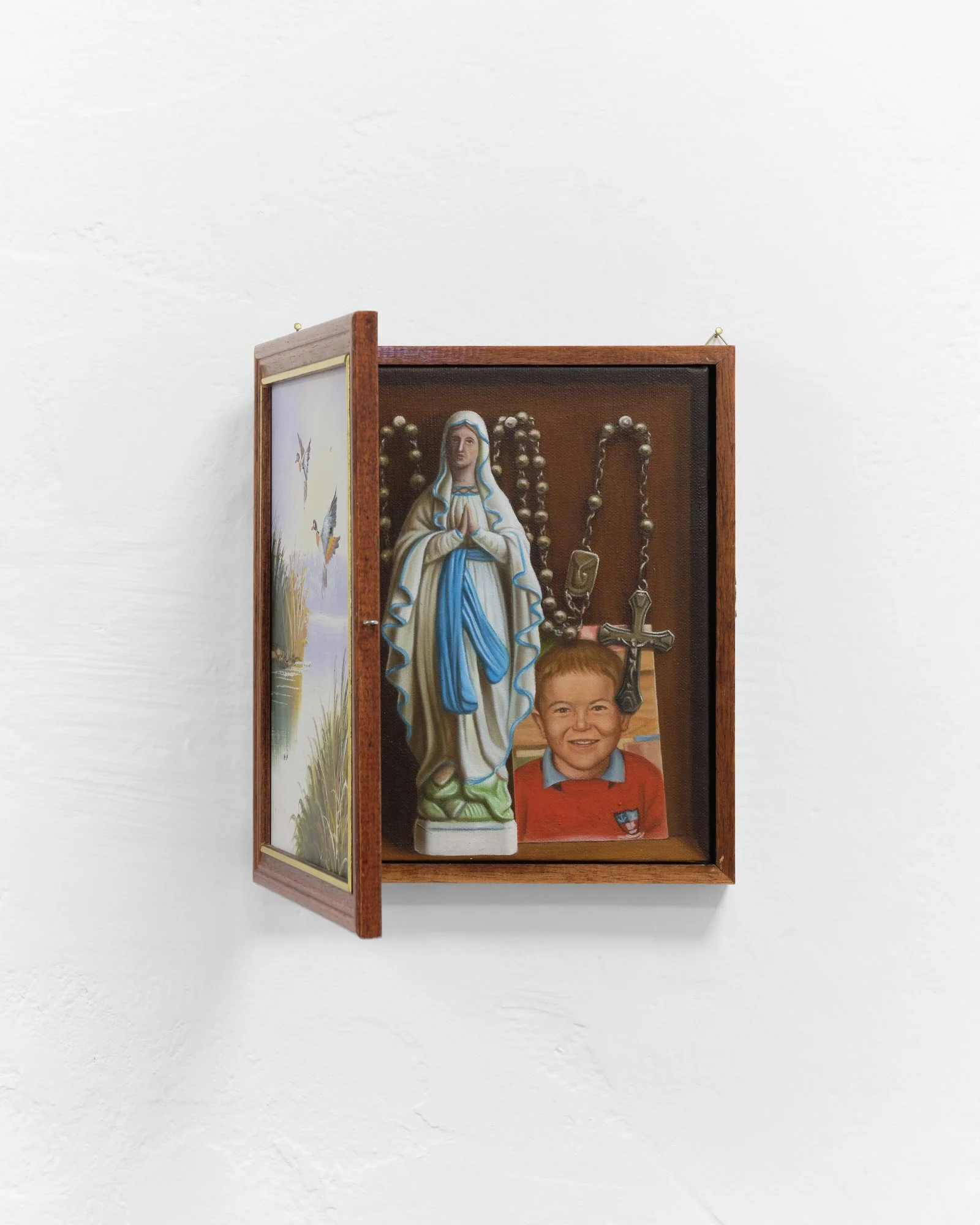
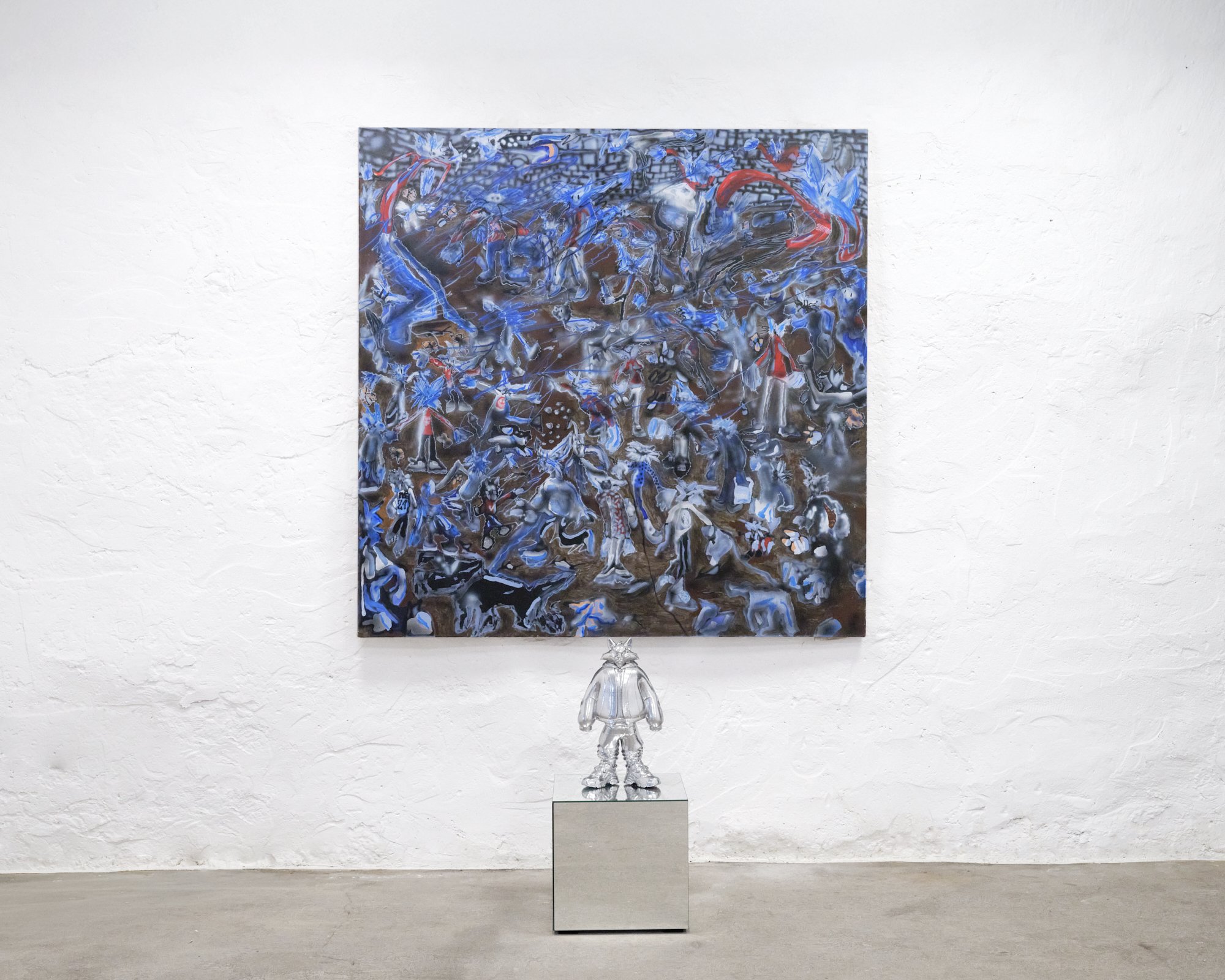
This exhibition brings together four of Forsbeck’s modes of expression, highlighting the breadth of his process. At the center is a series of larger pencil drawings that have not previously been shown to the public. The works stand out as monumental, teeming compositions where portraits, patterns, and figurative fragments cover the surface in an almost collage-like flow. These are contrasted with acrylic paintings on panel, whose austere and at times scenographic gameboard architecture balances the unpretentious with a seriousness, as well as two ink works featuring graphically condensed sequences and pop-cultural frames of reference. The exhibition also features a digital video work by Theodor which, given the rapid technological advancement, has already acquired a neo-vintage feel.
ZOI JOHANSSON - MELANCHOLY
(21 August - 12 September 2026)
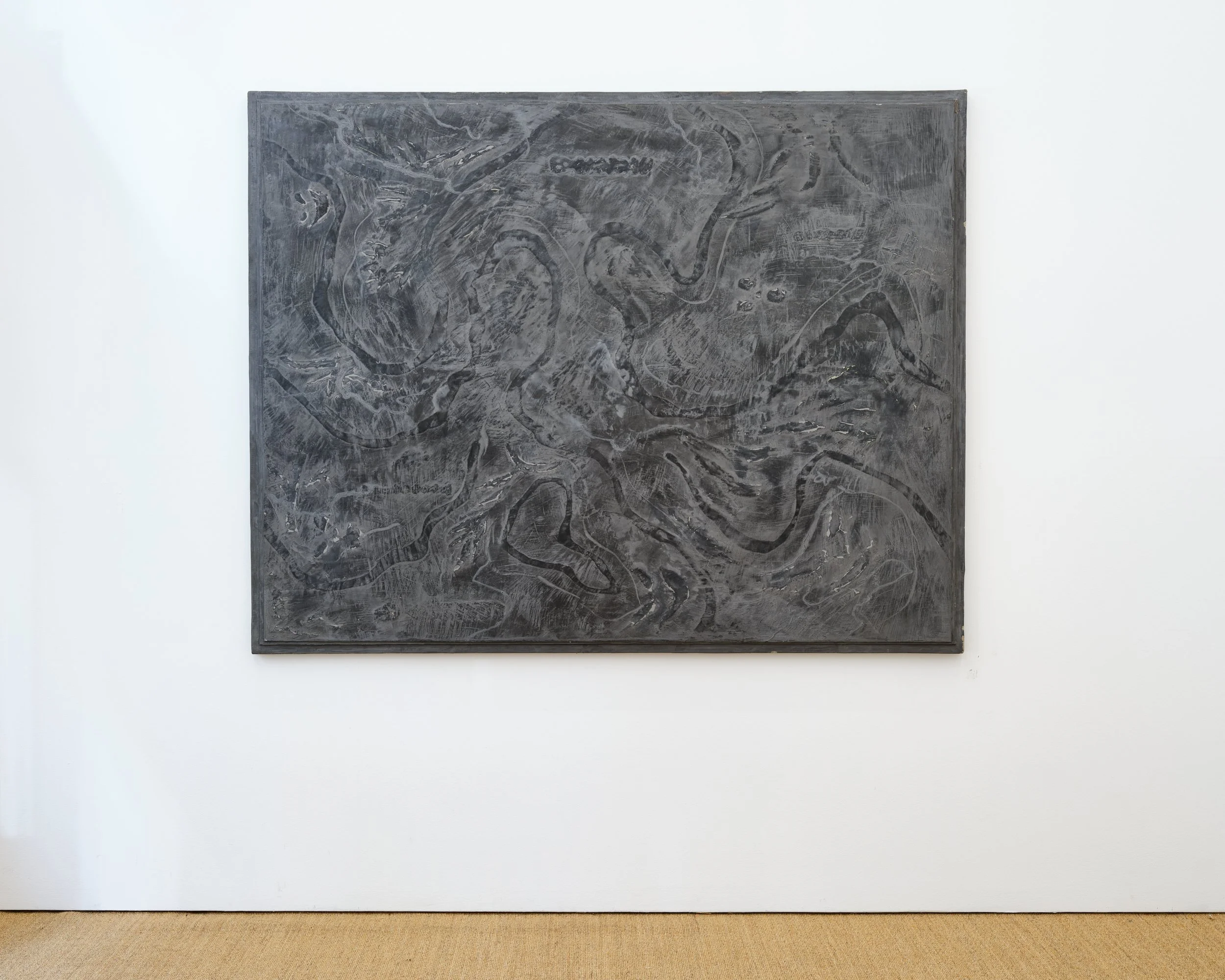
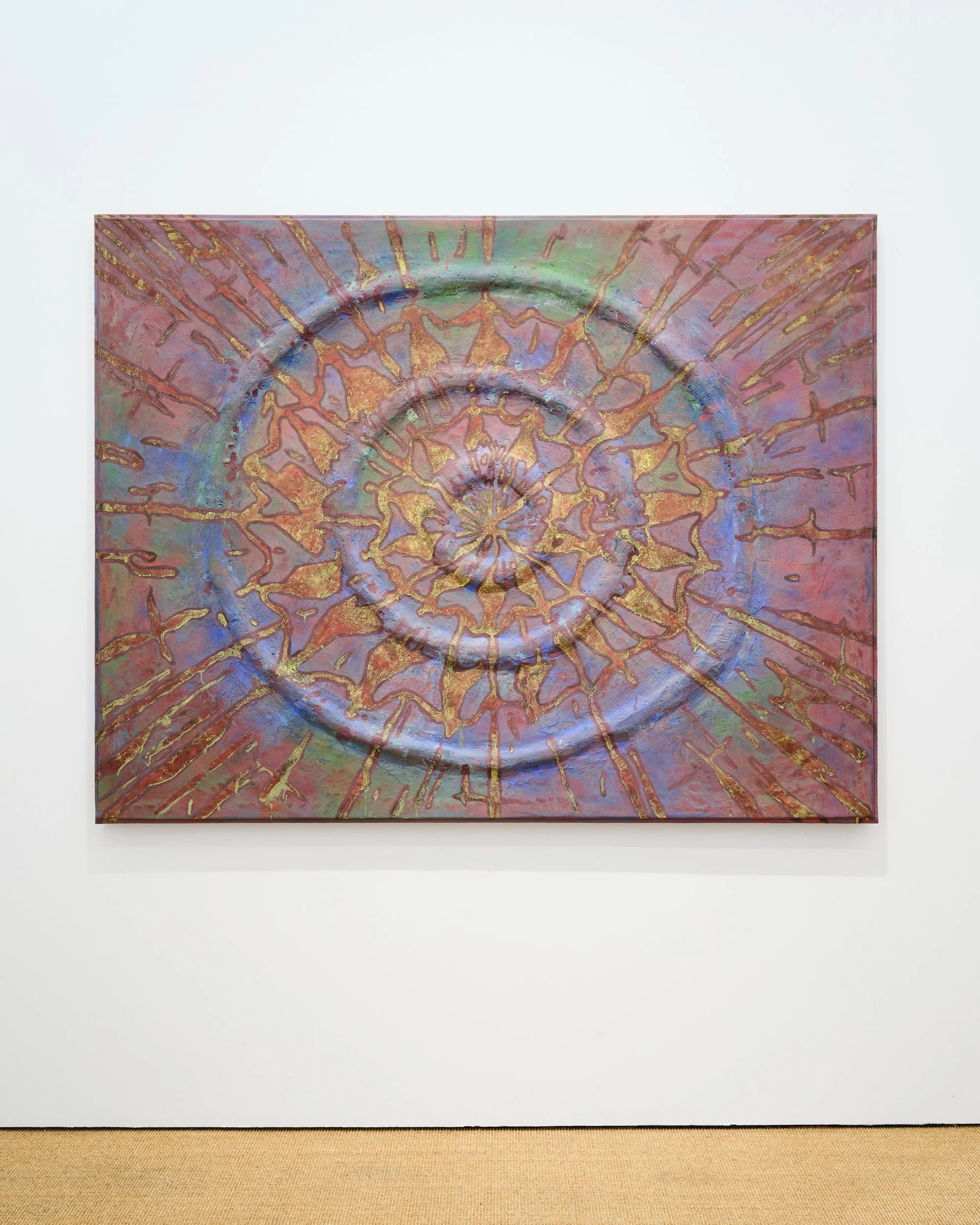
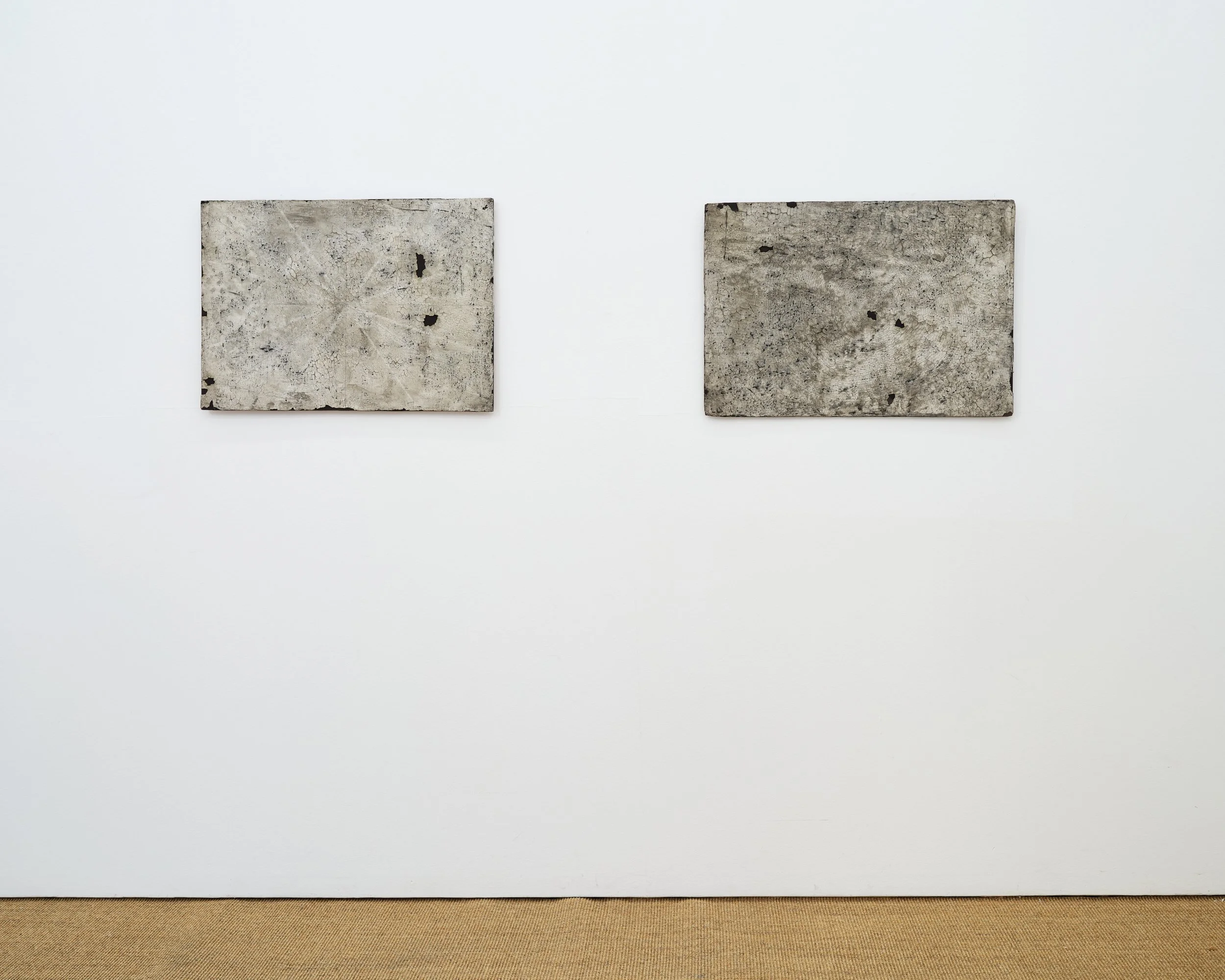
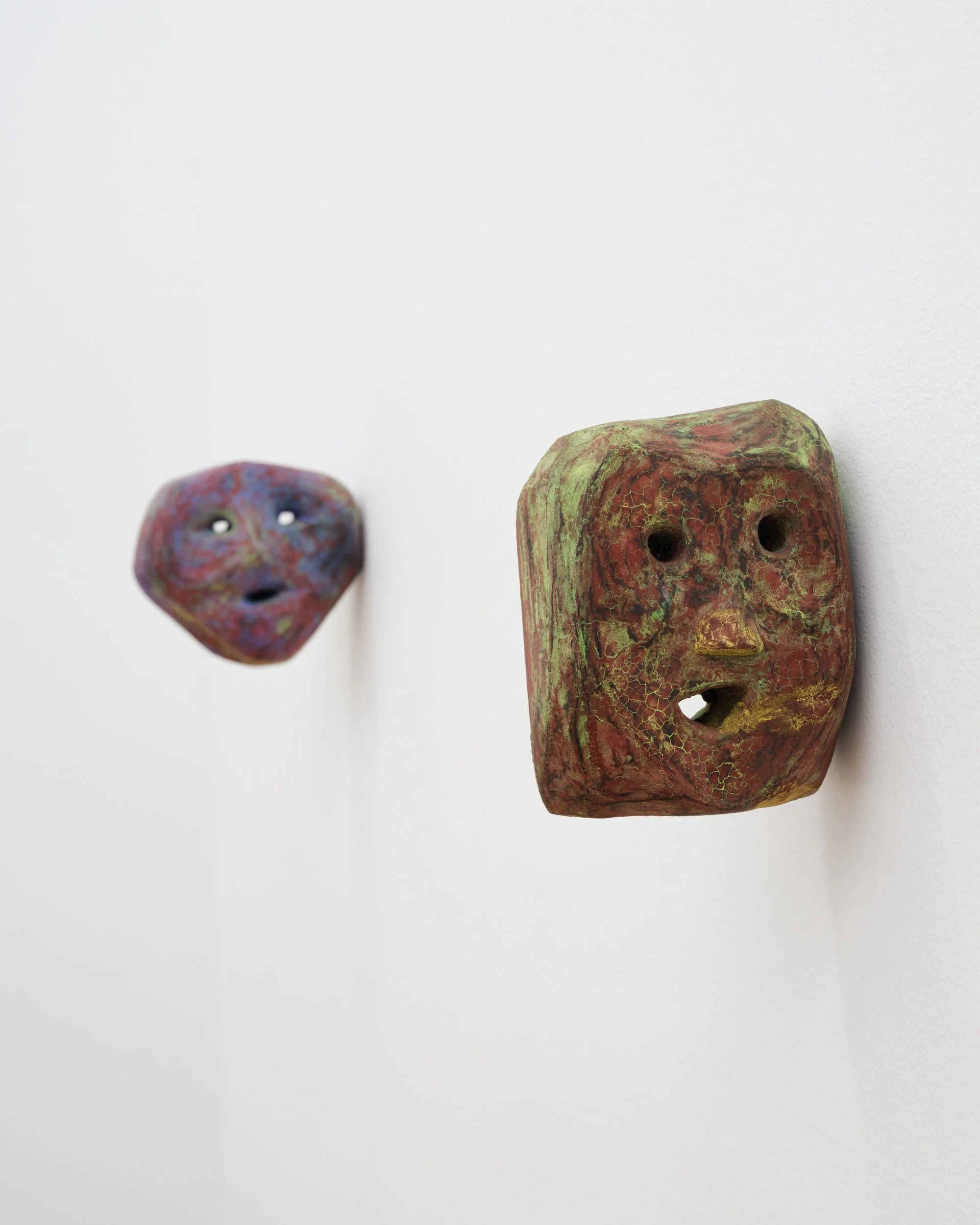
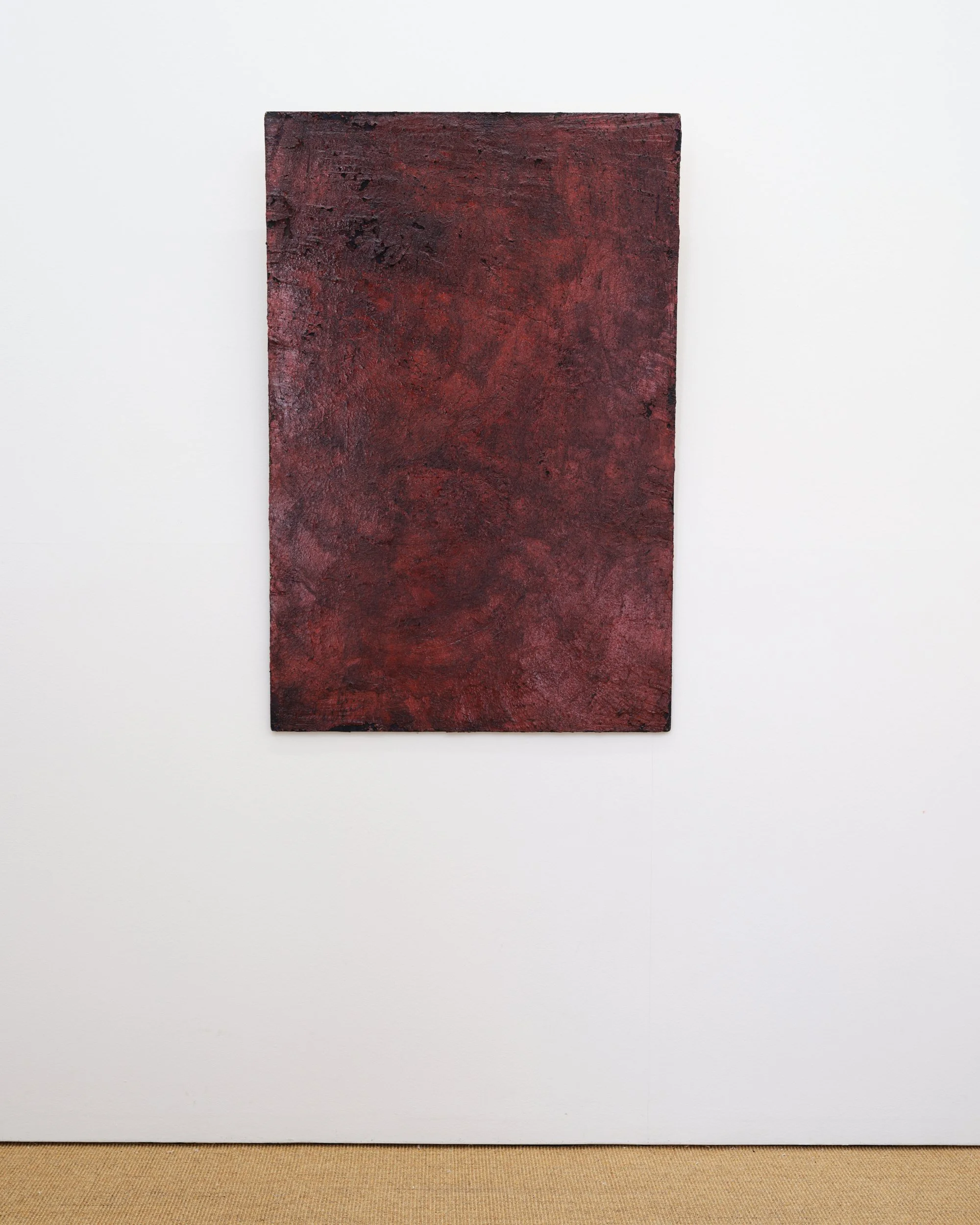
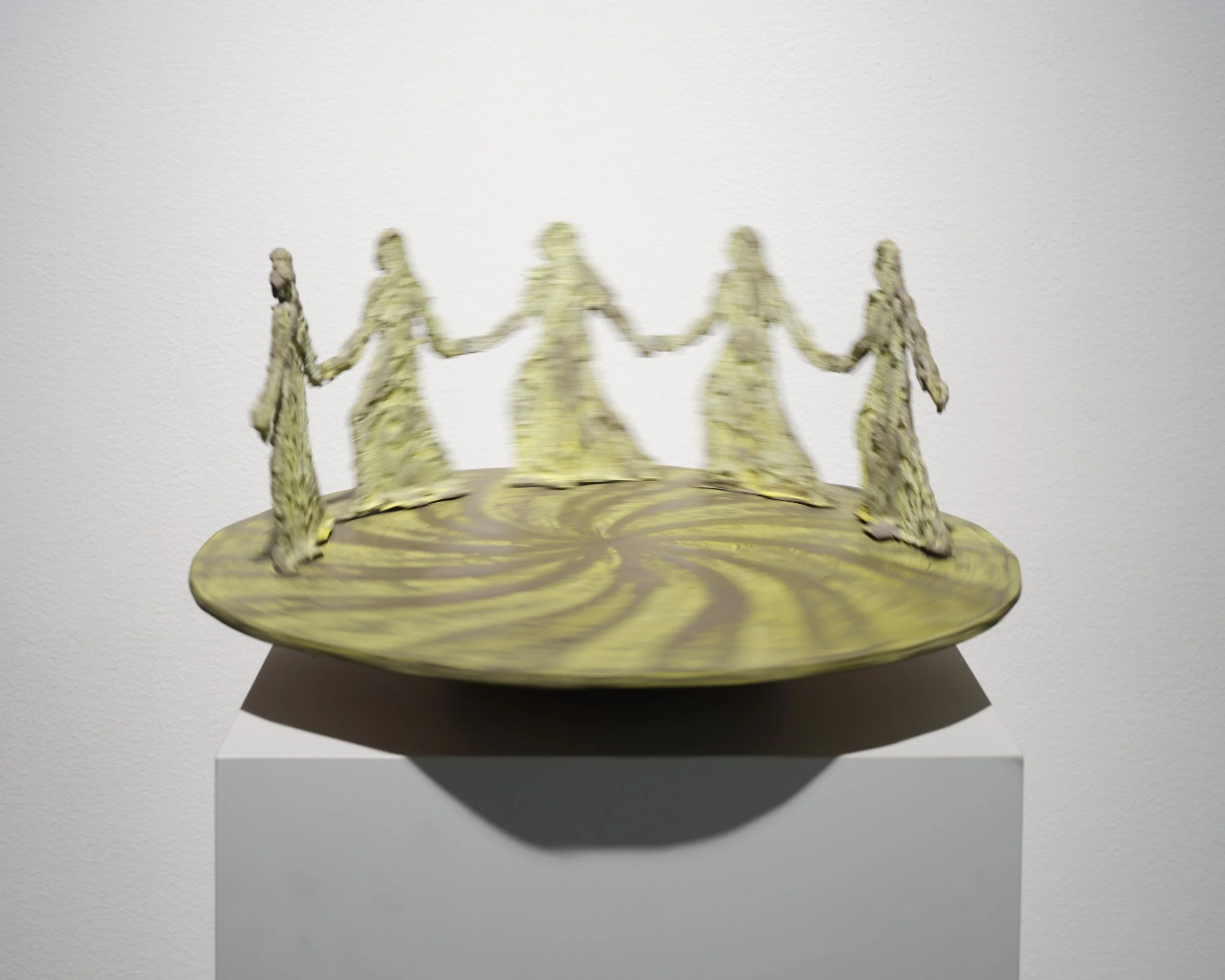
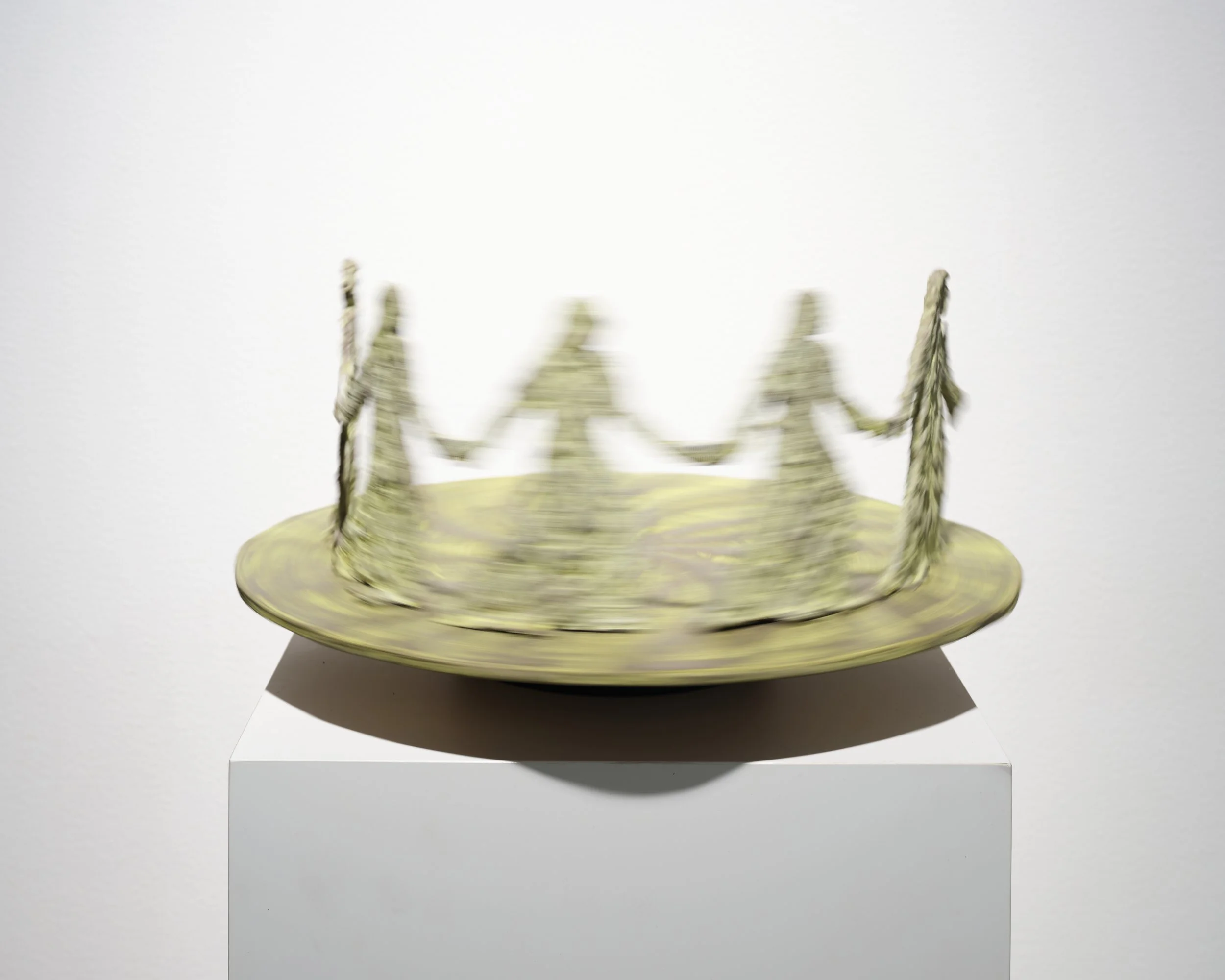
In the exhibition Melancholy, artist Zoi Johansson invites us into a borderland between time and matter, where transformation, decay, and renewal become intertwined. With an artistic background from the Oslo National Academy of the Arts and Konstfack in Stockholm, Johansson combines a sensitivity towards material and form with a practice deeply rooted in craftsmanship.
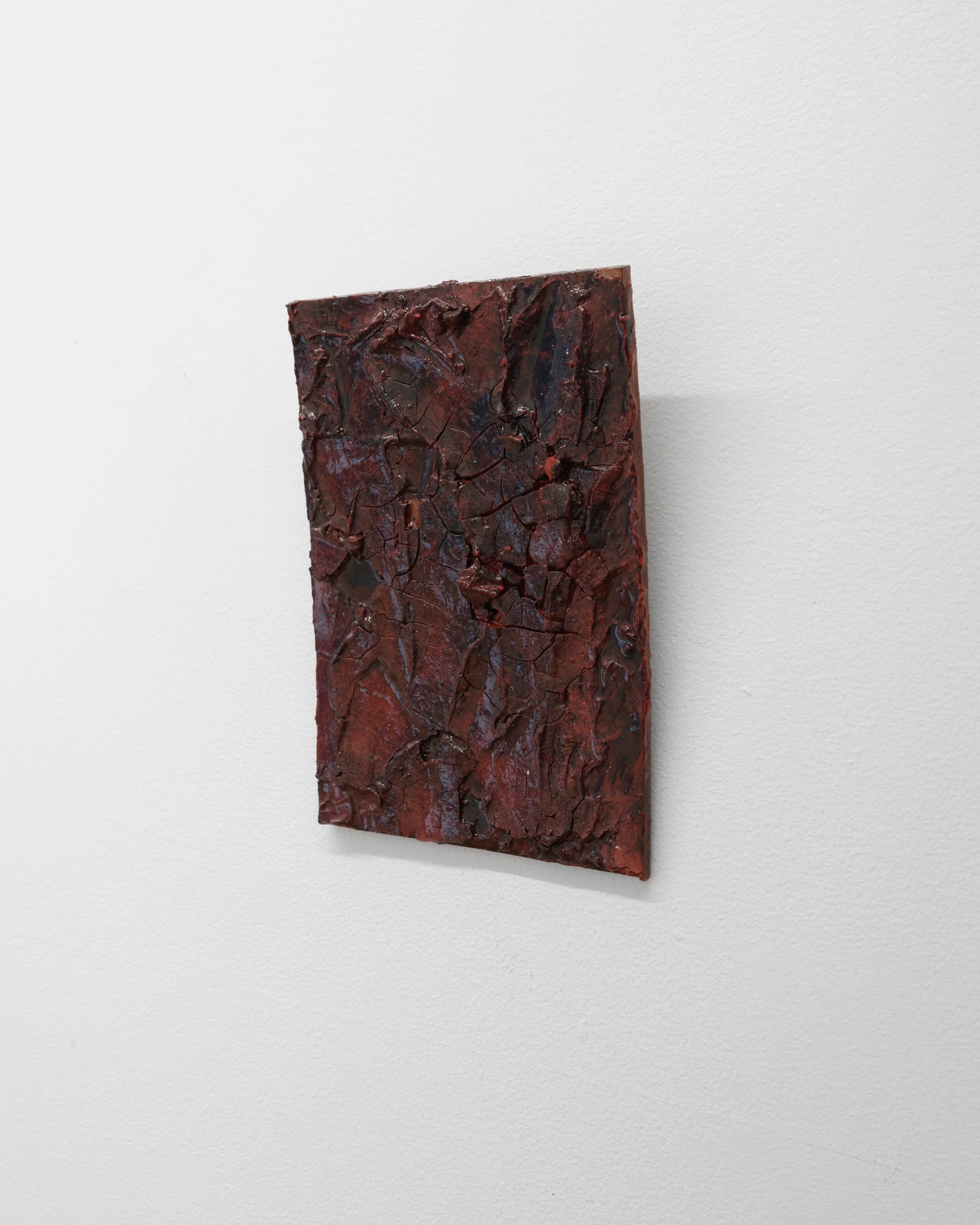
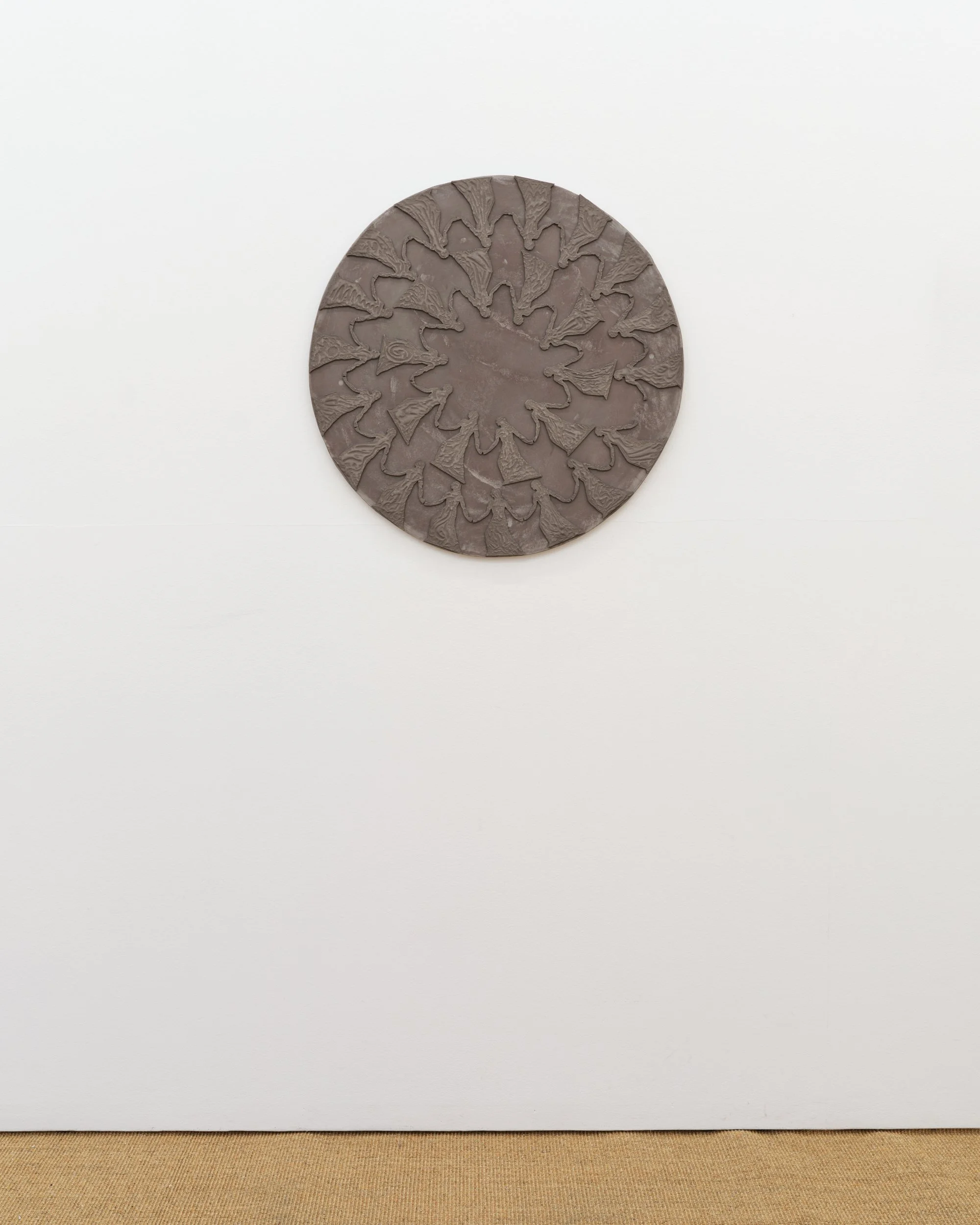
At the centre of the exhibition is an ancient lime plastering technique. Layers of mineral material are applied, shaped, and worked by hand, giving the works a raw and tactile presence. Their surfaces bear traces of the hand and seem newly formed and strangely ancient, as though excavated from another time.
This tension between permanence and change runs throughout Melancholy. Time is approached not as a straight line, but as something circular. Things emerge, disappear, decompose, and return in altered forms. Like a ring dance, there is no absolute beginning or definitive end.
This idea finds an echo in Bugonia, the ancient myth of new life emerging from decay. The story describes bees being born from the carcass of a dead animal, transforming death into the beginning of something new. Here, Bugonia becomes a way of thinking about existence as a continuous cycle of transformation.
Melancholy, in this sense, is not simply a state of sadness or longing, but an awareness of time of what has disappeared, what remains and what might return in another form.
STOCKHOLM ART WEEK - DELI
(22 april – 25 april 2026)
Participating Artists:
BIGERT & BERGSTRÖM, GEORG NORDMARK, JAANA-KRISTINA ALAKOSKI, JOHAN LUNDBORG, KONRAD LIDÉN, MAX RONNERSJÖ, MIO NIELSEN, NIKLAS BREIMERT, OTIS HUSS, SOFIA VIOL, TOVA MOZARD, VERA LJUNGGREN, XERXES OAKMAN, ZOI JOHANSSON, GÖKENS LIVS VICTOR LIZANA FT. VIDA LAVÈN.
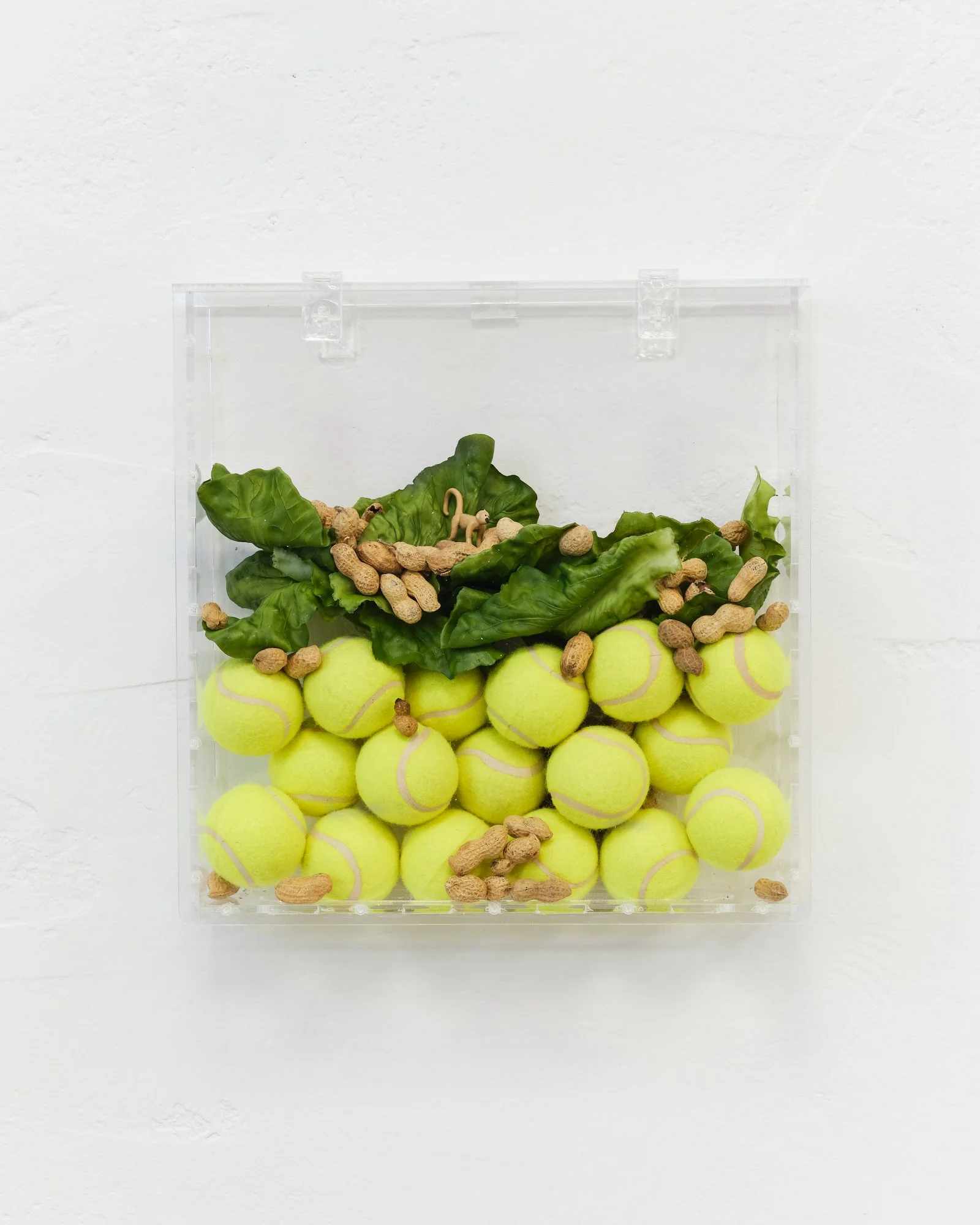
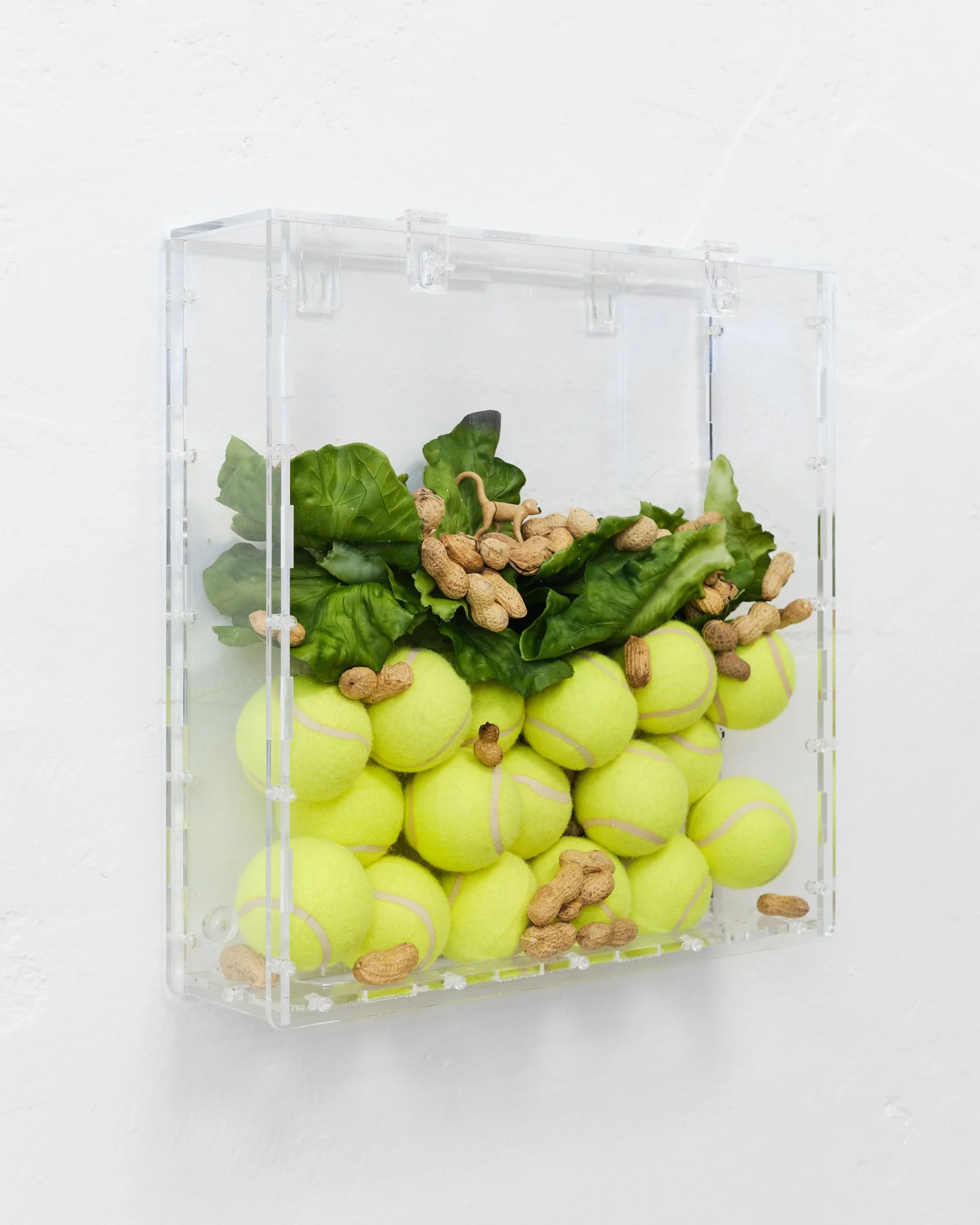
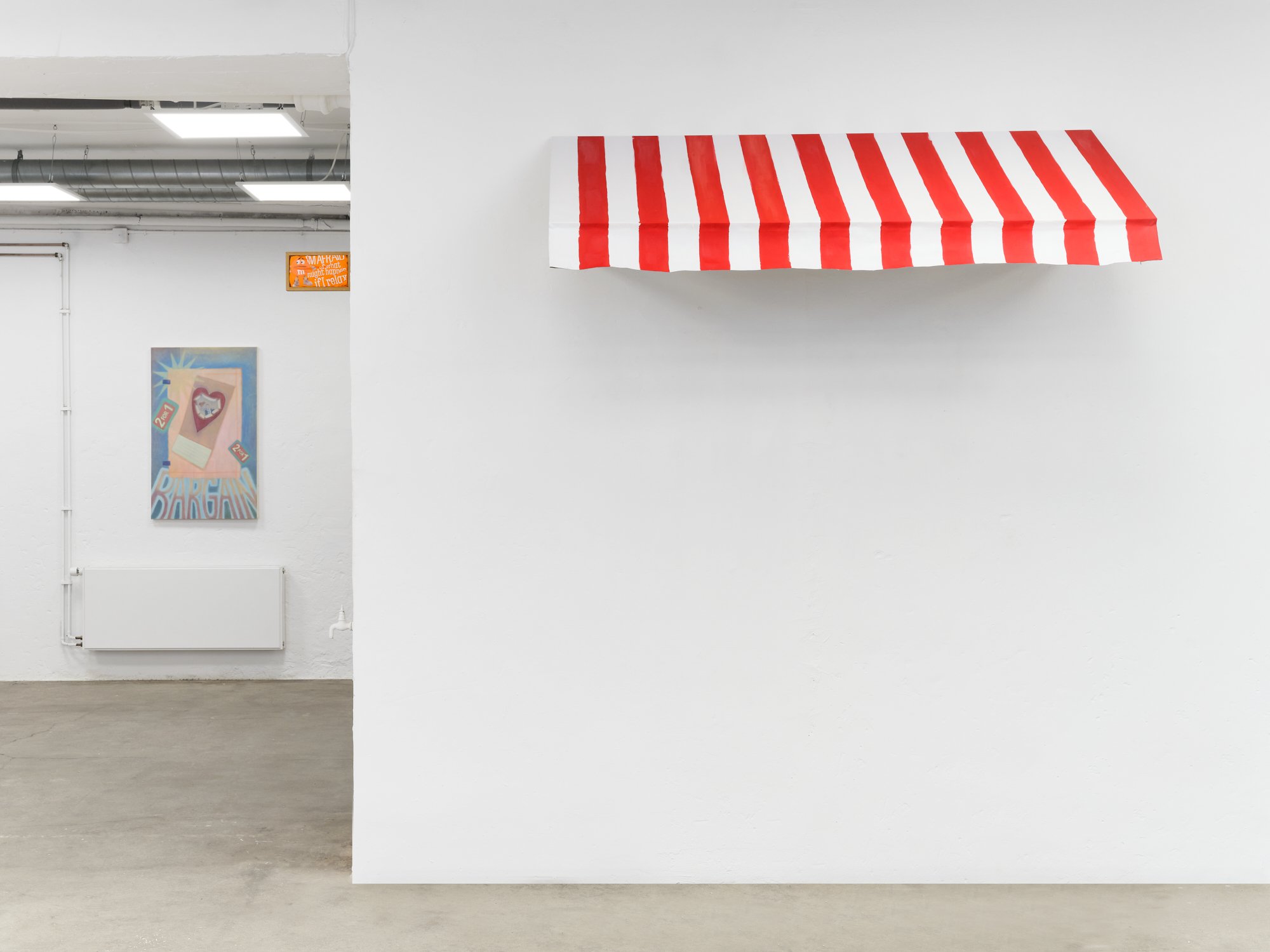
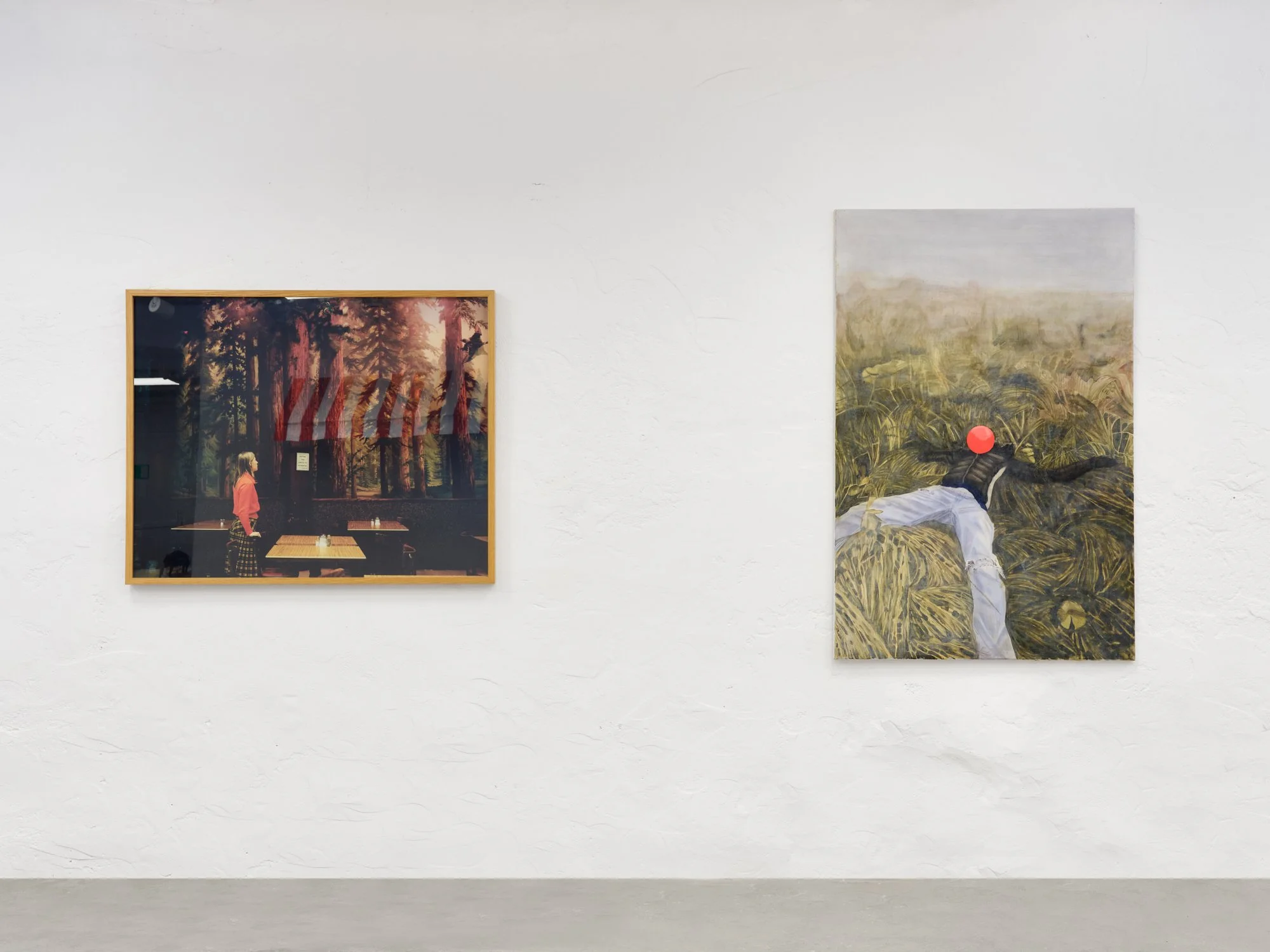
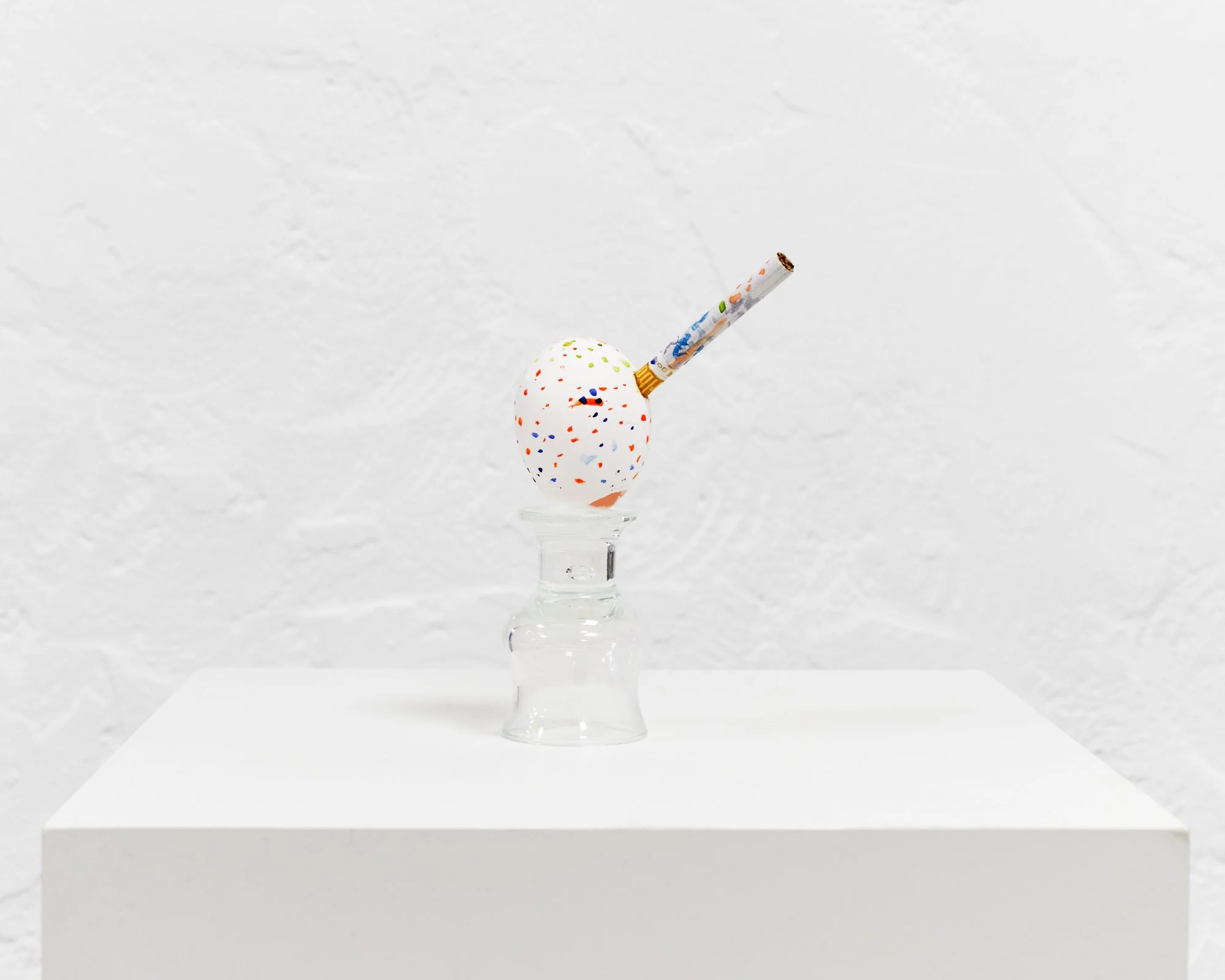
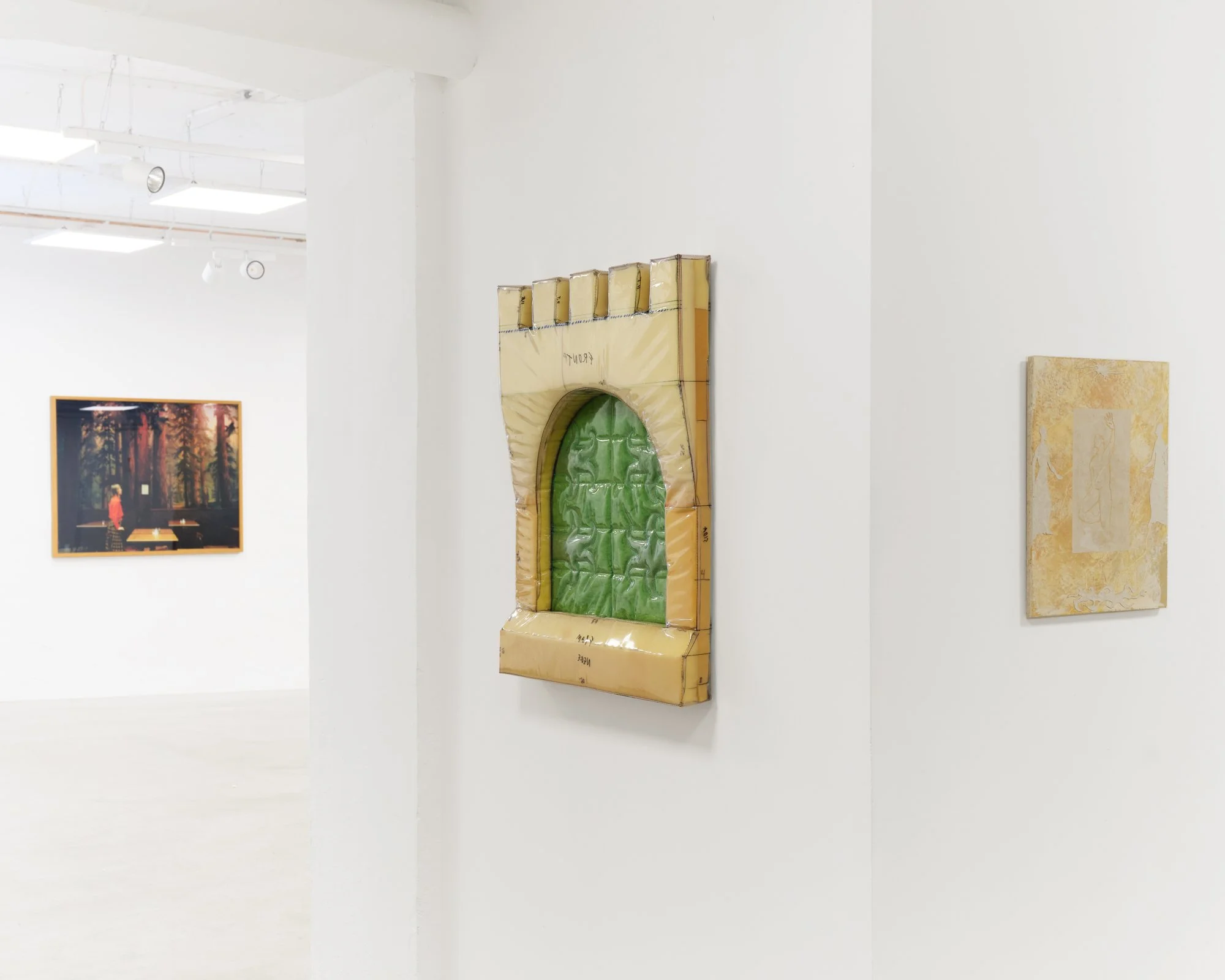
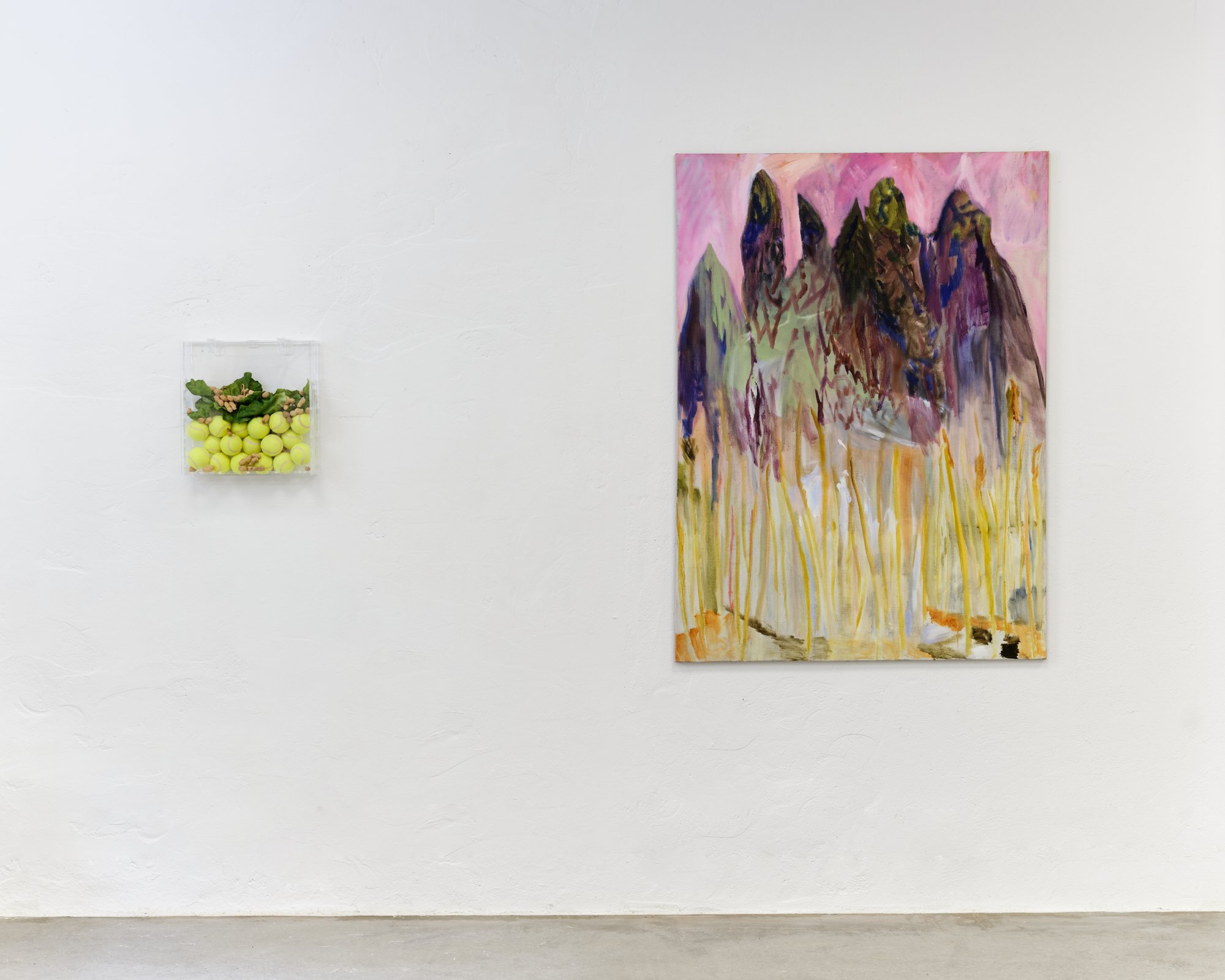
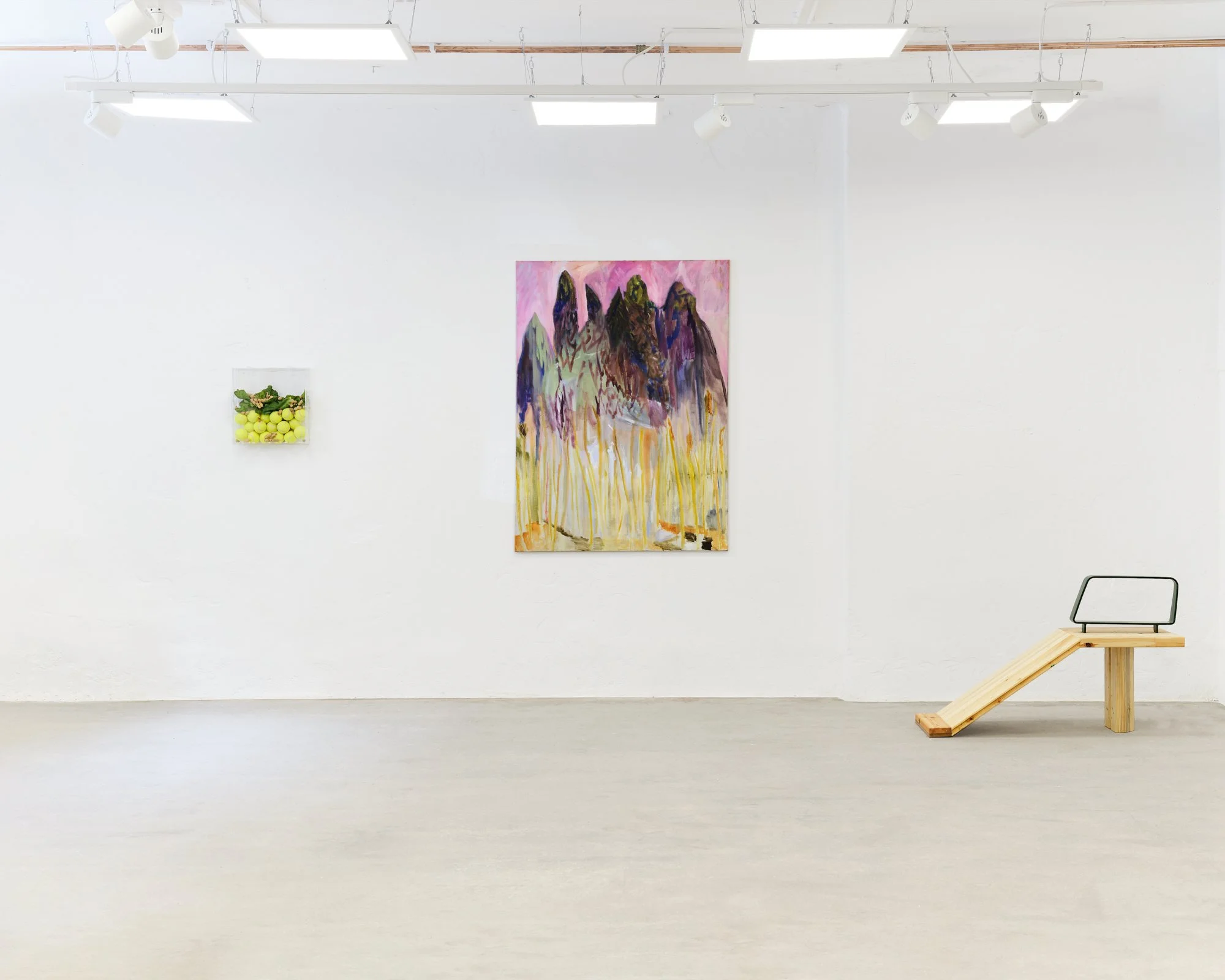
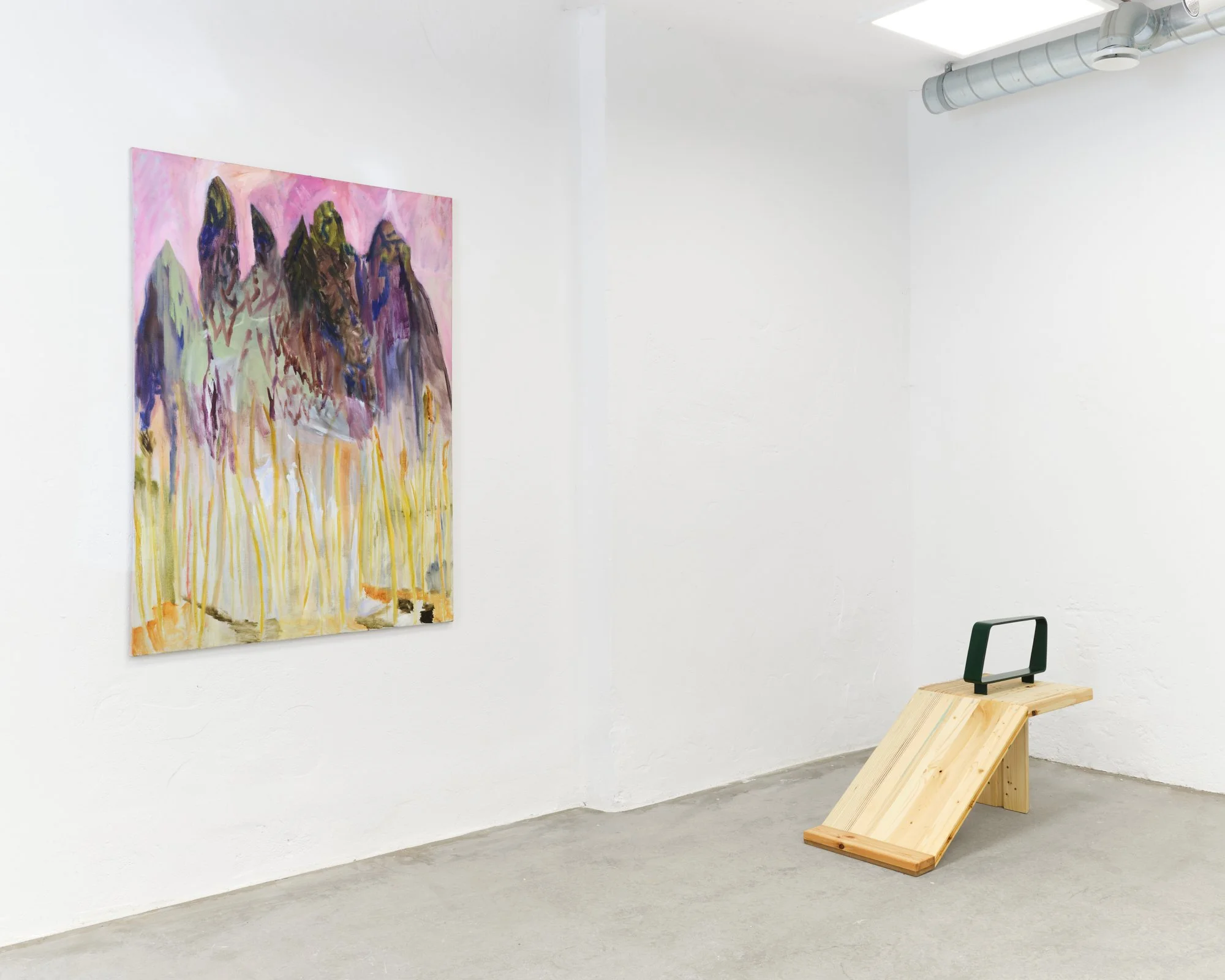
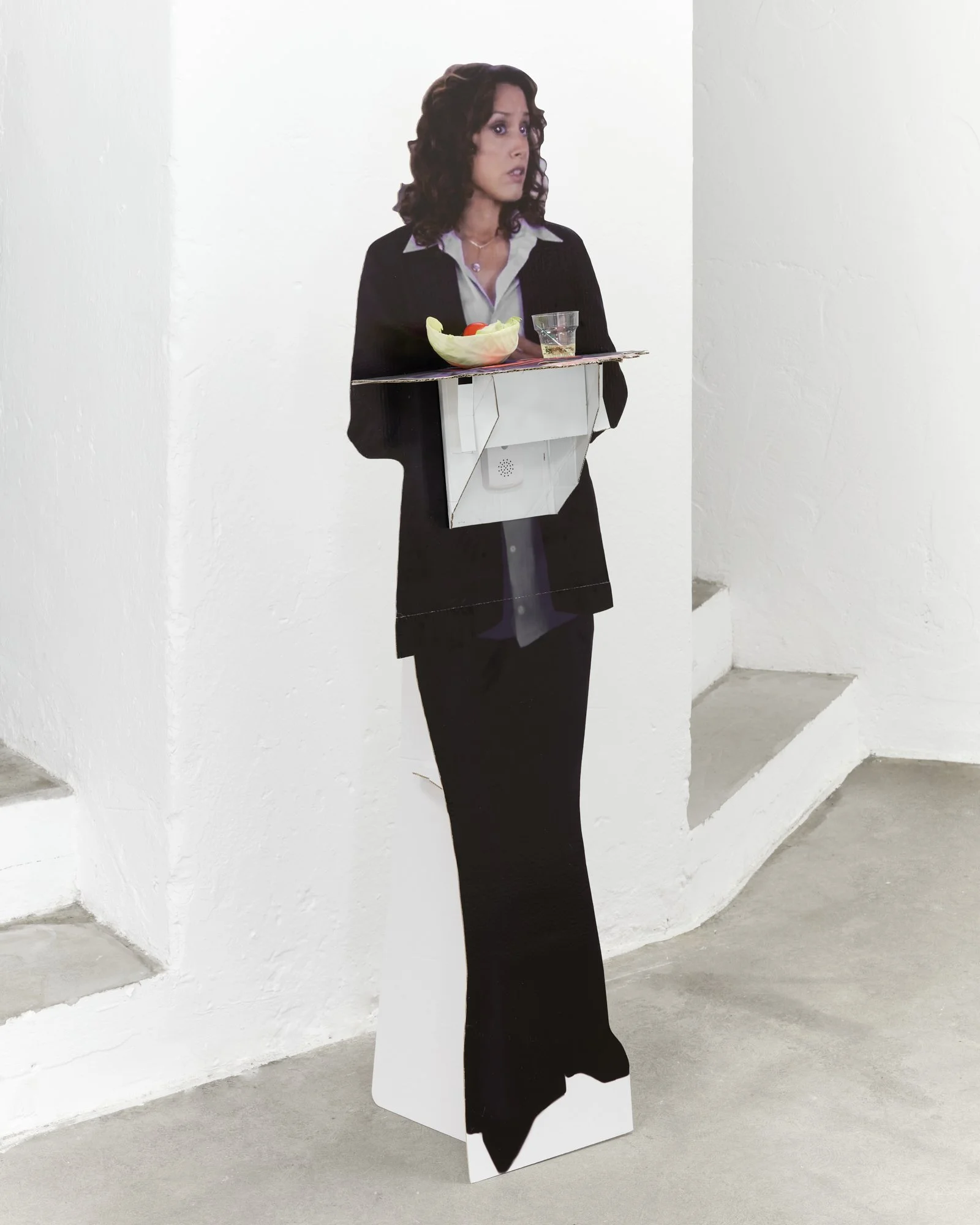
Richter Holtermann launches Deli during Art Week, a four day group exhibition taking inspiration from the classic NYC deli and deli as slang for delusional. The exhibition features 14 artists ranging from emerging talents to more established names in Stockholm, with each artist presenting a single artwork reflecting the theme in a curated market space setting in our gallery.
MARTIN KOZLOWSKI - OMSKRIVNING
(19 March - 11 April 2026)
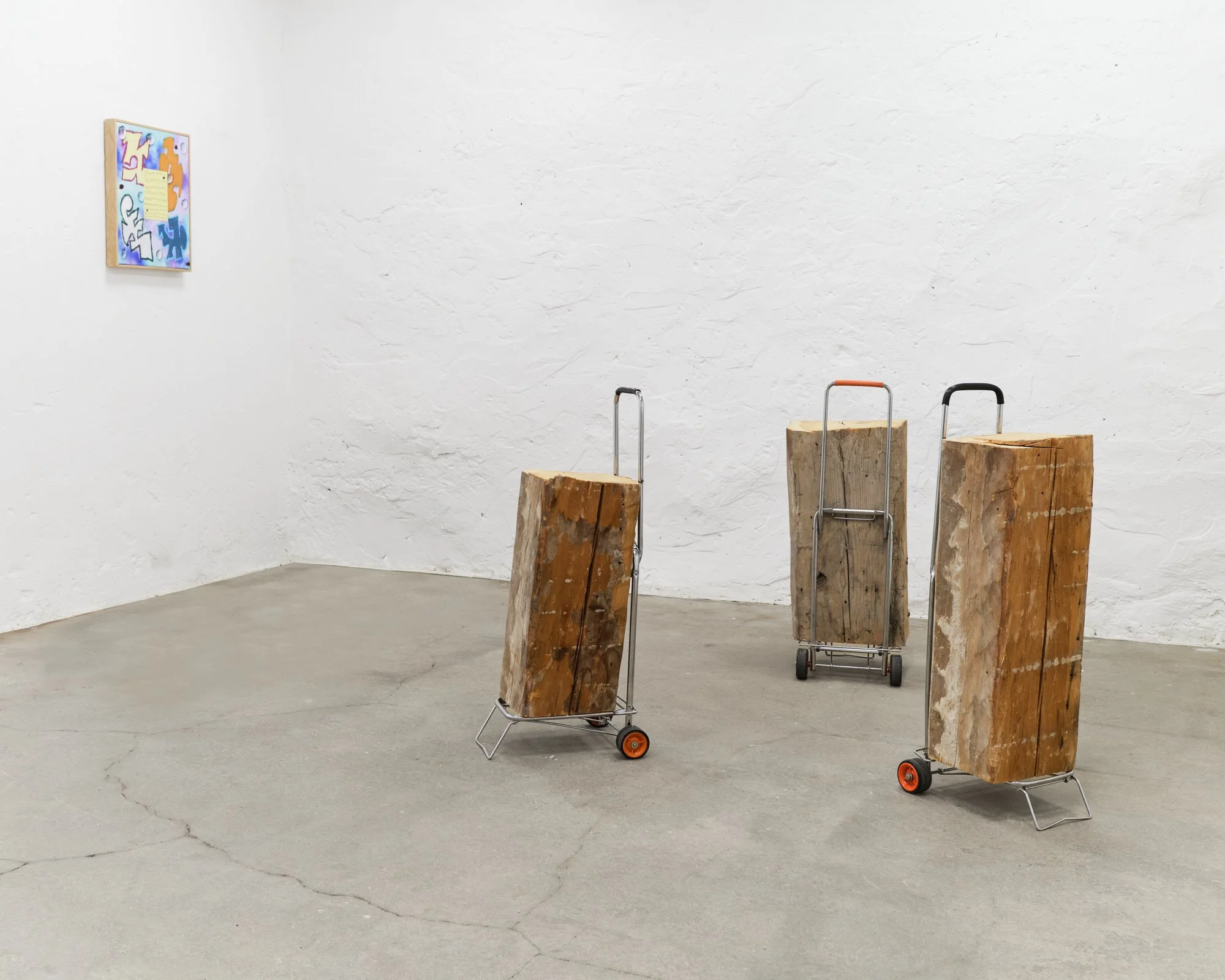
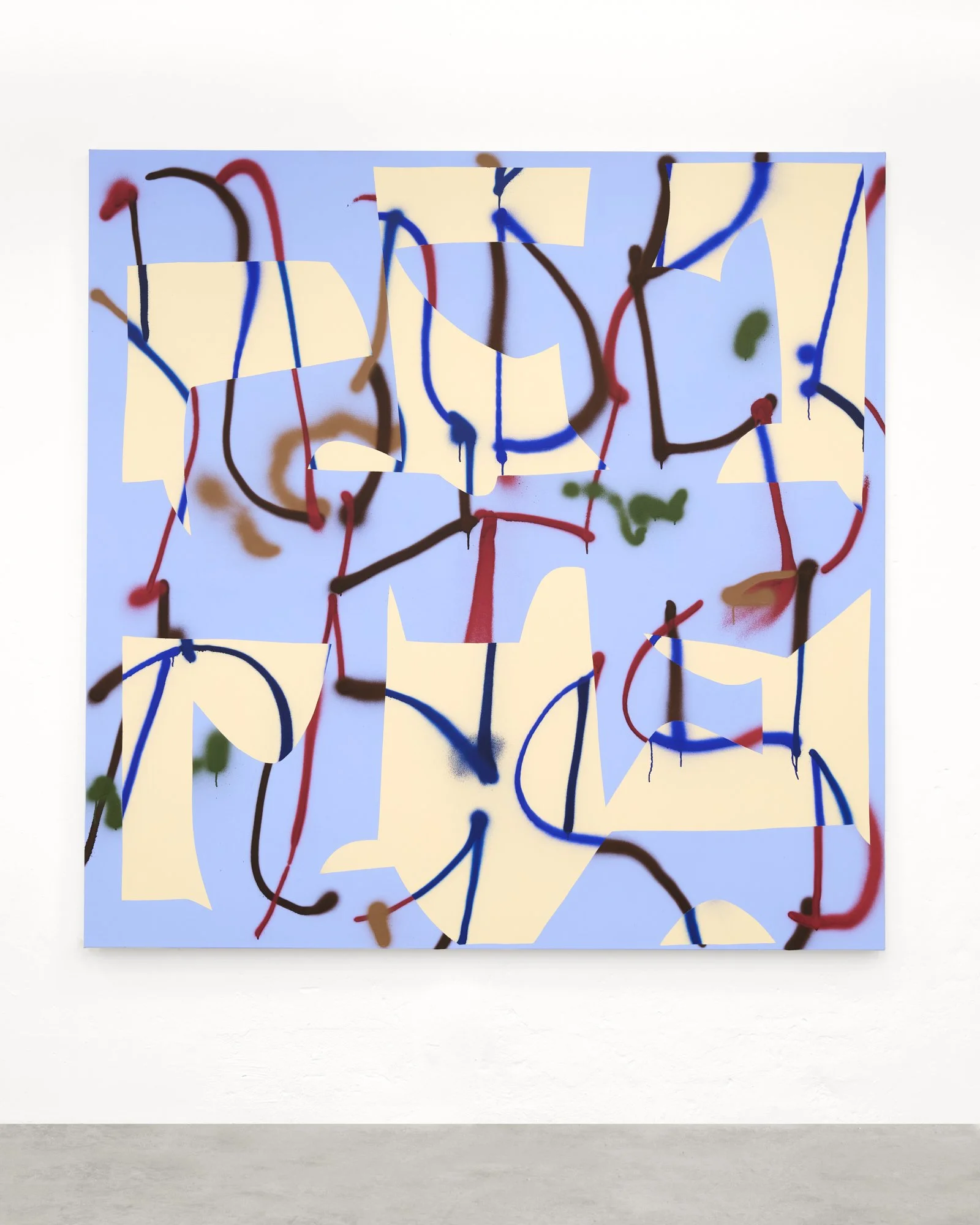
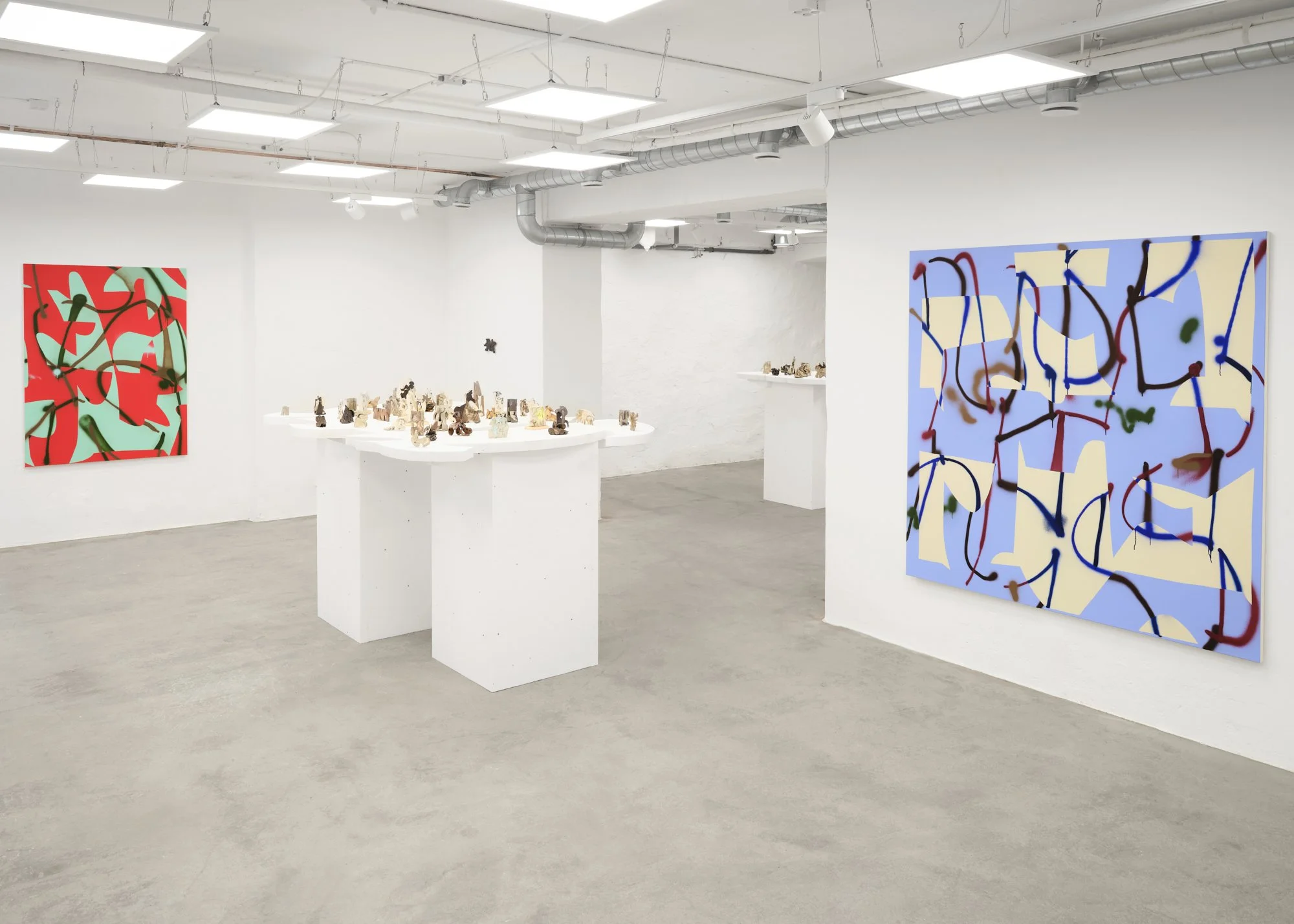
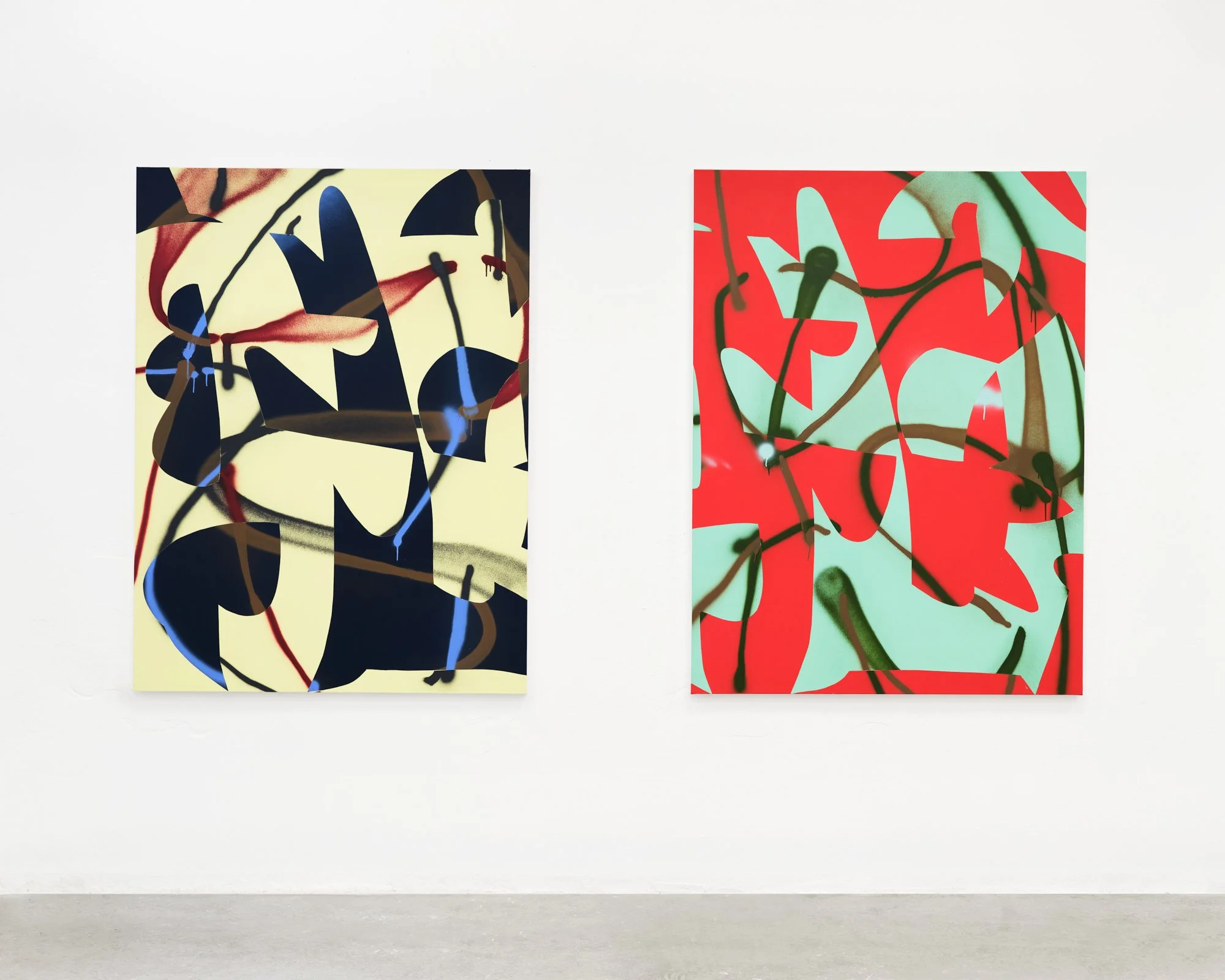
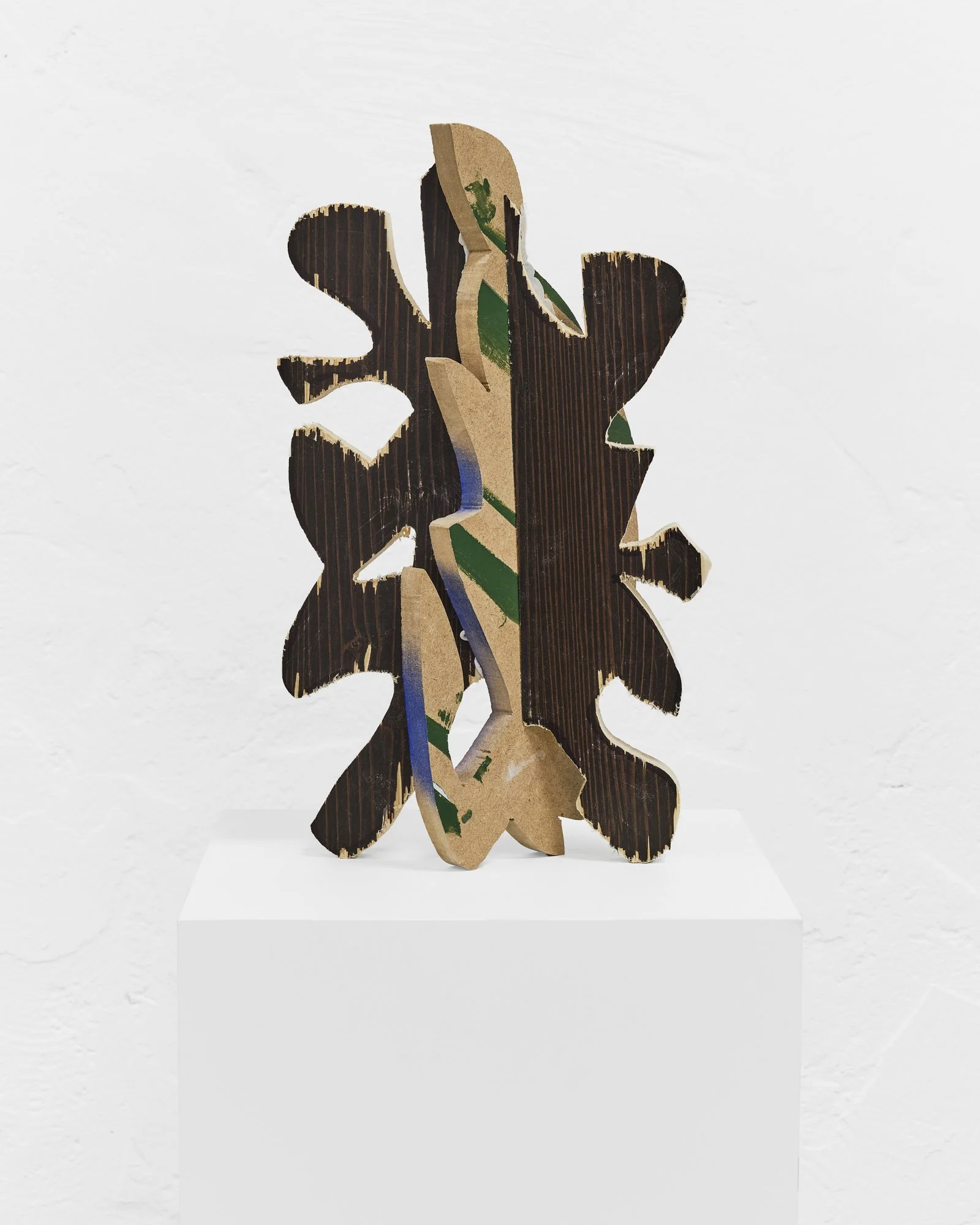
Martin Kozlowski’s artistic practice has recently taken a new direction. Ever since Goldsmiths (London) and Städelschule (Frankfurt am Main), he has primarily worked with spray paint as a medium to develop a gestural painting with a new vocabulary within the framework of spray paint painting. For Kozlowski, spray paint has functioned as a tool to extend the painting’s gesture on the surface of the canvas to instead suggest a space in front of the canvas. By varying the distance between the spray can and the canvas, he has been able to capture the speed, movement, and intensity of a distinctive style of painting with references to the speed and dynamics of the urban space.
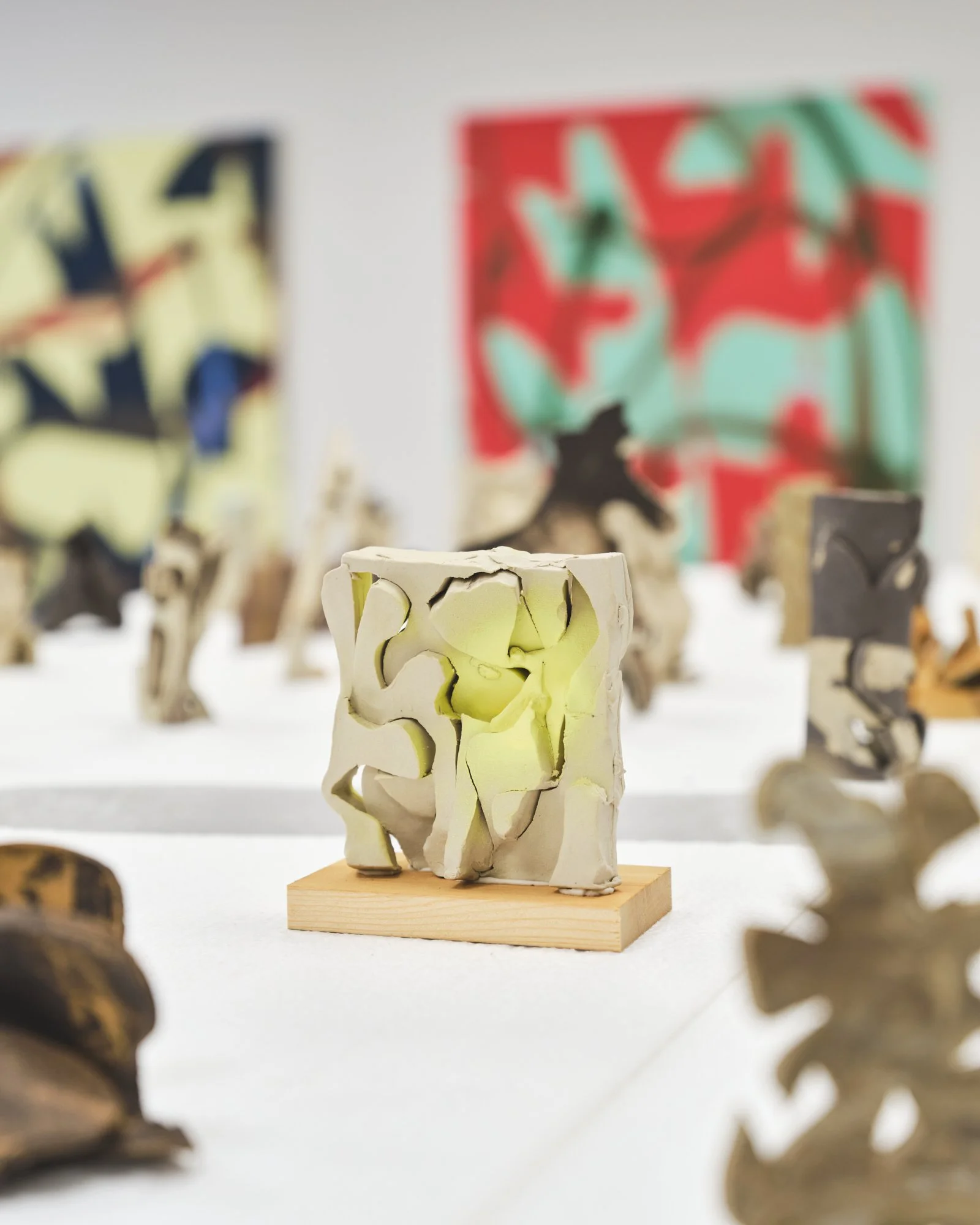
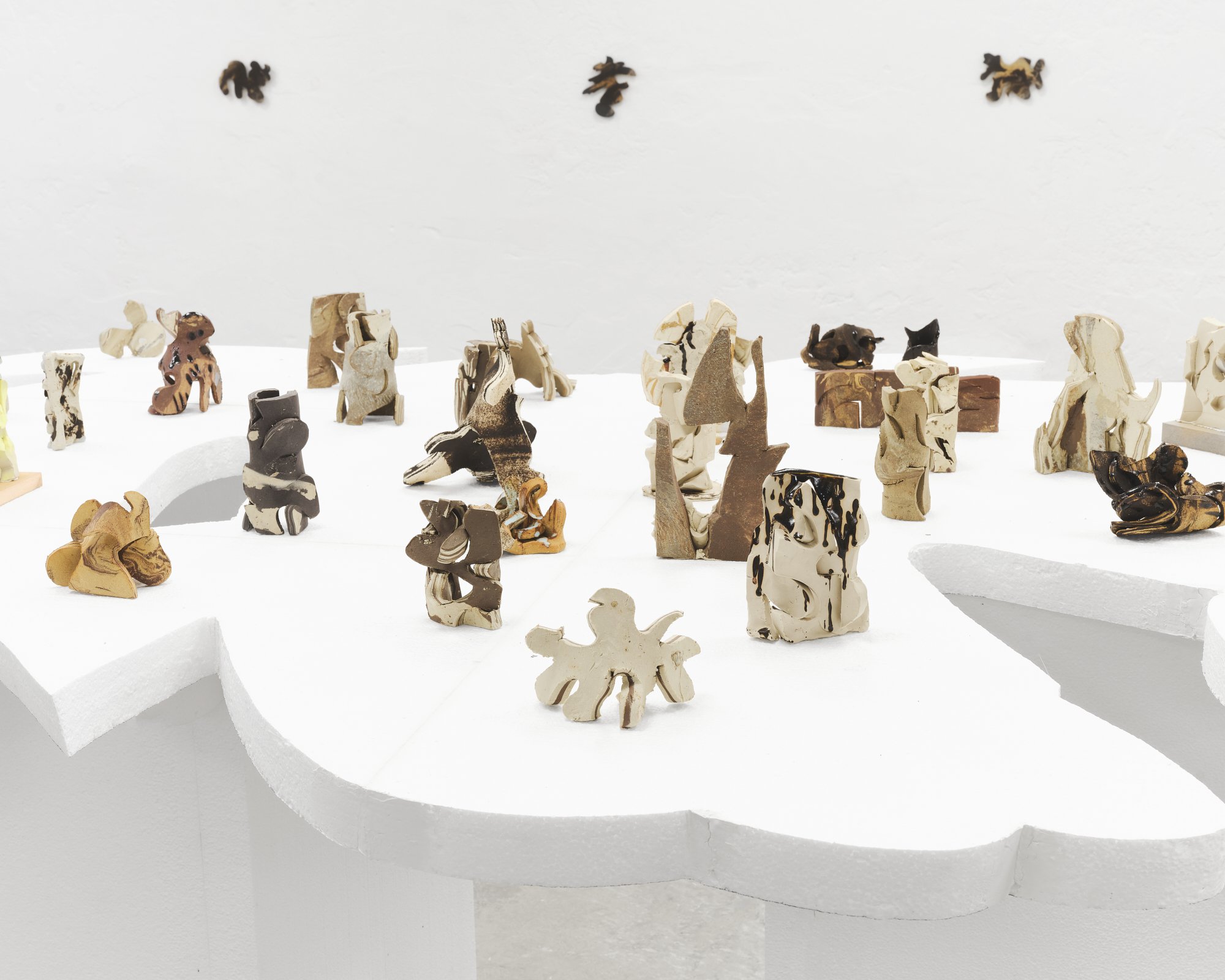
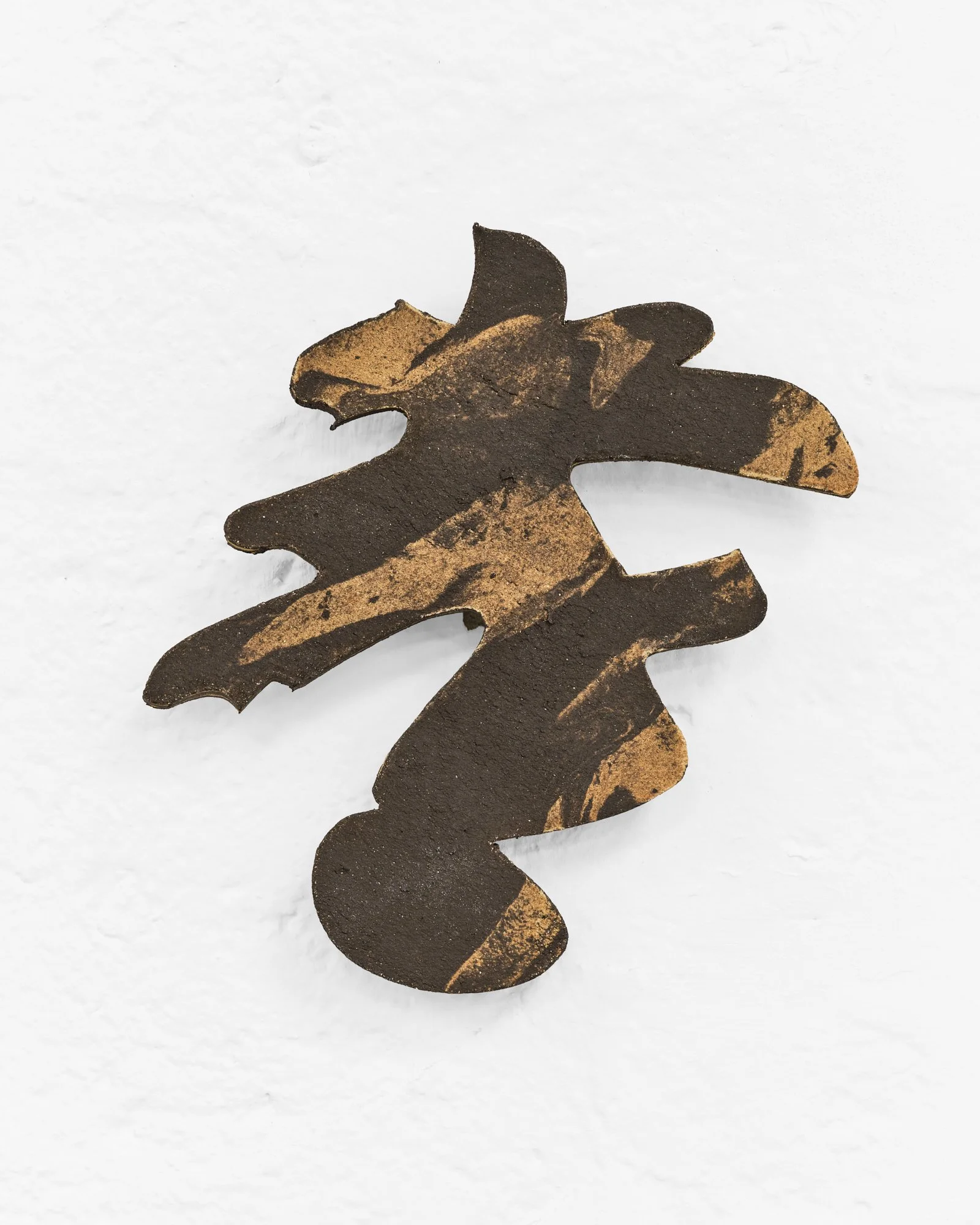
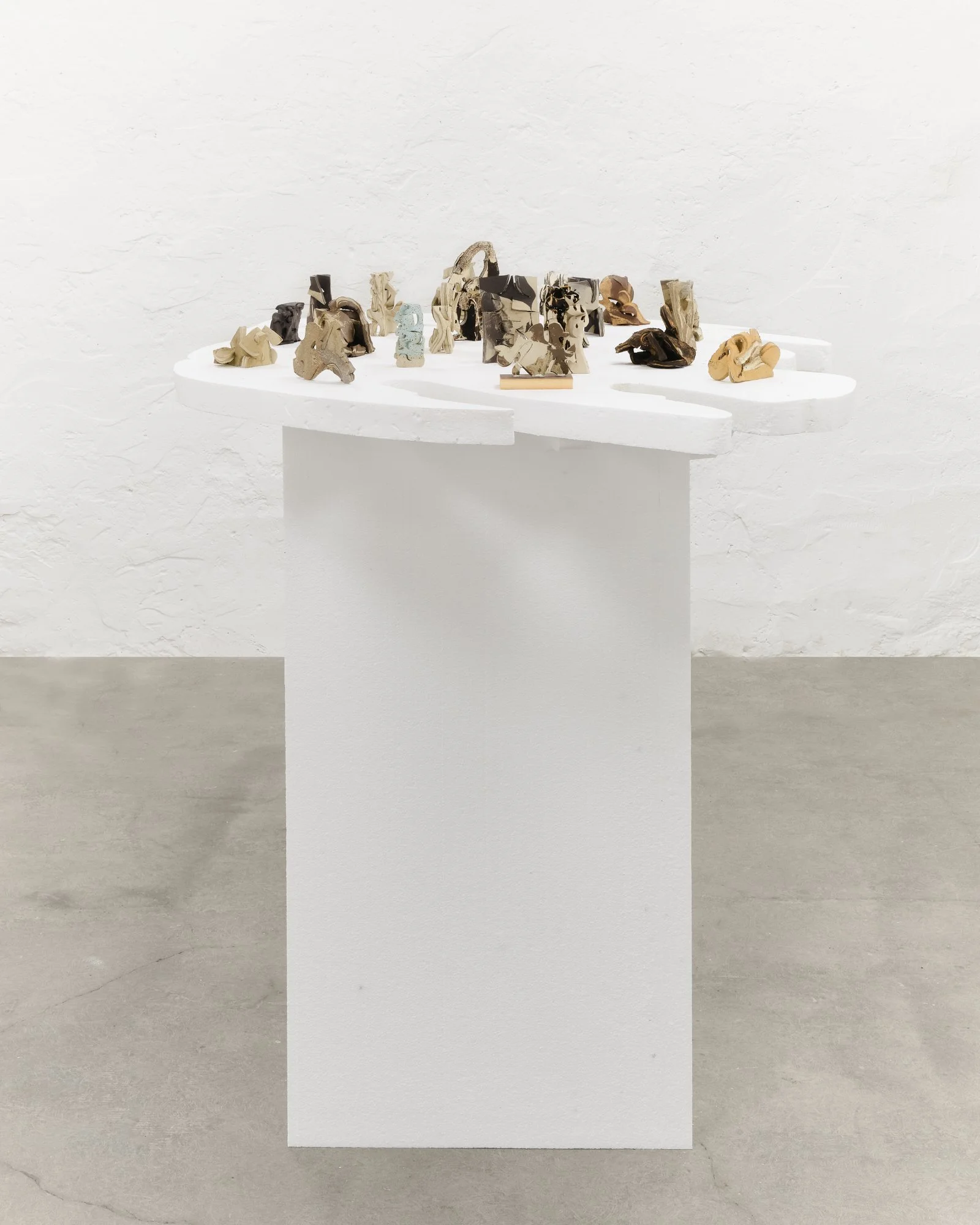
Kozlowski’s intense work in developing a gestural language with spray paint has resulted in the development of an allergy to the spray paint’s solvents. Suddenly, he was faced with the necessity of abandoning the tool that had long been central to his practice. The situation forced a reassessment of method and a translation of expression into several other media, such as drawing, oil painting, and most recently, sculptural works in wood and ceramics.
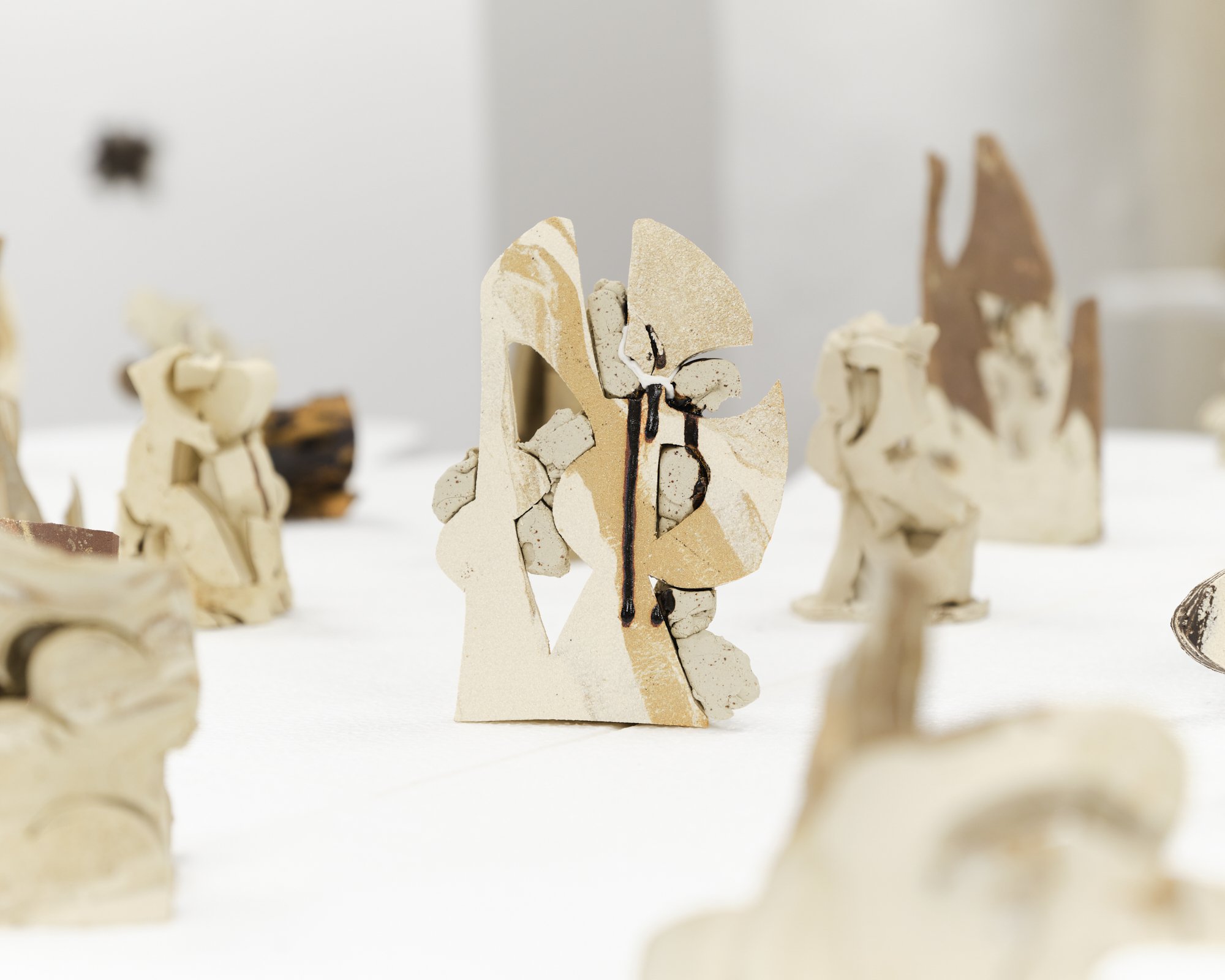
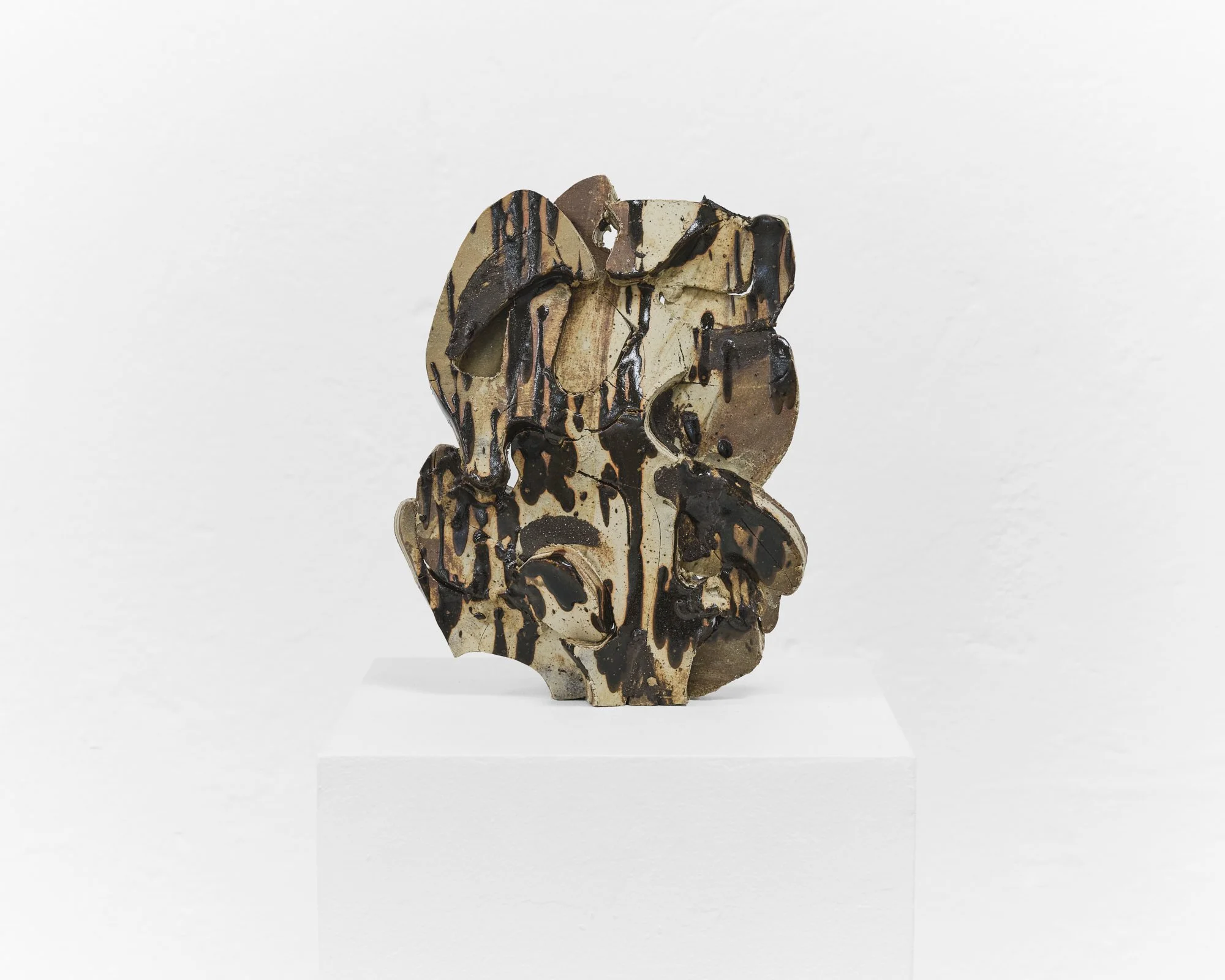
In the exhibition Omskrivning, Kozlowski leaves the two-dimensional framework of the canvas to process ceramics and wood into three-dimensional form. The painterly gestures and rhythms that were previously captured on the surface of the canvas are now translated into tactile materials in sculptural forms. In these new works, a practice in transformation emerges, where the language of painting is tested within the spatiality of sculpture. Movement and materiality remain central, but now gain a physical presence where the logic of the painting continues out into the room.
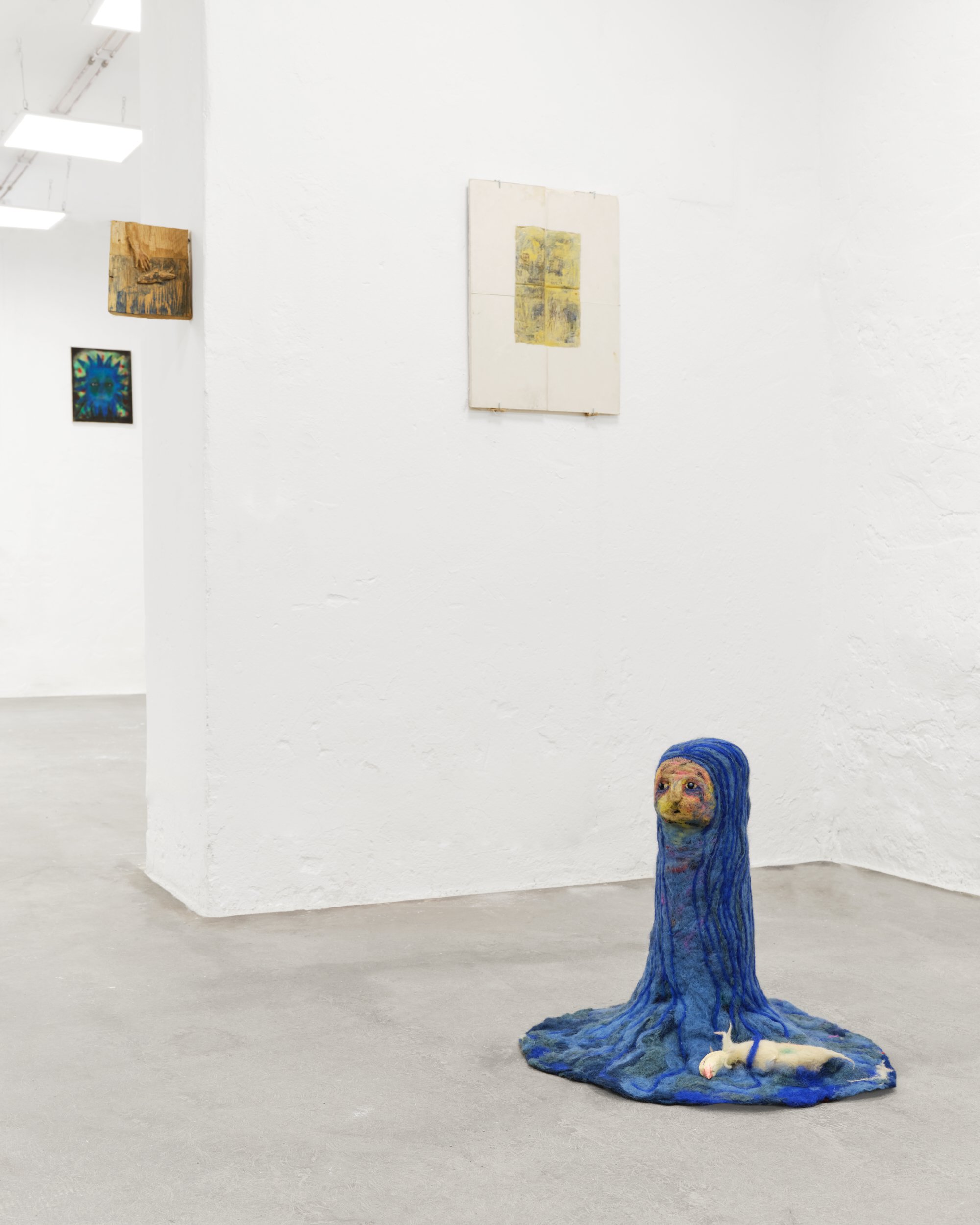
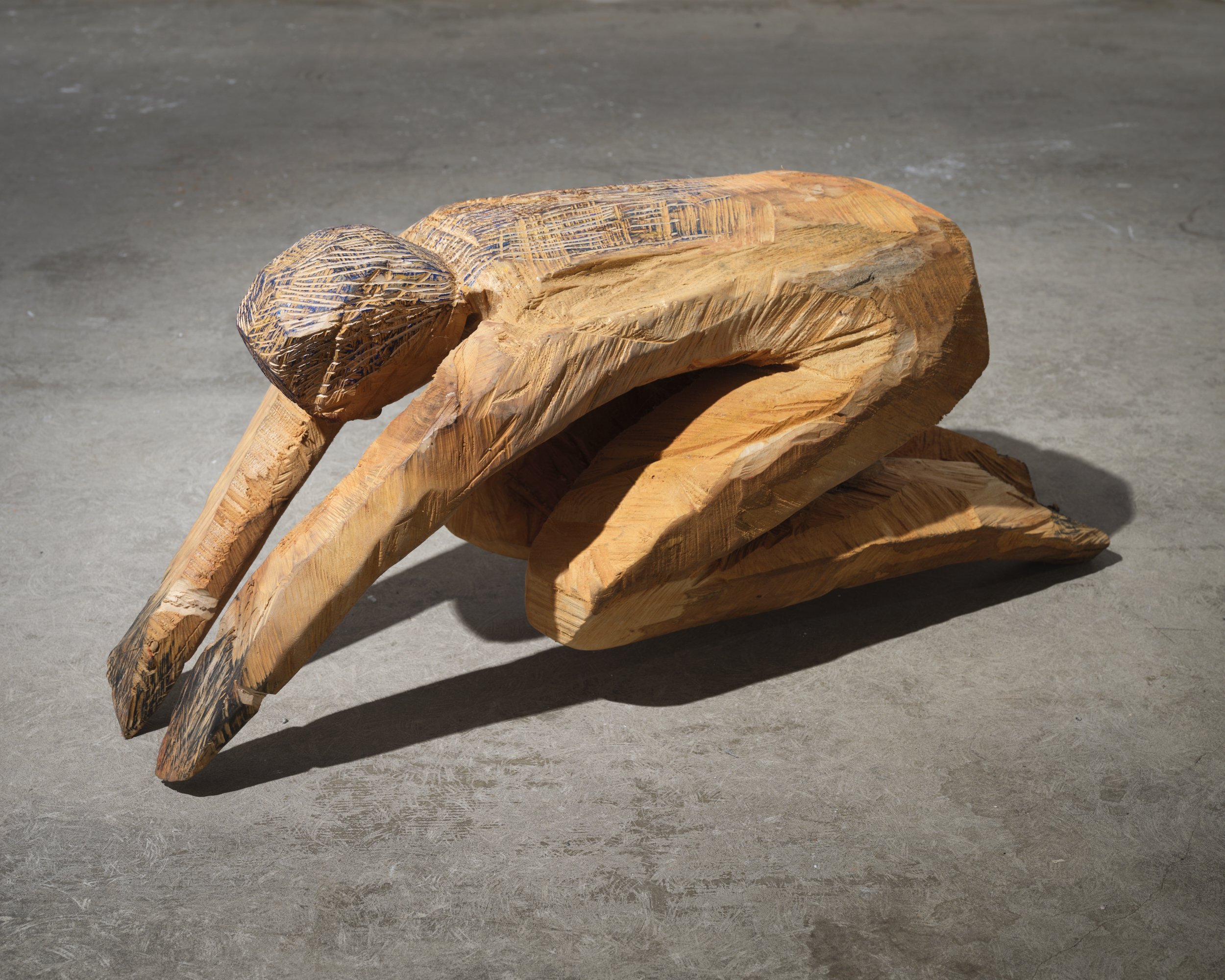
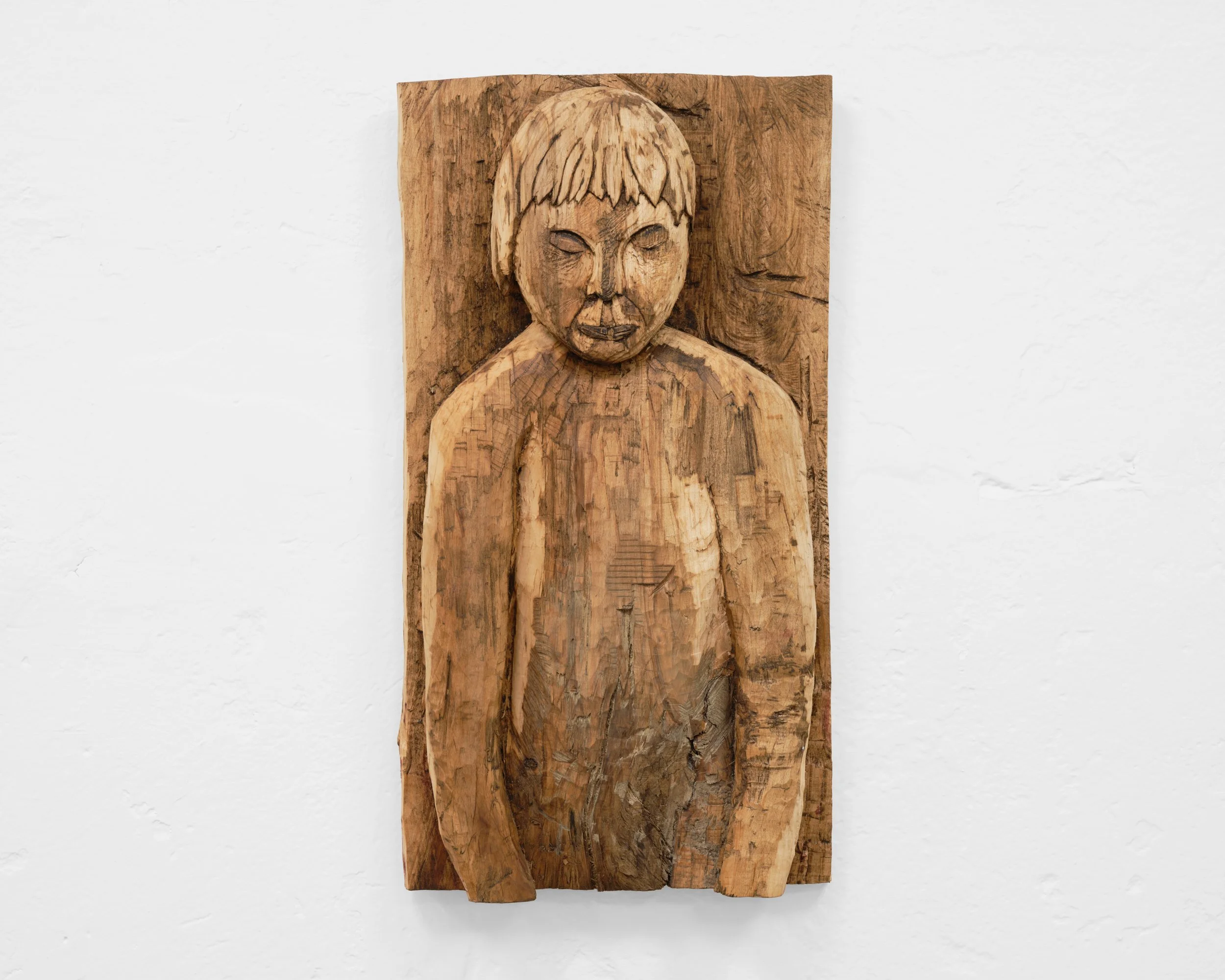
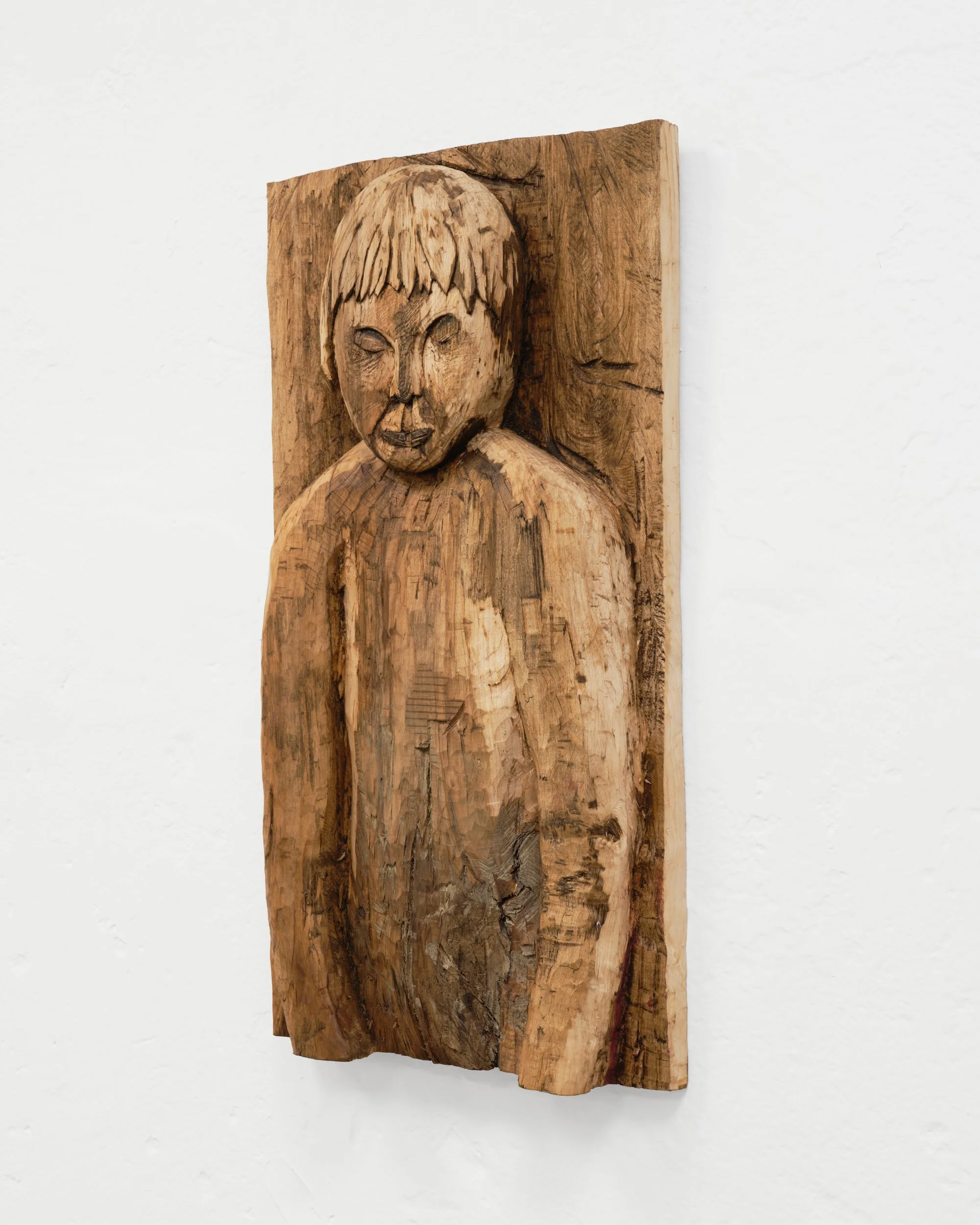
AND THEN SHE BRAIDED THE FISH´S HAIR
(12 February - 28 March 2026)
Participating Artists:
ELINOR SILOW
GURLI KRUBER
HEDDA HULTMAN
SPIRITUAL MECHANISM
(8 January - 7 February 2026)
Participating Artists:
ALICE NORDLUND, ALVA LE FEBVRE, ANDERS JOHANSSON, ANTON KASIAN EDBERG, CLARA KETTER, DAVID ÅBERG, ELIS ESSINGER, KEVIN JUDGE, SARALI BORG, STELLA LEVIN.
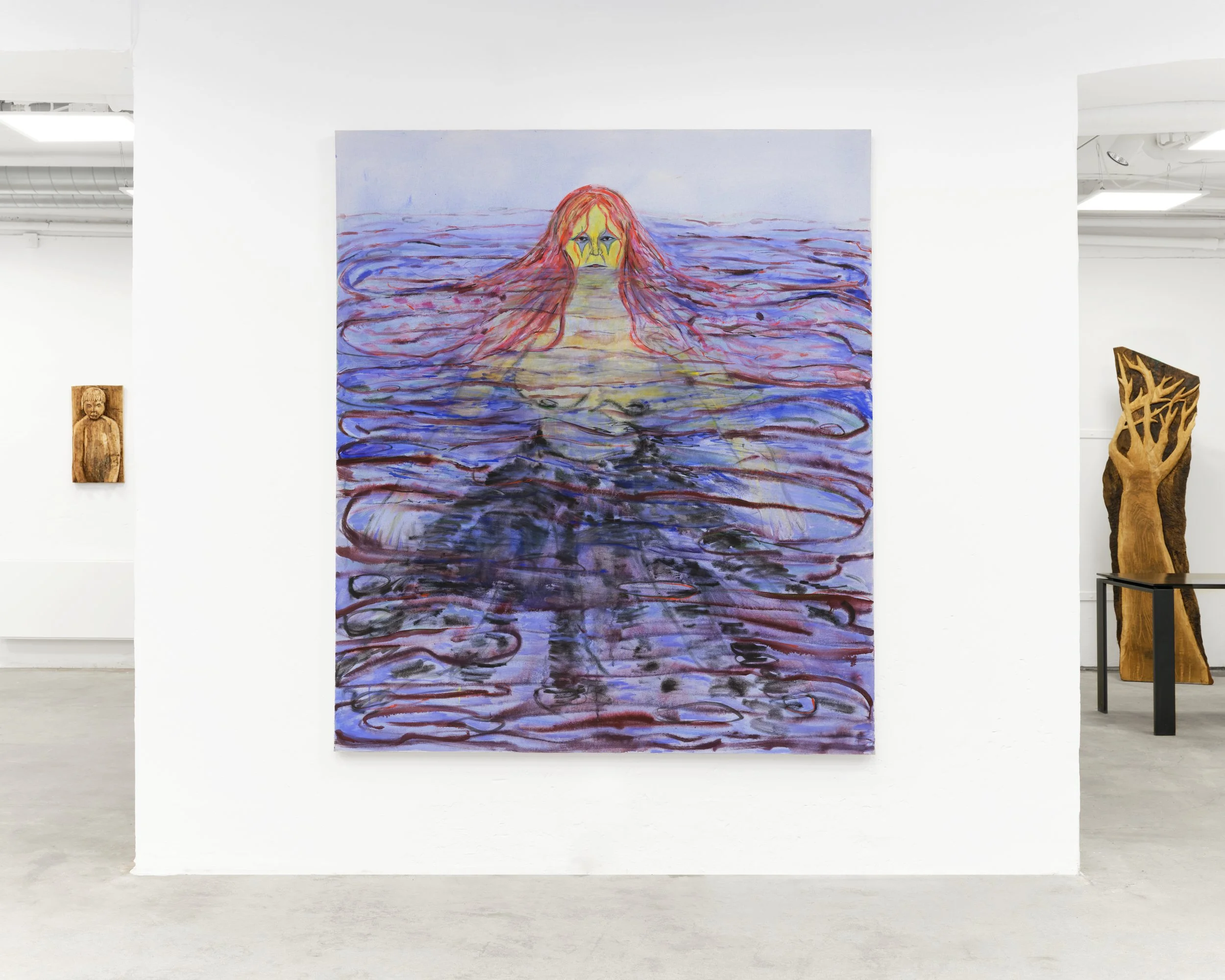
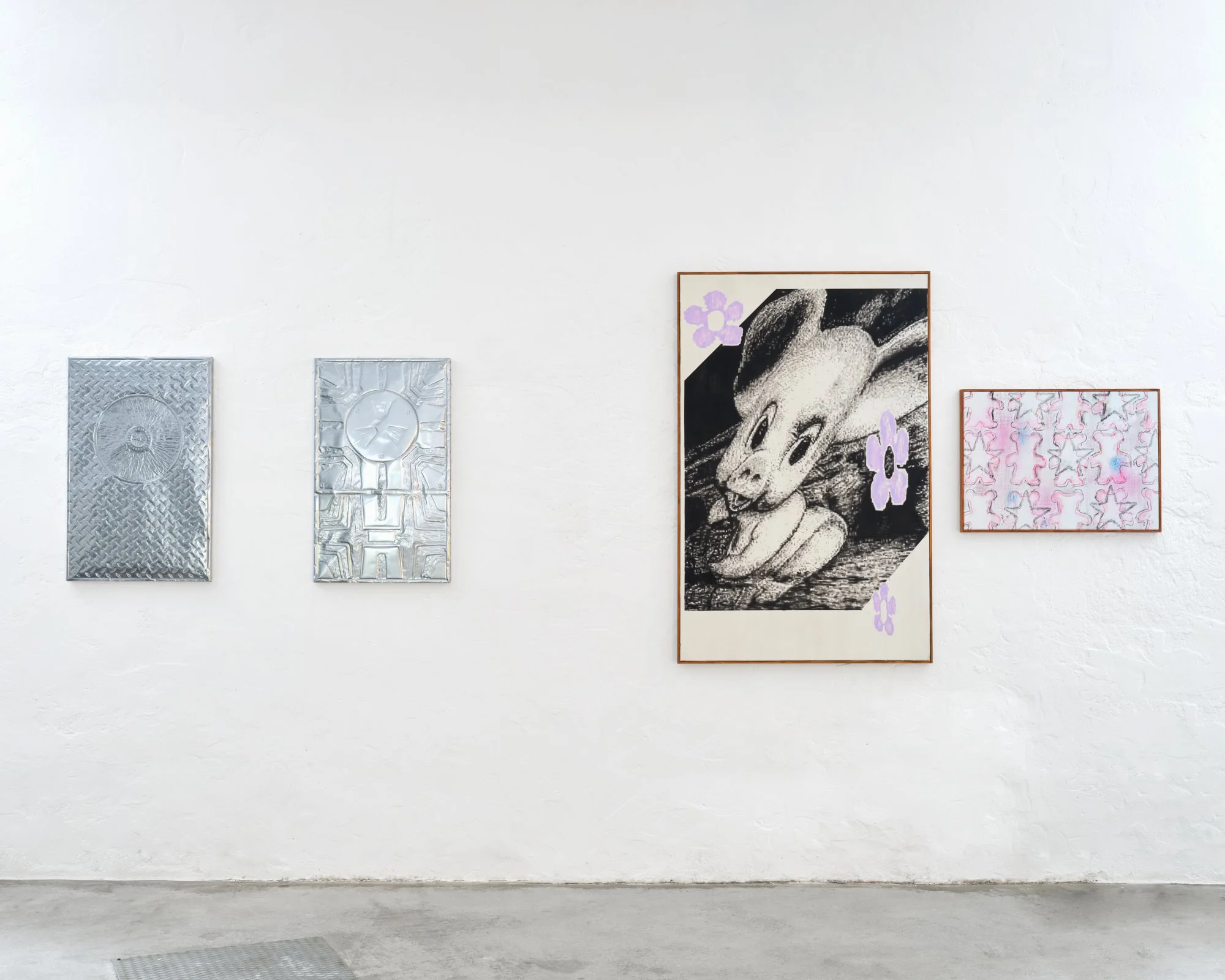
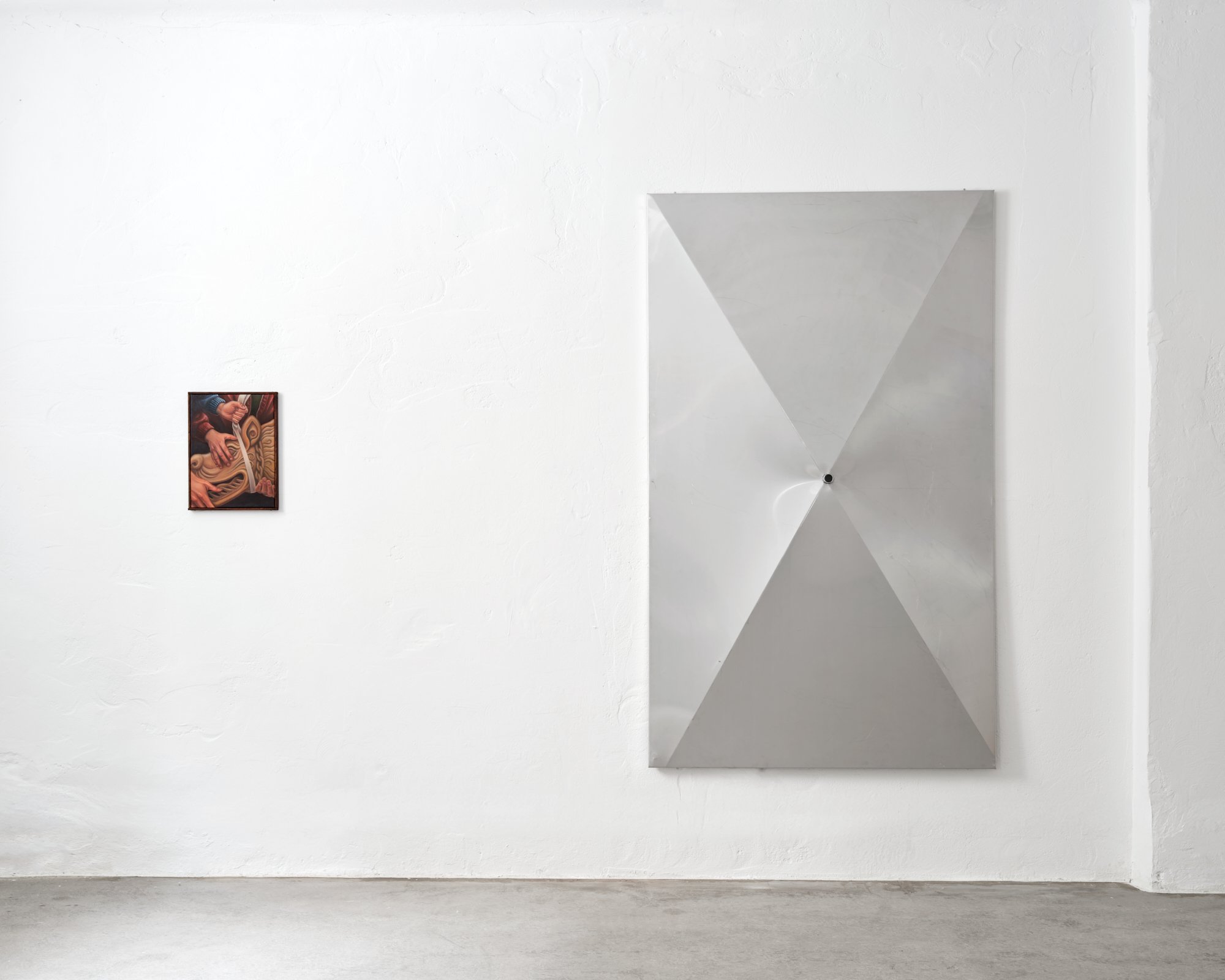
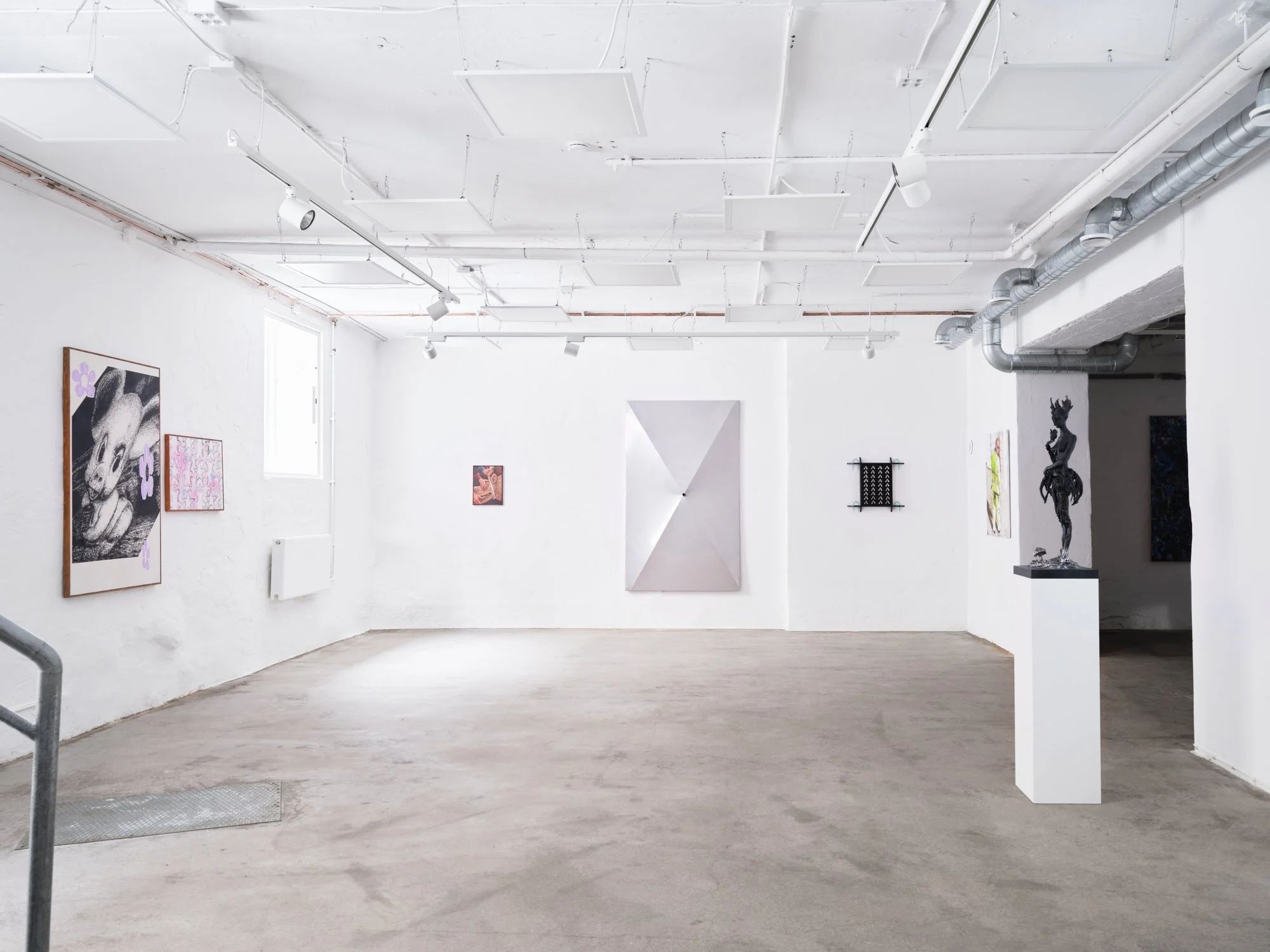
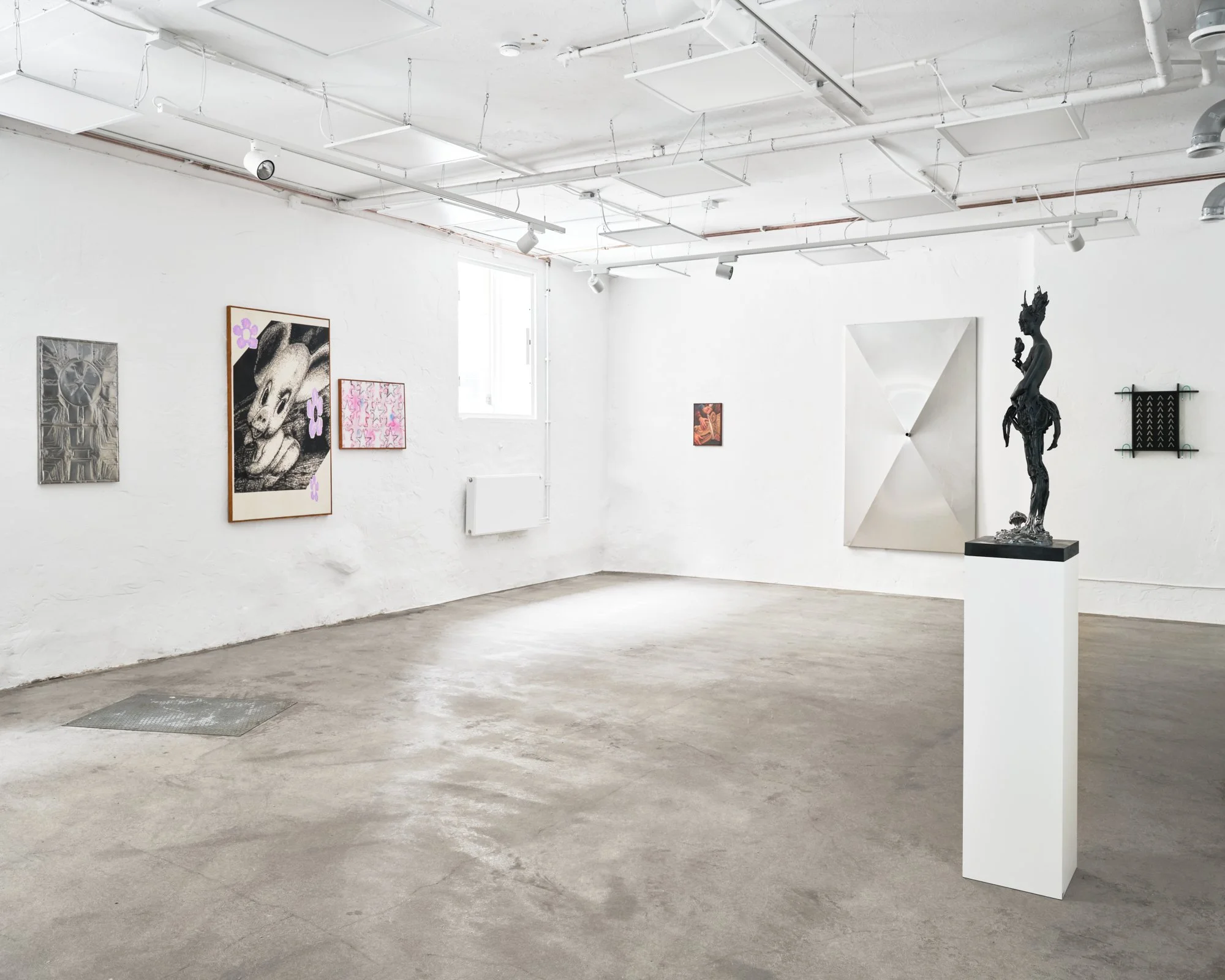
The human mind and body, with the machine as an extension. It is often not necessary to use steel, AI, computers, or mechanisms. But we do. We need these kinds of external tools, but what happens when tools and technology become spiritualized? When the human mind tangos with software, a piece of advanced technology, or an application?
The Antikythera Mechanism is the first complex piece of technology ever found, the oldest computer yet discovered. It was found in a shipwreck near the Greek island of Antikythera in 1901 by sponge divers. The invention predicted the positions of the Sun, Moon, and planets. Tracked lunar phases and eclipses. Showed dates of ancient games and used the Egyptian calendar. But what about all these statistics, why?
Maybe the first computer ever was a cousin to something bigger, or at least a tool for seeking answers to questions we still haven’t solved. Ghost in the machine.The metallic mechanism, with complex interlocking gears, housed in a wooden box about the size of a MacBook. An enchanted tool, with more power than the human brain could ever reach without its existence.
The machinery continues forever, and after the Spinning Jenny, everything suddenly starts to fly. And on our flight, we all turned on flightmode and forgot about the very beginning. The craziness has led human beings to 2026, and we are still stuck in the middle of inventing the new. But for some people or let’s say a certain group the machines are fulfilling another mission. A mission to tell stories, to provoke, without making things or making new things happen. Just to stimulate the mind.
In this exhibition, we invite you to explore the process rather than the results. We are not trying to capture anything, we are simply observers of fragments found along the way toward a higher resolution.
OLLE WITT - AFTER THE MISTAKE
(4 December - 31 December 2025)
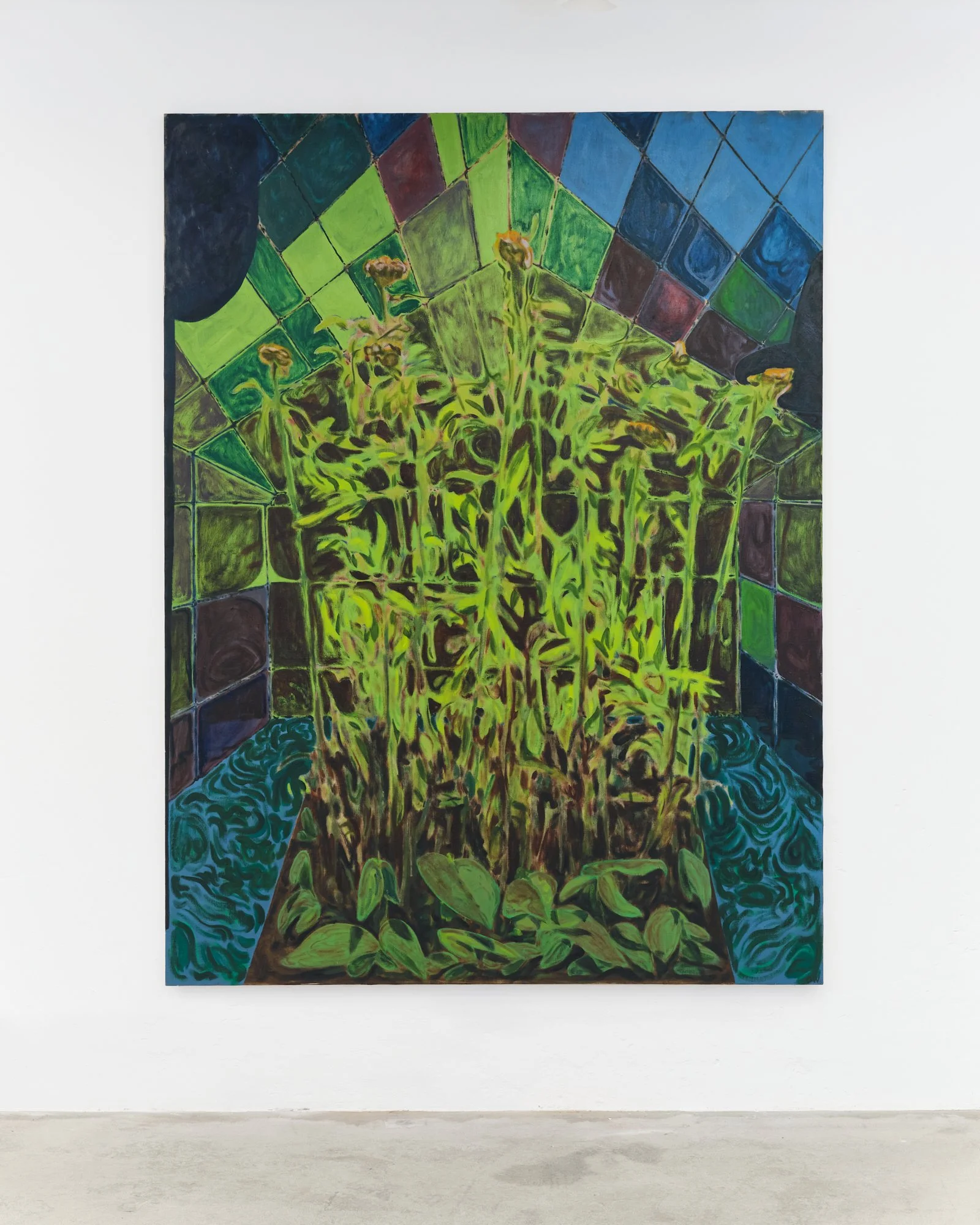
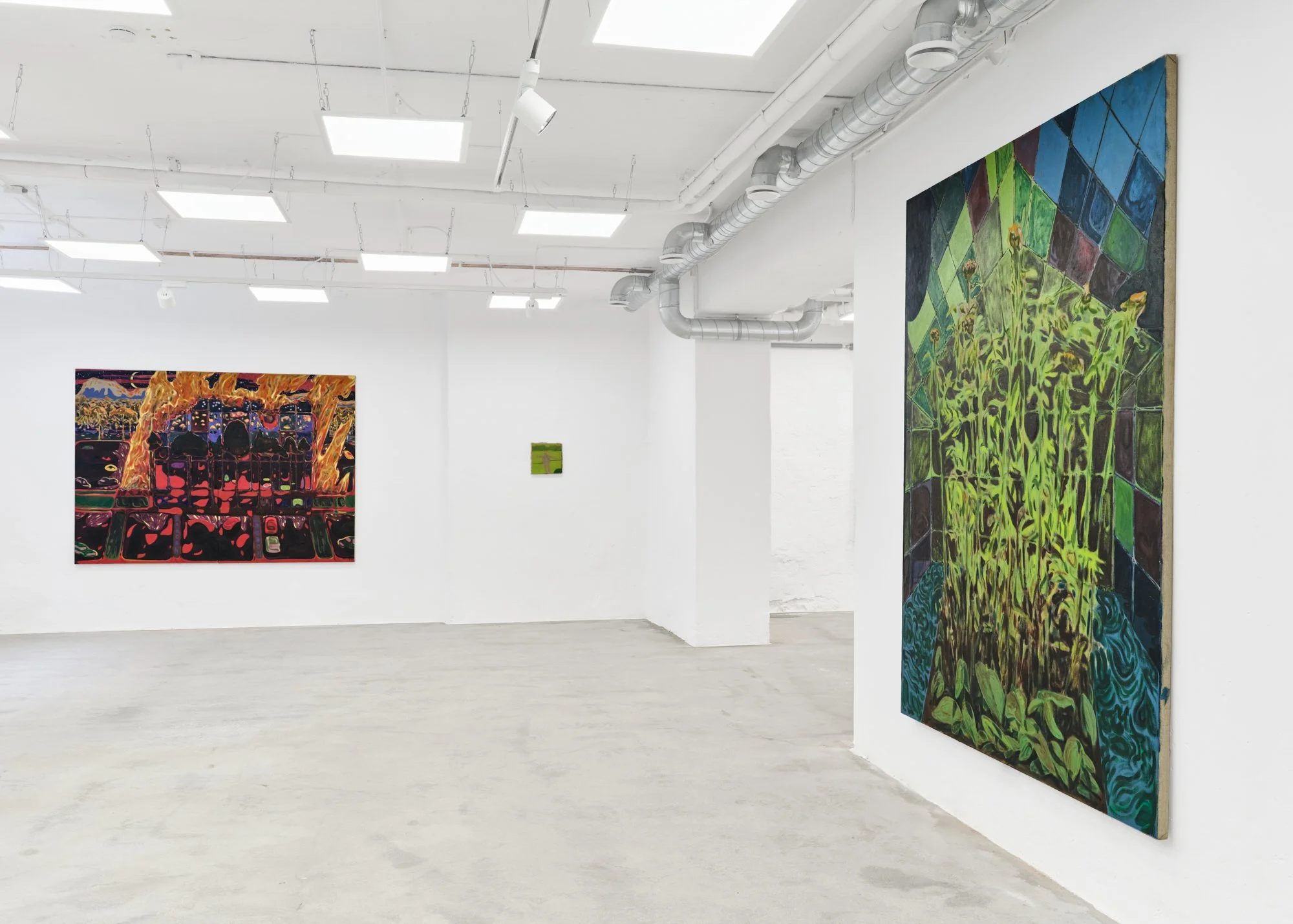
After the mistake you seldom realize that you've made it. Our collective epiphany is slowly creeping up on us, are we living out the after?Despite the negative connotations, the mistake is often referred to as an opportunity to improve, but what if it's repeated again and again?
The process often begins without reference, but as the painting gets painted my own recognition comes into play. When shapes emerge on the canvas i try and imagine what they can become, until the seesaw of the familiar and the uncanny finds balance in the middle.
In painting the mistake can be a tool that lets the bodies of paint partly decide for themselves what shapes they take. The painter is through the mistake, a mediator. The painters mission is to, after the mistake, try and make it again and again.Olle Witt (b.1998) is currently studying the last year of his Bachelor of fine arts at Konstfack, Stockholm. Witt has previously studied painting at Pernbys Målarskola and Philosophy at Södertörns högskola. He has exhibited at Galleri Hedenius as part of the group exhibition Unga Konstnärer and was one of three winners of the royal grant Den tänkande handen (2024).
VERA LJUNGGREN - NIGHTINGALE
(4 December - 31 December 2025)
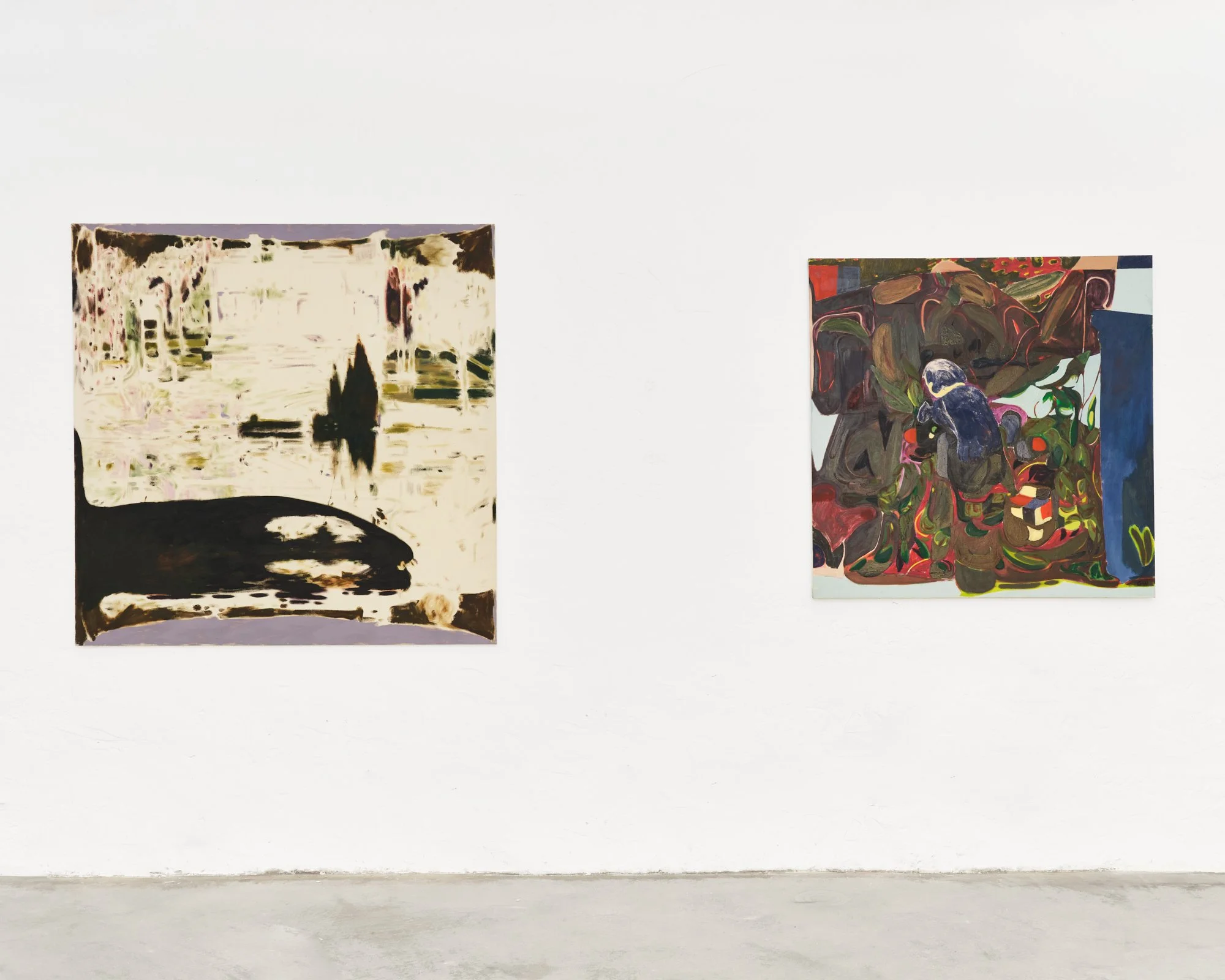
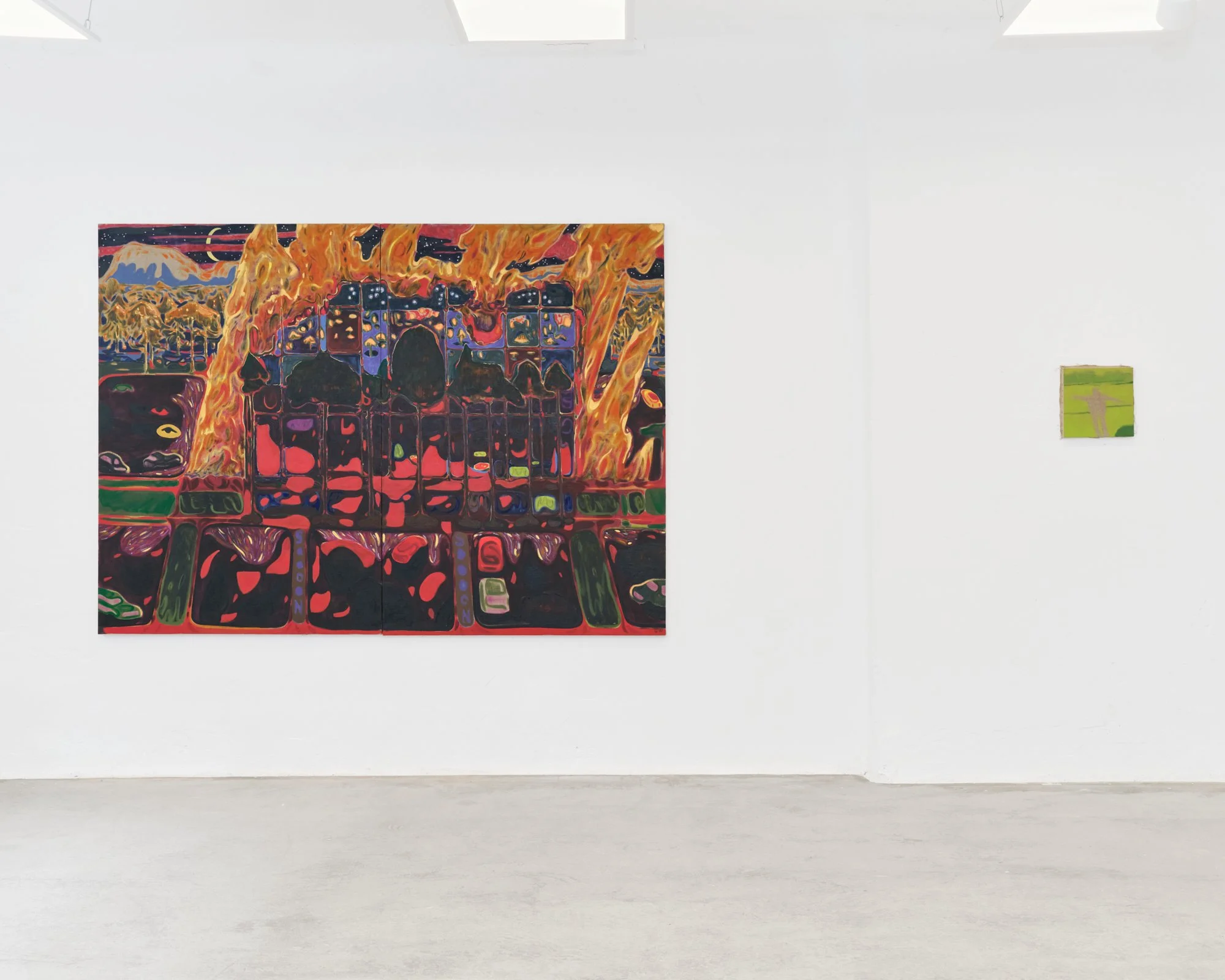
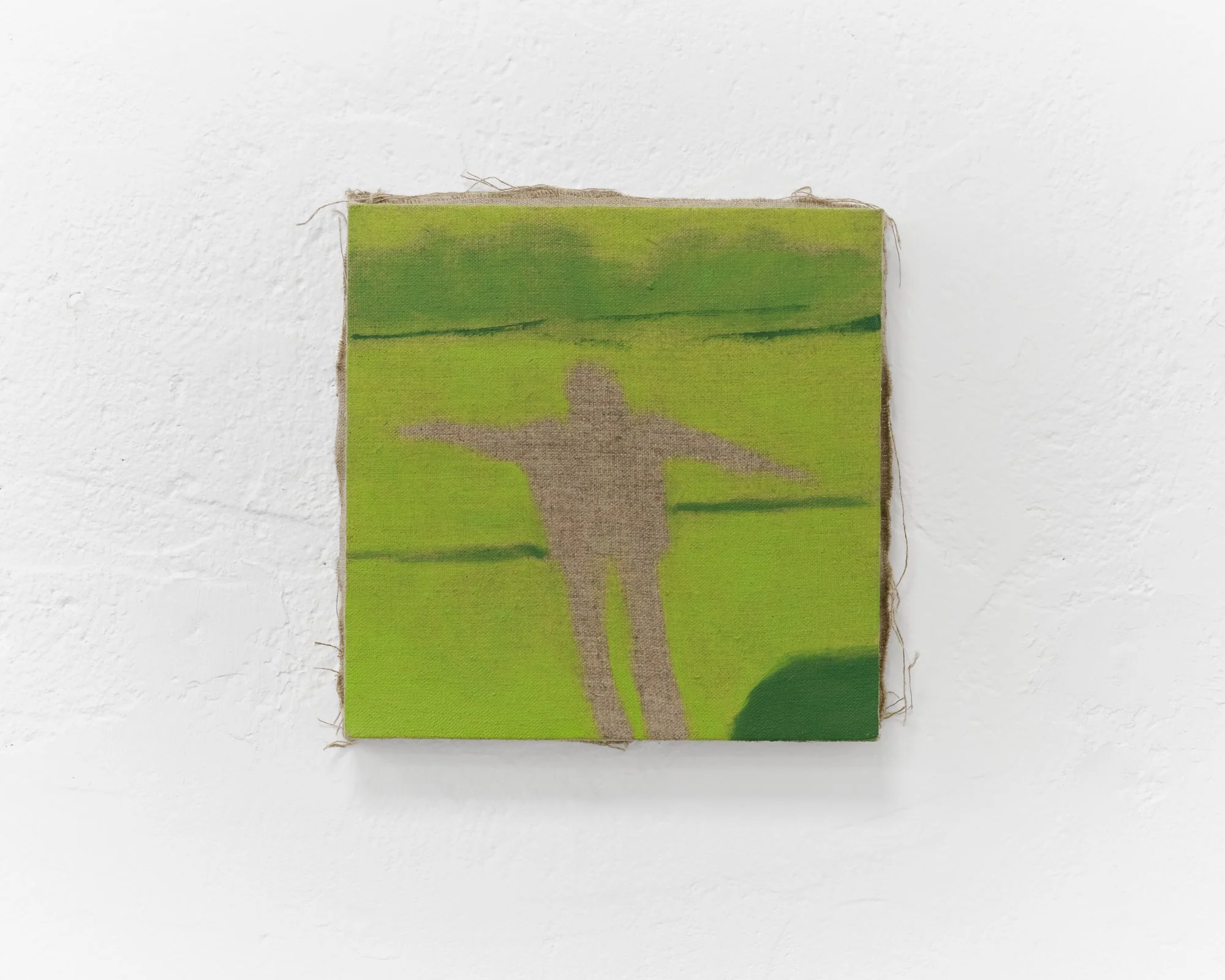
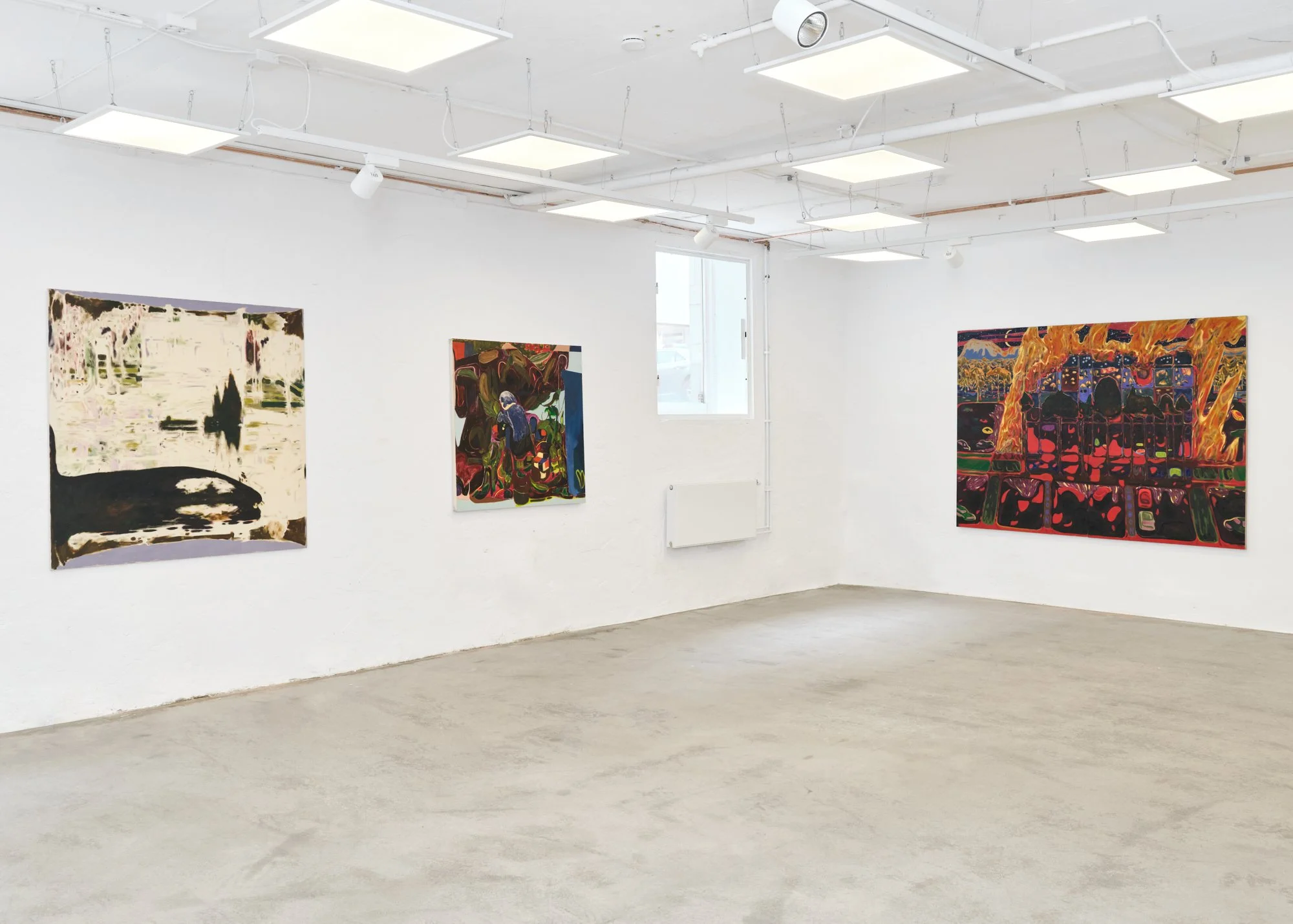
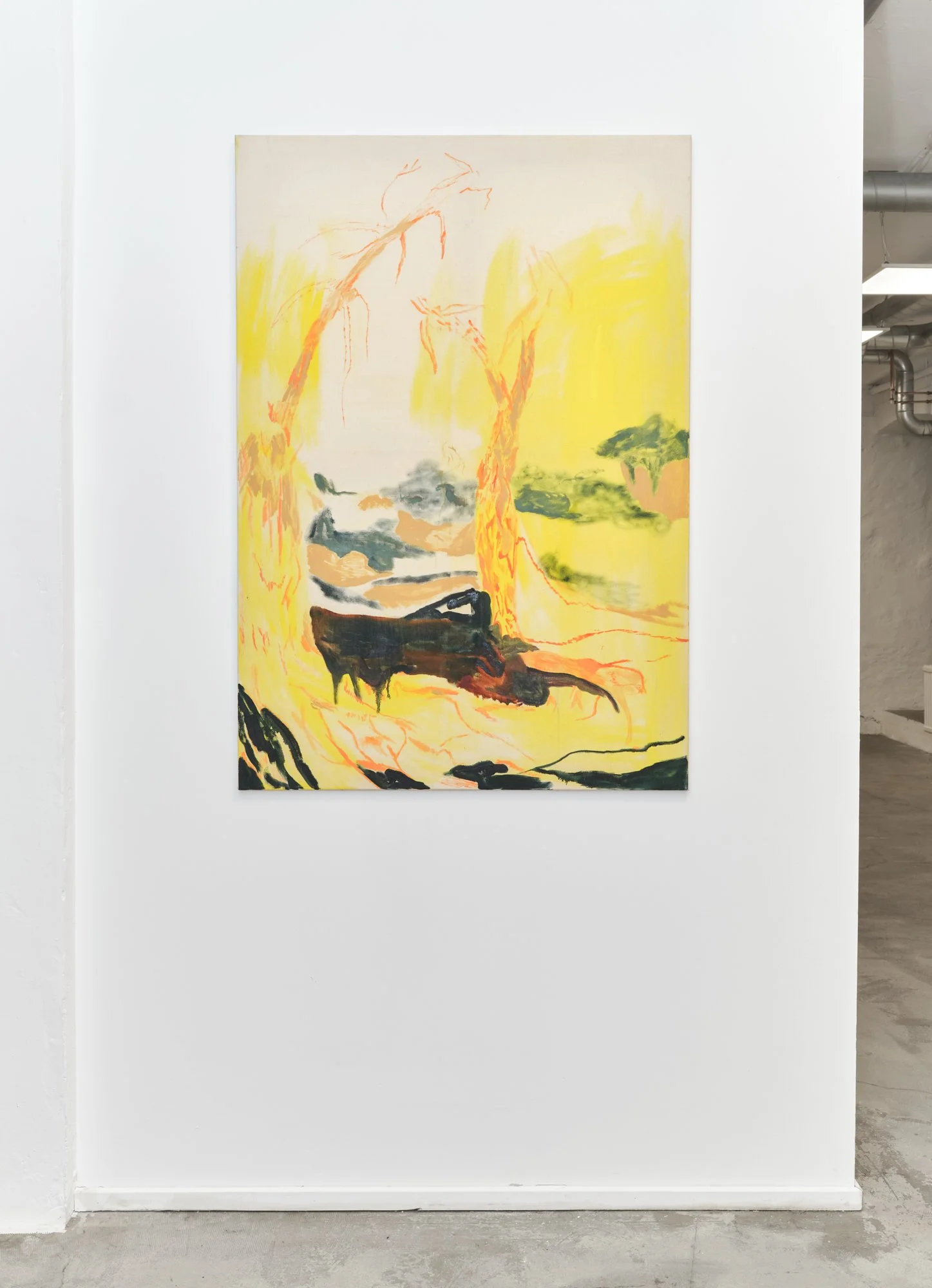
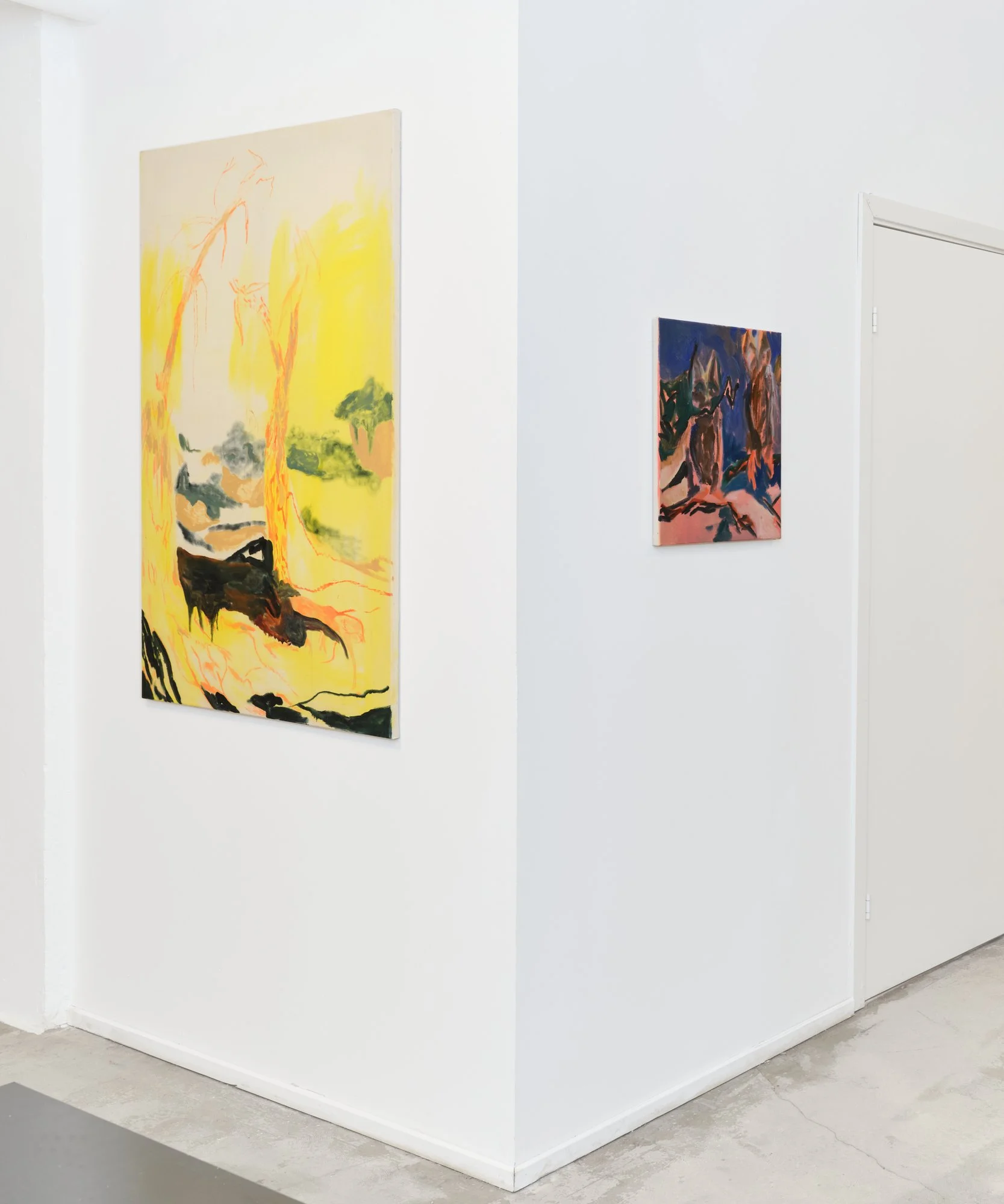
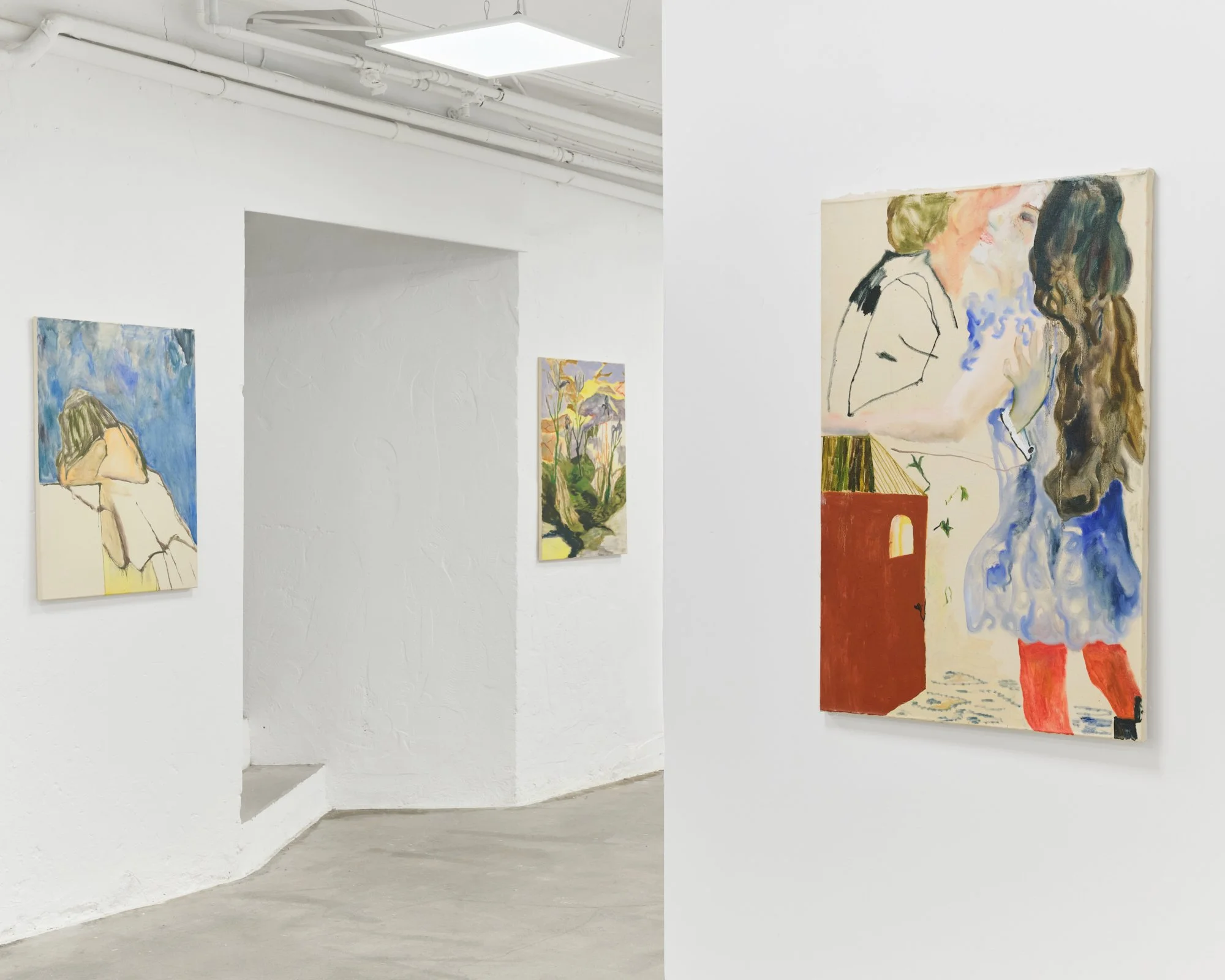
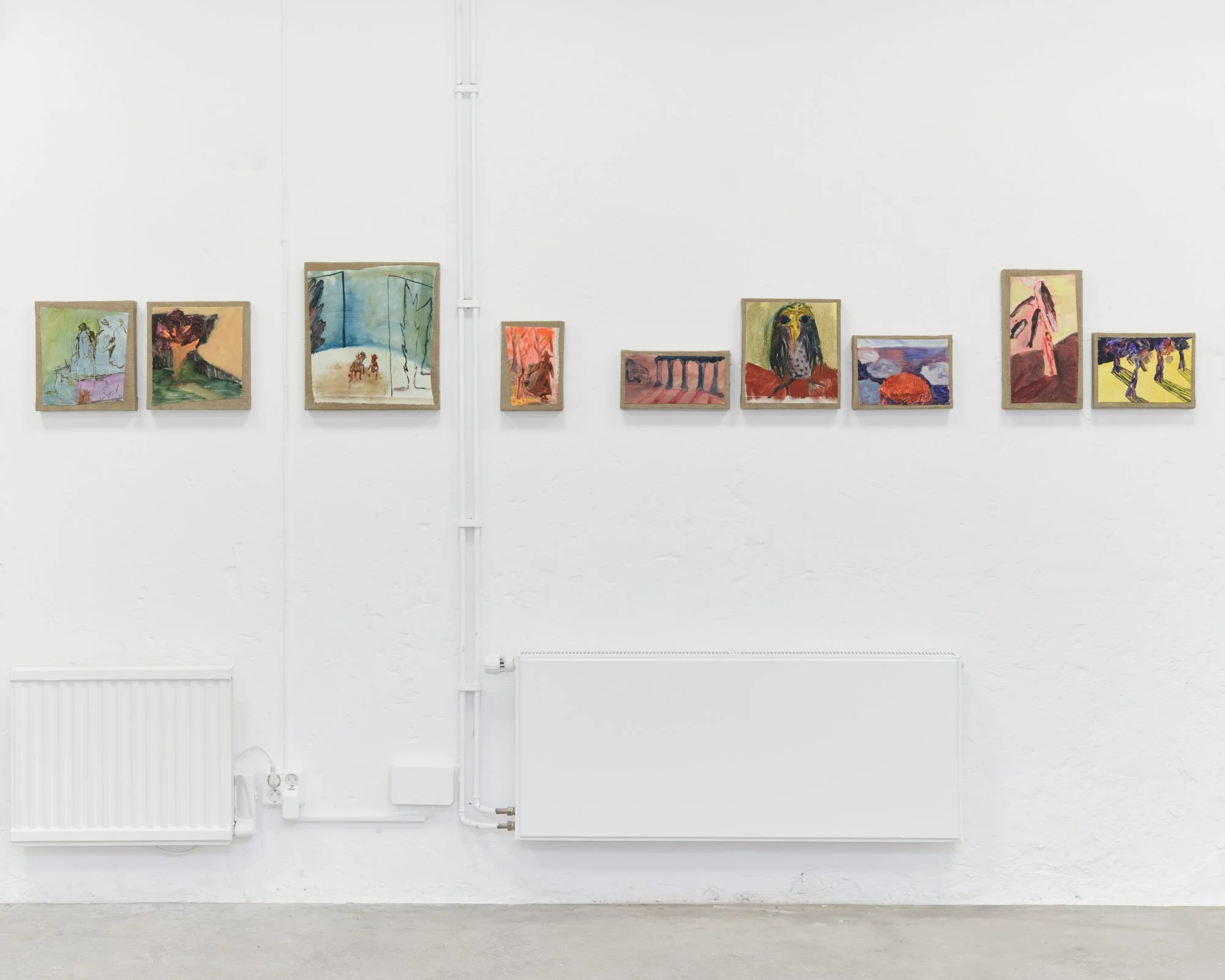
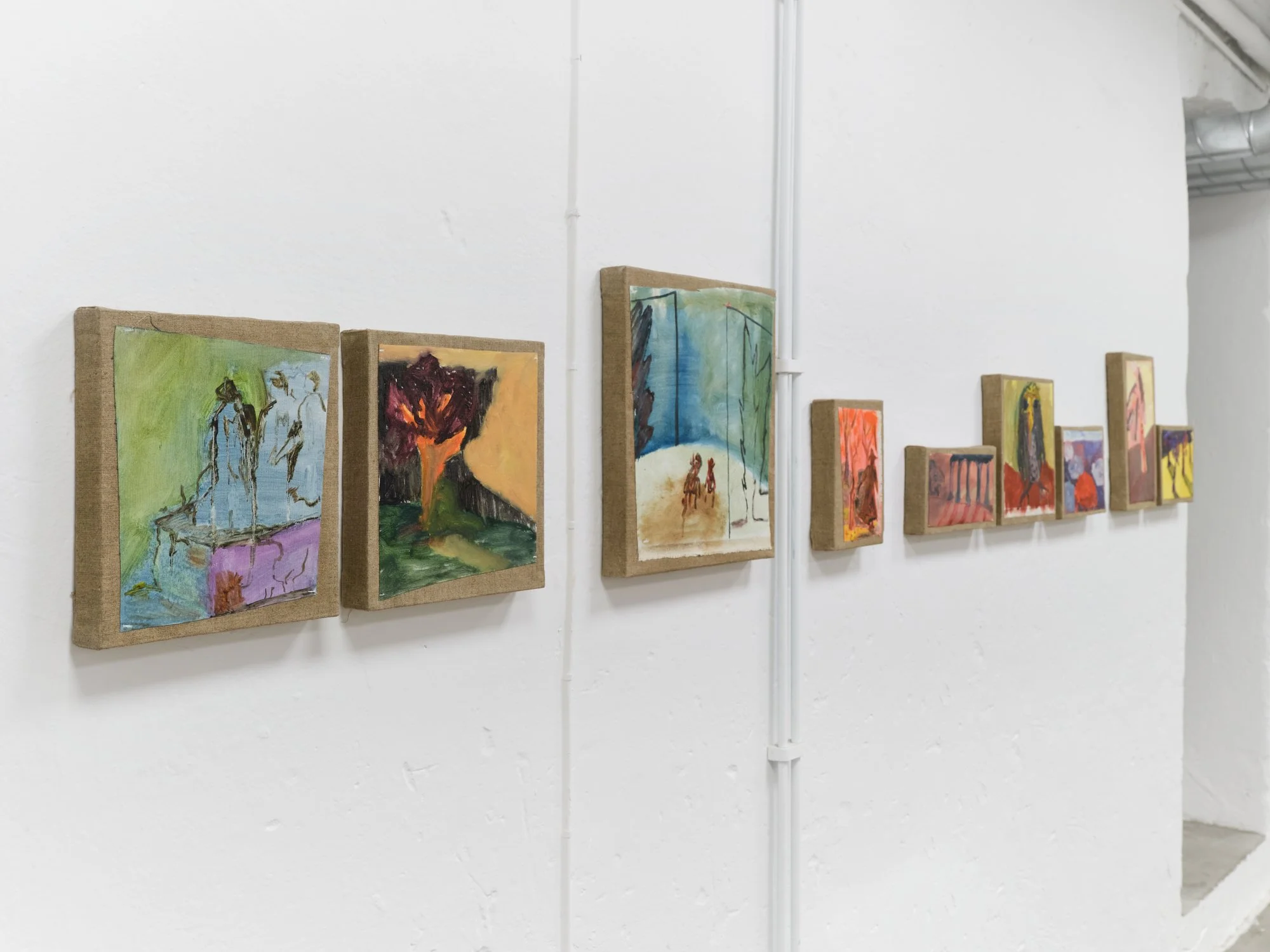
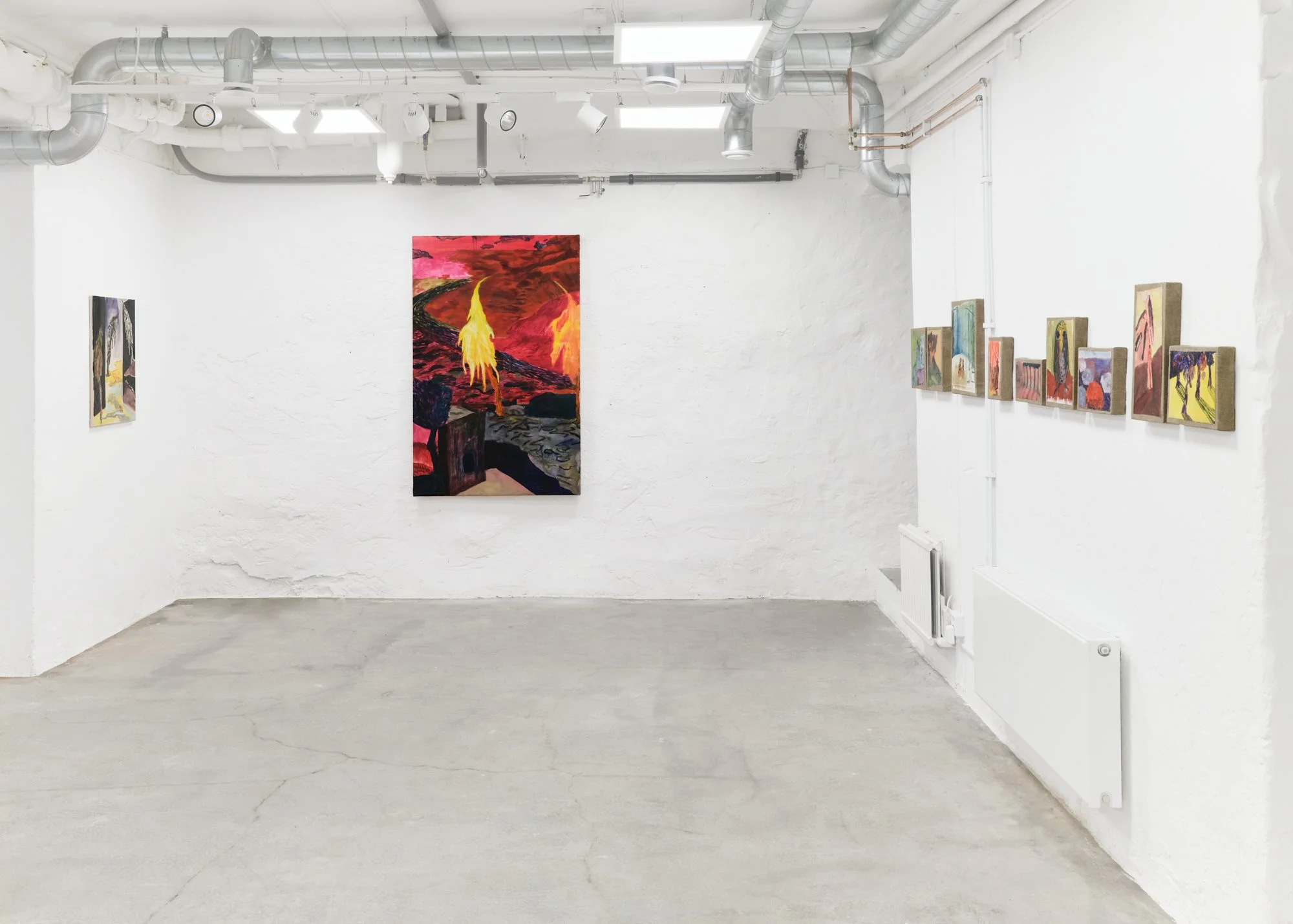
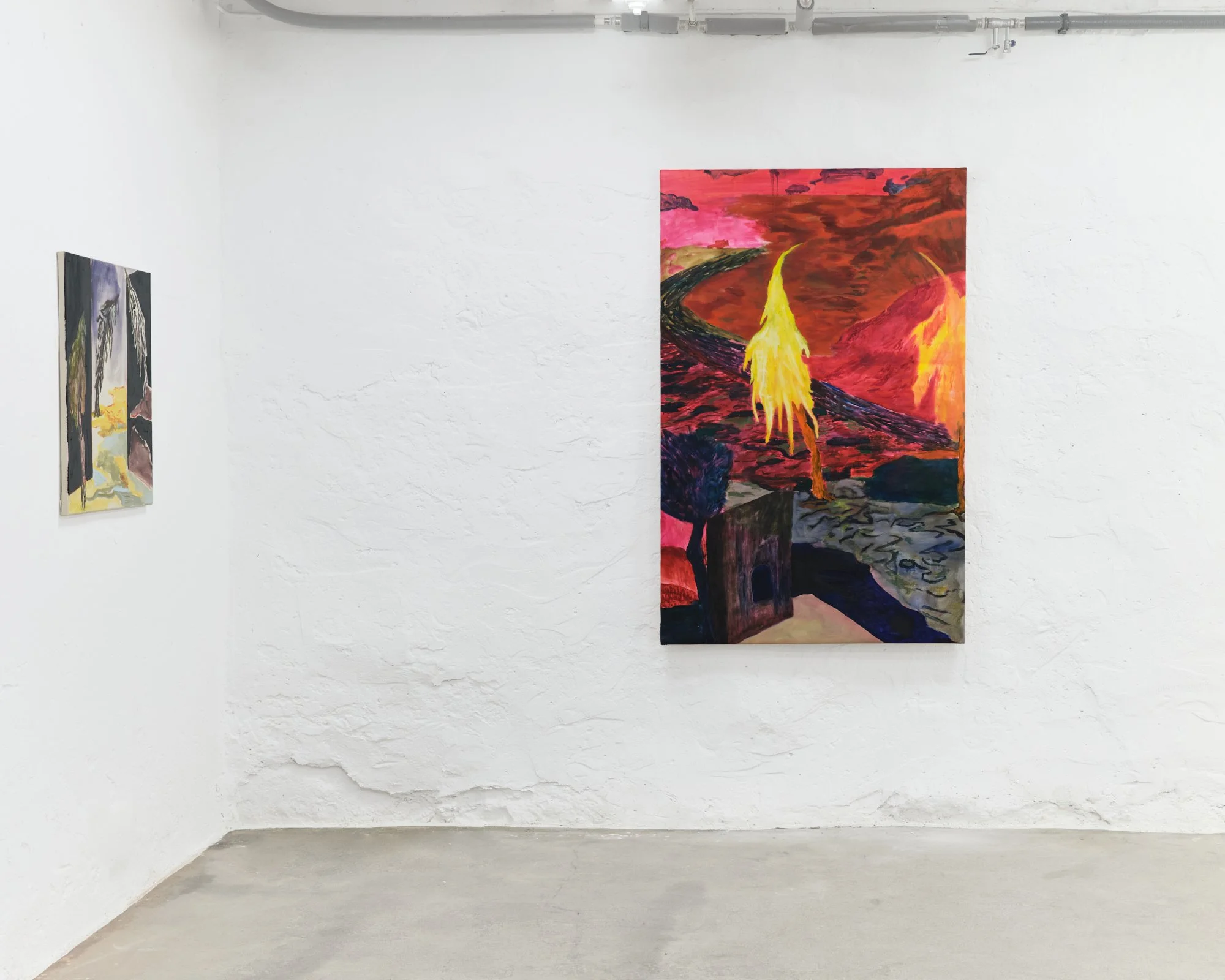
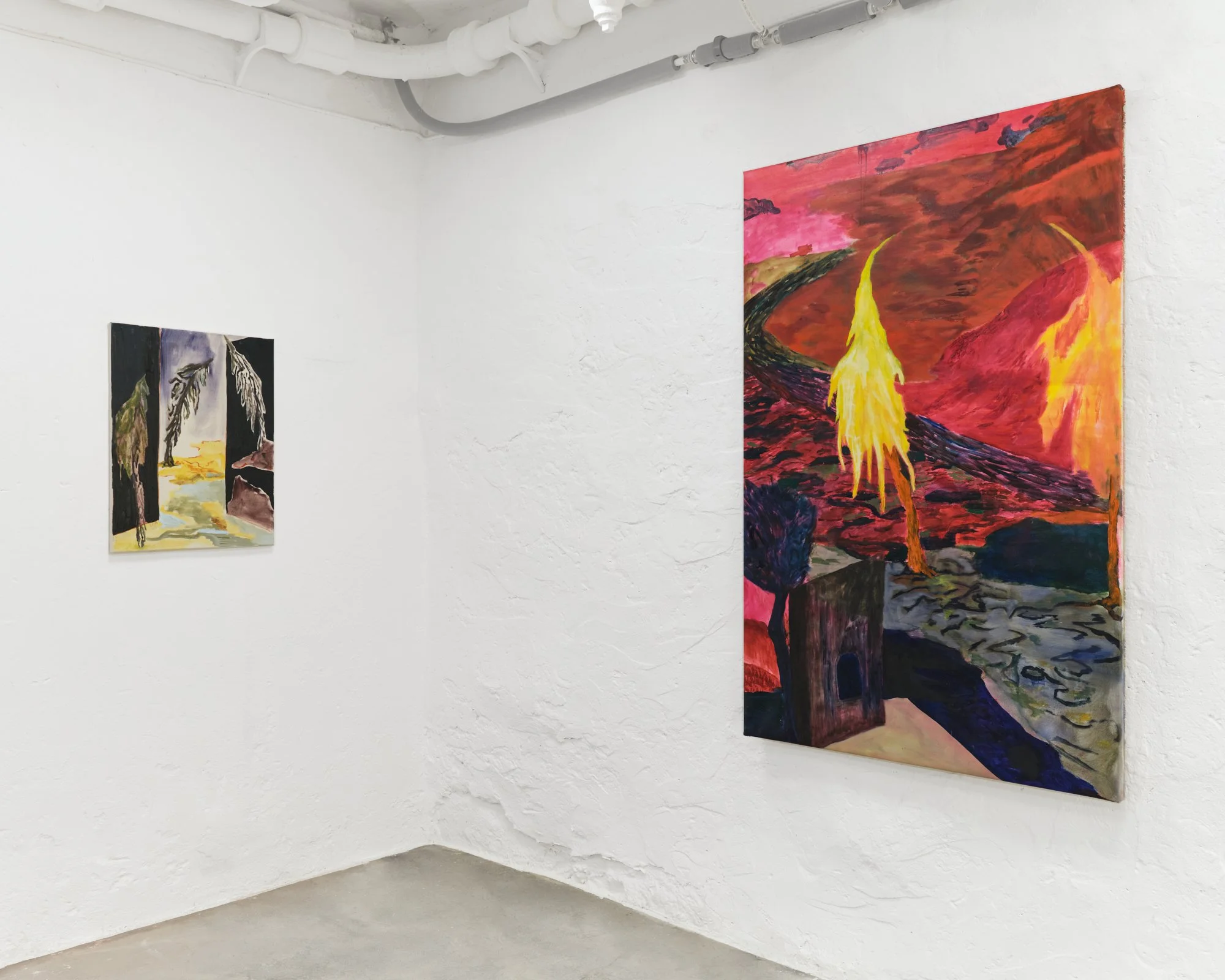
Vera Ljunggren’s distinctive visual world emerges from a playful, almost naive curiosity about the dim recesses of existence. Owl, Palm, Crab — titles that follow the logic of a picture book while simultaneously opening toward something more suggestive. The broken, bare tree branches in the paintings’ landscapes bend into curlicues, as if nature itself were expressing a state of mind rather than serving as a motif. In Fever, the fire-yellow tree seems to pad its way forward on a trunk resembling a small foot, moving through an equally glowing landscape.
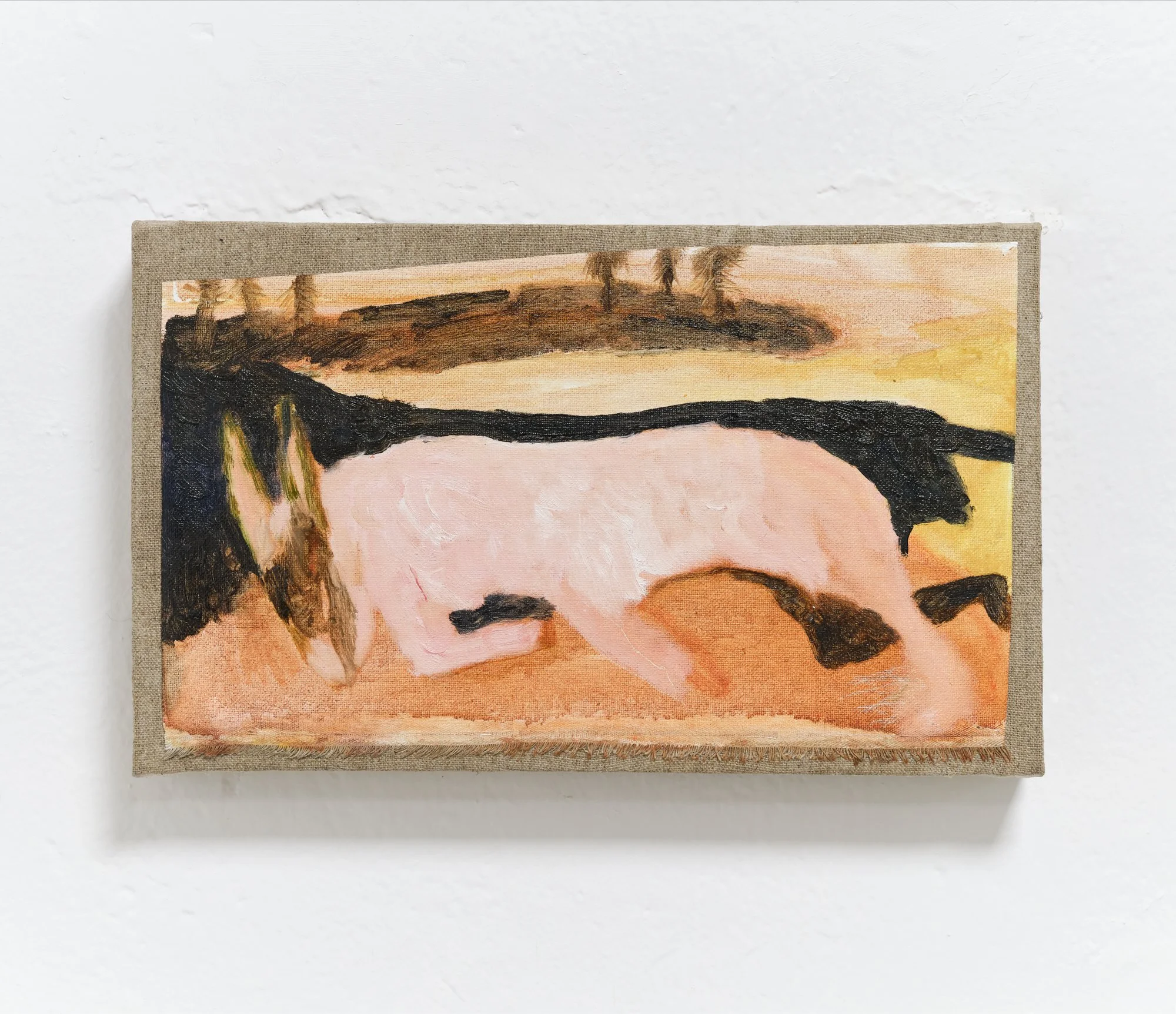
Perhaps this can be read as a kind of poetics — for the world of these paintings evokes the fever dream. Despite the sly warmth that accompanies their almost childlike simplicity, the works are filled by a certain unease: the animal in the painting of the same name appears dying or felled, with eerily human, pale skin; Pelargård, despite its inviting title, is brutal in its fateful yet beautiful presence; and the embrace in Embrace is stiff and withdrawn — a turned-away cheek, a ghost-like translucent hand, the silhouette of a body.
Vera Ljunggren (b. 2000) based in Stockholm. She studied at Konstfack and Pernby School of Painting, and completed an exchange at the Royal Danish Academy of Fine Arts. With Nightingale, she is exhibiting in Sweden for the first time. Vera has previously exhibited in Copenhagen inncluding group exhibitions at Galleri Alice Folker, as well as the dialogue exhibition Follow the Tails in collaboration with photographer Tine Beck at Galleri Arden Asbæk.
HUGO CIAPPI - MEET ME HALFWAY
(6 November - 4 December 2025)
Richter Holtermann presents their first solo exhibition and are pleased to invite you to Meet Me Halfway featuring Hugo Ciappi. Ciappi describes the series as a kind of personal diary, where every painting holds a story and every title carries weight. The works speak to the instability of perception and the ongoing dialogue between past and present, certainty and doubt."You always think you're right in the present," Ciappi reflects, "but only later do you question your choices and maybe you're wrong again. Meet me halfway, because you never live entirely right or entirely wrong. It's about finding balance, and I never quite manage it."